Monthly Archives: July 2013

Flavored Vinegars

When summers bounty is at its peak, I seem to get the urge to create my own concoctions. Whether it be preserving my harvest a little different then last year or just trying something new for the dinner table. Flavored vinegars are always on the to-do list to add a distinctive flavor to foods from prosciutto salad to bulgar wheat.
You can buy some pretty bottles or reuse old vinegar or small neck bottles to keep you vinegars in.
Raspberry vinegar is probably one of our favorite flavors. We use it as a salad dressing when mixed with a little olive oil. It’s also very delish when used with pomegranate salad. Use either red wine vinegar or white wine vinegar for best flavor. Combine 1 1/2 pints of wine vinegar, 4 T sugar and 1 cup of raspberries. Simmer for 15 minutes. Can be reduced to intensify the flavor. Strain the mixture through a fine sieve and pour hot into a sterilized bottle.
Herb vinegars are probably the most popular. You can pick any herbs fresh from your garden. Herb vinegars release all their stored aromas. Bring 4 cups of cider vinegar to a simmer and add a handful of chosen herbs. T

urn off heat right after adding clean dry herbs and leave to cool and then strain and pour into a sterile bottle.
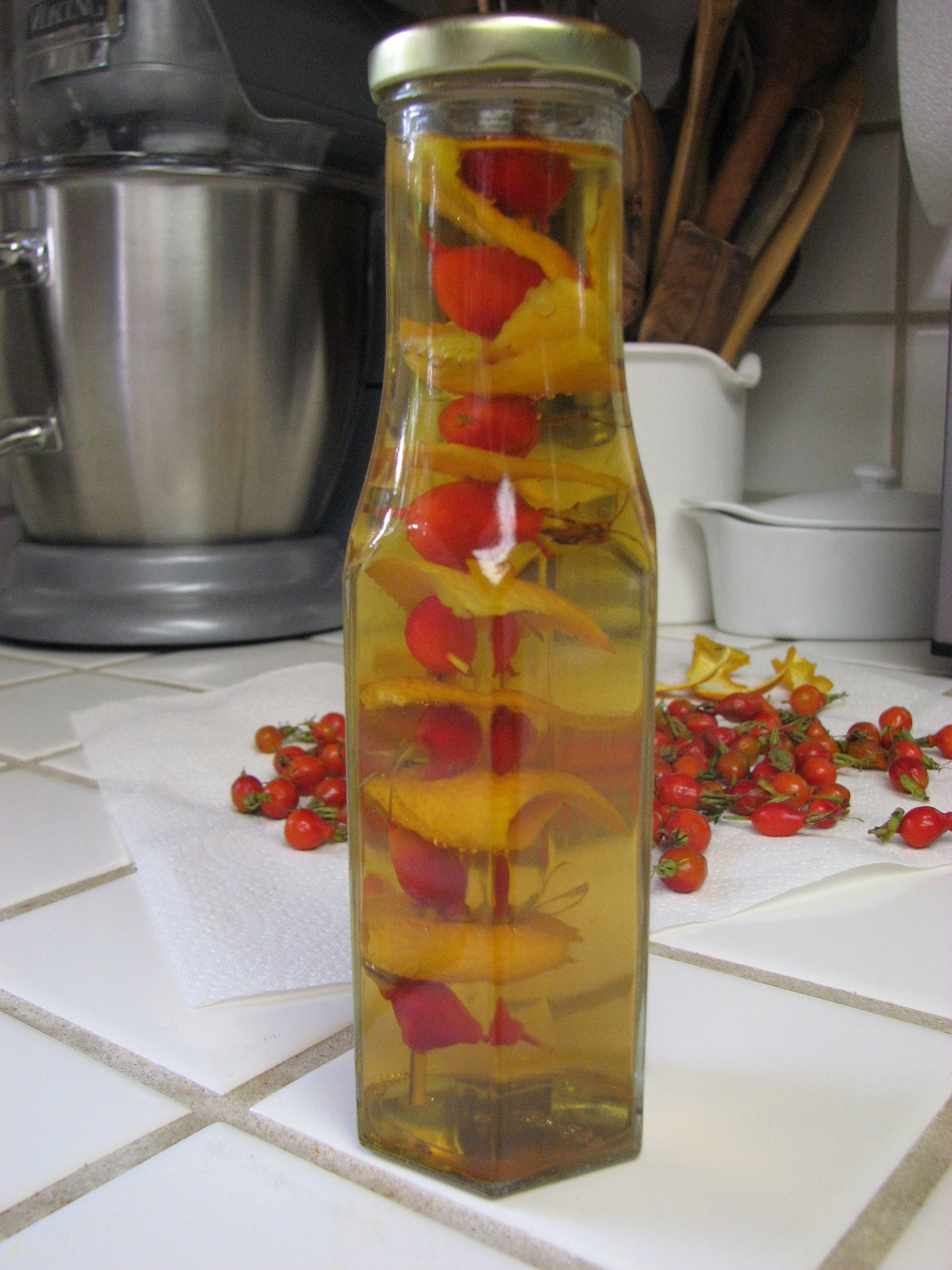
Rosehip Vinegar

Rose-hip Vinegar

Have you ever thought about using lavender or nasturtiums to make flavored vinegar? Prepare the same way as making herb vinegars.
If you are looking for something special to liven up a melon and prosciutto salad, try making rose-hip vinegar. Not only is it beautiful on the counter, but it adds a great zing. Heat 4 cups of cider vinegar, and 4 T of sugar until dissolved. Allow to cool. Thread rose-hips and orange peel pieces onto a skewer alternating. Place skewer into a sterile bottle and pour in the vinegar. Cap off and let sit for at least two to three weeks for flavor to become infused.
These vinegars should be used within a year of making.  Just in time for a new season and preserving!
Leave a comment

Filed under Preserving, Recipes from the Garden

Who Would Purposely Plant Stinging Nettle?

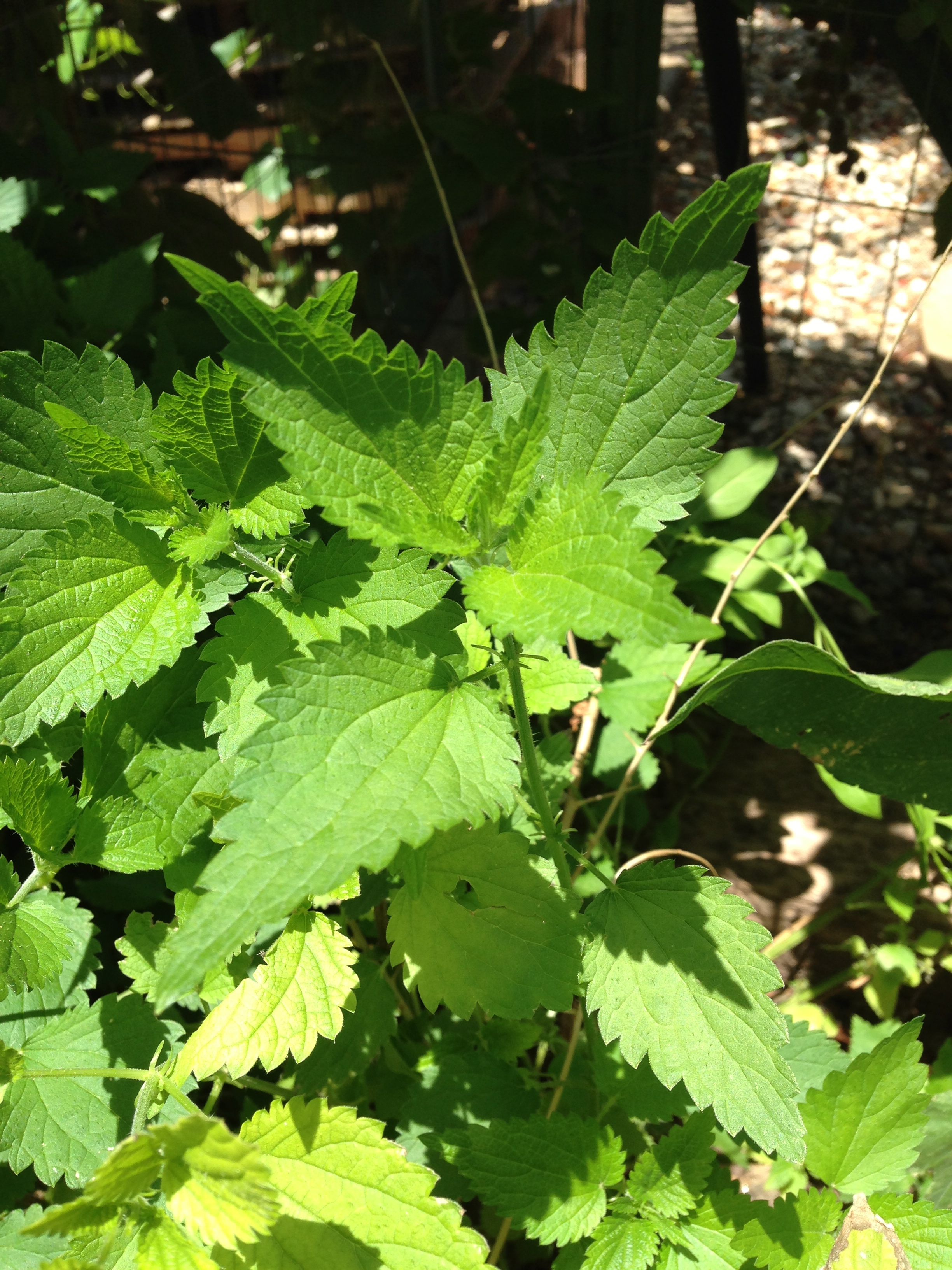
Stining Nettle

Stinging Nettle Leaves

Well, lets see….I would! Of course I haven’t always had a love for this plant of nature.  When I was a child I had many experiences of floating or running up and down the irrigation ditches, only to unknowingly brush up against the nasty leaves of nettle and quickly break out into a stinging rash, earning its name. Little did I know of its healing properties when handled with loving care!

Stinging Nettle has been used for many a years for allergy relief, soothing headaches, treating asthma and high blood pressure, dissolve kidney stones, expel toxins from the body, relieve skin inflammations (ironic), anemia and even coughing.  And not to mention all the minerals and protein it packs.

Nettle leaves can be used many ways to get all those benefits, but my favorite is just to make a simple brew of tea.  1/2 cup of leaves steeped in 2 cups of water for 5 minutes, adding a squeeze of fresh lemon juice and touch honey.   Don’t worry!  Once the plant has been simmered the stinging hairs will no longer have an affect.

Take the bite out of harvesting by wearing gloves.  Pick the top, most tender leaves with scissors.  Cutting leaves can be done in the spring or fall.

I started my nettle plant easily from seed, but cuttings can be done as well, but in the fall before winter die back.  My upright nettle plant stands in the very back of the barn, where there is very little worry about anyone coming in contact with its needle-like stinging hairs.  Give it plenty of room.  This guy, if allowed can reach 6′ easily with a spread of 4-6′.  I do keep mine under control to a height of 3′.  Perhaps it’s from cutting it back all the time, drying the leaves for later winter use.

Nettle grown in the wild here in Southern Utah often times is accompanied by mullein growing nearby.  Ahh, I wish I knew that as a kid!  Know your plants and if you happen to tangle with nettle, look around quickly for mullein leaves.  The mullein leaves rubbed on affected area will ease the sting almost instantly!

Stinging Nettle Seed

4 Comments

Filed under Herbs