Author Archives: Ali

Ali's avatar

About Ali

Gardening is a peaceful place for me. I have loved it since I was a very young child. I want to share with you my journey in my small half acre lot in the middle of our city what you can achieve, such as gowing a garden, orcharding, caring for bees, goats and poultry. Going back to the simple life. Using what you have to the best of your ability.

Tending to Garlic Crops During Winter Months

You planted you garlic last fall and now what?

Most garlic planted in the fall should be at least sprouted and has developed a root system.  Ours will vary from variety to variety.  Some have leaves as tall as 8 inches, while others are just emerging from the soil level.   Winter temperatures will also affect the growth of garlic.

During the winter months garlic is slow growing and will still require water and some fertilization.  Garlic can survive with virtually no water, but to produce a nice size bulb, water is essential.  We let the surface (top 1″) of our soil dry out before watering.  Our soil is a nice loam and holds water fairly well.  Watering will depend on rainfall and soil types.  Garlic is fairly short rooted, but watering only with surface will only starve garlic from water.  Watering to the depth of 2 foot will be ample.  Soil should stay moist, but not saturated or possible rot can occur.  Drought stress delays bulb formation as well as produce smaller bulbs.  As longer days come around and they begin to warm up, watering chores should increase.   Keep it simple!  Water garlic like other vegetable crops.  When harvest time approaches, soil can be allowed to dry out for harvest, but then and only then.

When garlic was planted, hopefully you amended your soil well with compost and fertilizer.  Timing is everything when fertilizing.  Late fertilizing can delay bulb formation and decrease yields, and producing a garlic bulb that does not keep well.  We fertilize with blood meal organic fertilizer (nitrogen fertilizer) in mid-February when the garlic leaves start to actively grow.  In some regions, the growth may not come until March, April or May, so fertilizing later will be necessary.  Watch your garlic!  We sprinkle the blood meal along side the garlic and cover with a thin layer of compost.  Every six weeks thereafter we spray the leaves with liquid kelp until a month before harvest.

Mulching garlic moderates temperature, moisture and suppresses weeds.  Layer 2-6″ of organic matter such as straw, leaves or lawn clippings.  The colder the climate, the thicker the mulch should be.  I use 2″ of rough compost or a soil conditioner once the garlic begins to emerge from the soil.  Wood chips are not a preferred choice of mine because they rob your soil of nitrogen, which is what your garlic needs.  Mulching can be done at planting time and/or throughout the growing season.  Strong winds in our area blow away mulch, so mulching a few times a year work best for us, watering afterword’s can help hold mulch placement, especially if we have a freeze.  If using straw or other lofty mulch, it may need to be removed once temperatures are not longer freezing to help the soil warm and keep hiding places for pests down.

Weeds!  Grow weeds or grow garlic.  Garlic likes its own space and weeds should not be allowed to grow.  Pull weeds early when young and avoid

hoeing as you can damage bulbs.  There is nothing more to say about that!

Straight forward winter garlic care ~ Water when needed, but don’t overwater, fertilize once growth begins in late winter or early spring with blood meal, fertilize with liquid kelp every six weeks thereafter, mulch and keep weeds out!  Come summer, you’ll have the best harvest ever!
dsc_0006.jpg

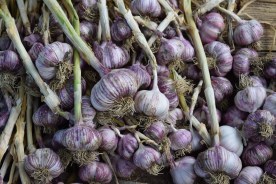
Early Turban Garlic


Leave a comment

Filed under Gardening

Natural Energy Booster!

I’m always looking for ways to keep myself up and running during the summer time when it’s hot an I’m dragging.  Out back I grow a little patch of Stinging Nettle.  It’s not the friendliest plant (hence it’s name), but it has many uses to give it home here at our little farm.  Remember, this is stinging nettle and it can cause skin irritation.  So harvesting with tongs or gloves is a good idea!

This plant has deep green leaves, which indicates “energy”.  Put a handful of fresh nettle leaves or 1 oz of dried in a teapot of 2-3 cups of boiling water, turn off heat and let it steep for at least 4 hours.  Strain.  Use within 36 hours.  Sweeten with honey, agave or even a few leaves of stevia plant if desired.

I drink this daily when I need an energy boost without wiring my nerves.

Ayurvedic medicine uses an infusion of nettle tea as a spring tonic and rejuvenator.

For more information on Stinging Nettle Click HERE


Leave a comment

Filed under Herbs, Recipes from the Garden

The Attack of the Cucumber Beetle!

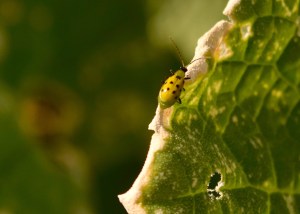
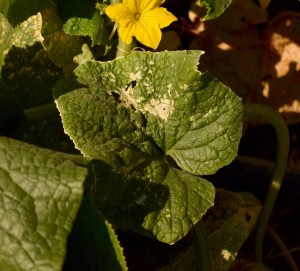
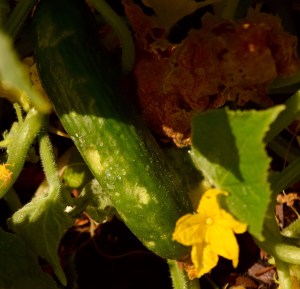
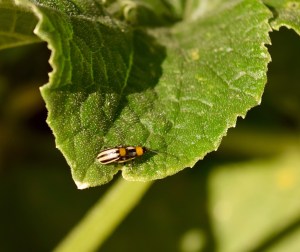
Ugly cucumbers with scars, chewed holes in cucumber plants?  What is going on?  Take a look around your cucumber plants, near the base, in flowers and on the leaves.  You may find this devastating beetle wrecking havoc on your plants and cucumbers ~ The spotted cucumber beetle and striped cucumber beetle.  Melons, summer squash, gourds, winter squash plants and fruits can be affected as well by these little buggars.

Make no mistake!  These are not insects like the likable lady bug you want around.  These disease carrying cucumber beetles will feed on rinds of fruits causing ugliness..aesthetic injury, bacterial wilt, squash mosaic virus, stunting, and even killing young plants.  They become more active as the weather warms, feeding on blossoms, pollen, nectar, fruits and leaves.

Managing these cucumber pest require a bit attention.  Left along they can ruin a entire seasons of harvest.  Pure neem oil sprayed twice a week will slow and eventually stop any further invasion.  Spray in the evening, when the bees have gone, being sure to spray the base of the plant, basically used as a soil drench to treat eggs and larvae.  Persistence, I say!

Try companion planting!  Radishes, calendula, catnip, nasturtiums, rue and tansy all work well.  Marigolds are great, but plant the right kind or you may be attracting them rather than repelling them.  Varieties like African, french or Mexican marigolds are your best bet!

This year we took our overgrown tansy plant and chopped (made a mulch, sorta speak) it up, sprinkled it around the base of our cucumber plants and saw a decline in beetles within a few days. However we still had to treat with neem oil.

Mulching also helps.  Mulching can deter cucumber beetles from laying eggs near the plant stems, in the ground, but this does not deter beetles from feeding on flowers, fruit and leaves.

This year we have planted several different varieties of cucumbers.  Muncher is top of the list of attack, while Marketmore fruits and have not been affected what-so-ever and the leaves are in the best shape.

Okay, with a little more fast knowledge of cucumber beetles and ideas to control them~ Go get um!

1 Comment

Filed under Garden Bugs, Gardening

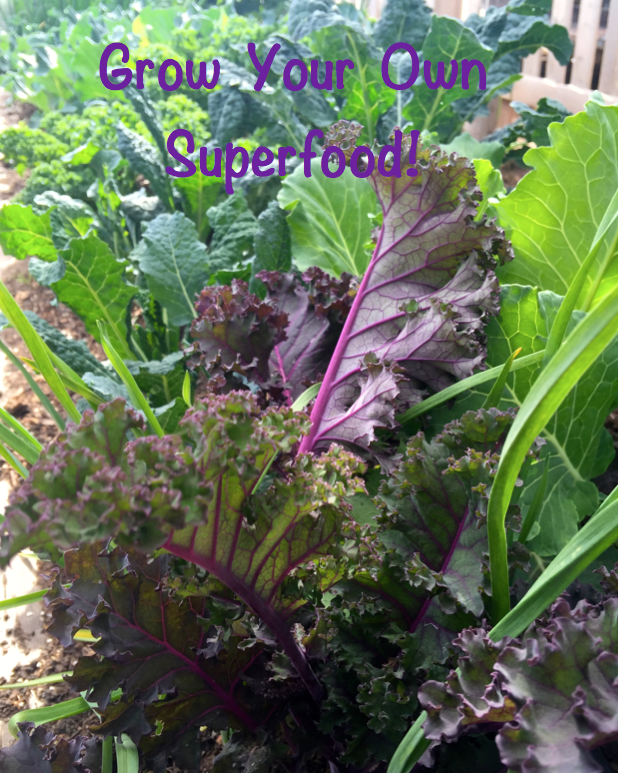
Grow and Eat Kale The Superfood!

Organically Grown Kale

Kale the superfood and superstar!  Why wouldn’t you grow and eat kale?  It’s loaded with vitamin K, omega-3, alpha-linoleic acid, it supports the brain and bones, contains more vitamin C than an orange, plus boosts the body’s natural ability to detox.

I have grown kale for many years for it’s beauty in the flower garden and vegetable beds.  There are so many types of kale you can choose from and make a rainbow of awesome, edible interest.  While this superfood will “kinda” grow in not so great soil, it will grow quicker and healthier if you take a little time to amend the soil.  It also enjoys some sunshine, but will adapt to a semi-shady spot in your garden or yard.  Plus, if you have a windy area that most plants do not tolerate, you can place your hardy kale plants in that environment!  Amend your soil well with plenty of compost and a nitrogen and phosphorous fertilizer such as “Bio-Fish 7-7-2“.  You can sow directly or use transplants.  Seeds can be sown eight to six weeks before your last frost of the season, but even in our hot climate we have had success sowing seeds right through late spring with a little extra moisture.  Thin seedlings to 12-18” apart.   Transplants can be planted out here in February through early summer.  Wait a month if your soil is still below 40 degrees.  If temperatures are going to drop into the low twenties, I simply give them a little protection with a quick covering of a frost blanket until the sun reaches them the next day.  Kale can tolerate frostbite.  Never starve kale of water or it will become bitter.  Kale loves kelp!  Throughout the season, once a month, drench the soil with a kelp solution.  That will be the only food kale should need if your ground was prepared at planting time.  Harvest leaves a baby size for salads or let them mature and pick from the bottom up (larger leaves) if you want continued harvest.   Pick kale with a sharp knife and eat right away. During the summer months, kale will produce somewhat looser and greener leaves.   Don’t have room for kale?  Sure you do!  Grow in a pot or pop a few in your flower bed, they add contrast, color and interest in the background of flower beds or patios.

We grow many kinds of kale for many different uses.  Curly Green kale is probably the most common and seems to work well in most recipes.  It comes in dwarf size plants to plants that reach 3 foot (yes sometimes larger, depending on variety, soil and location).  Curly green kale is great for making kale chips.   Lacinato kale is also known as dinosaur kale.  It is gaining popularity these days. Lacinato can also be used in most recipes that call for kale.  It has a spicy flavor and pairs well with spicy sausage.  Redbor kale, or curly roja kale has been traditionally grown for its ornamental look in the garden, but is just as tasty as other kales.  I feel it it the sweetest of the kales and with its dark ruby hue makes it great in blueberry smoothies.  It is not commonly found in grocery stores.  Red Russian Kale has a red leaf stalk with purple veins.  It’s sweet, tender with a hint of spice.  Russian kale is ideal for Asian dishes with flavors of sesame, soy and ginger.  Add Red Russian kale to your egg dishes and be boosted up all day long!

Kale and Blueberries!  What a healthy combo…

Blueberry Kale Smoothie

1 cup fresh or frozen organic blueberries

1/2 whole milk

1/2 cup packed chopped kale, stems removed

1 T honey or agave nectar

1/2 teaspoon vanilla

1/2 cup ice cubes

Place all ingredients in a blender and blend until smooth.  Serve immediately.  This smoothie is great for your cardiovascular health!  Drink up!

For another great recipe we like go to this link: Roasted Veggies and Kale

Kale was recently added to the “Dirty Dozen” list of vegetables, so it is definitely worth growing your own or buying from a reputable local grower.

1 Comment

Filed under Gardening