Author Archives: Ali

Ali's avatar

About Ali

Gardening is a peaceful place for me. I have loved it since I was a very young child. I want to share with you my journey in my small half acre lot in the middle of our city what you can achieve, such as gowing a garden, orcharding, caring for bees, goats and poultry. Going back to the simple life. Using what you have to the best of your ability.

Anise Hyssop

Growing & Using Anise Hyssop

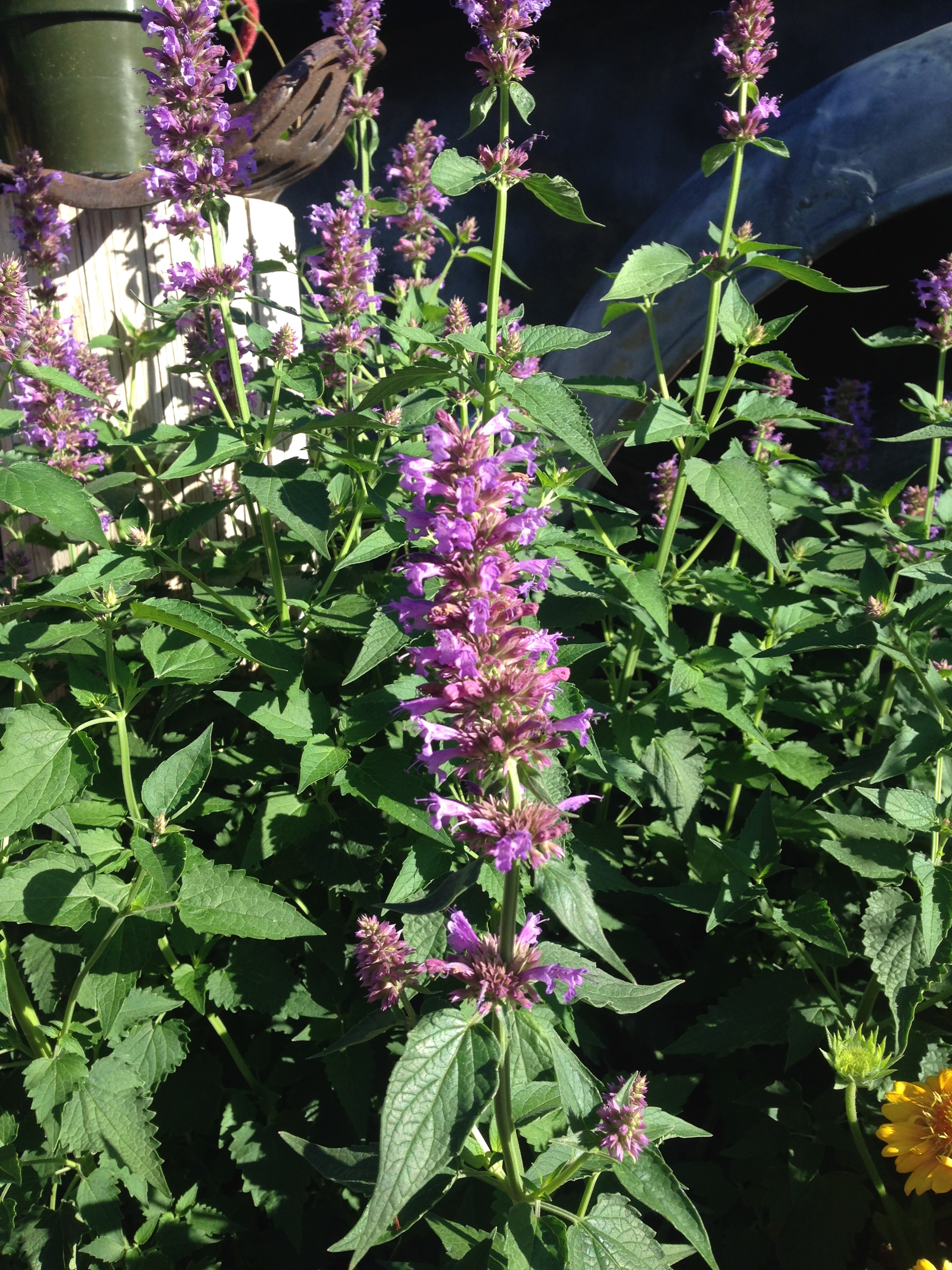
Anise Hyssop Flowering

It’s Fall!  Well not technically, but around here when the monsoons come in and the temps cool just a little and mornings are crisp, I know it’s time to start planting fall crops, whether it be vegetables, herbs, annual or perennial flowers.  Anise hyssop is first on my list.  It’s a member of Agastache genus and is a favorite herb to attract hummingbirds. But more than that it’s a great mosquito repellant plant (perfect for fall monsoon weather).  Bees love Anise Hyssop!  I see bees hover over its flowers more than any other herb in the garden.  Any help with pollination in the garden these days…I’m on it!

Agastache (Anise Hyssop) comes in a variety of colors from purple-blue to the ornamental varieties coral, apricot and pink.  Culinary Anise Hyssop makes a delicious tea.  The leaves and blossoms can both be used and they have the fragrance of anise.  Add the leafy stem to flavor a pitcher of water.  Scatter the blossoms over a cooked vegetable like beets, or a plate of slice peaches.  Add color to a lettuce salad.  Be creative.

Anise Hyssop is a very showy plant, blooming from June to September.  Giving a bit of care by deadheading will insure larger blooms for a longer duration.  Some plants will reach 32 inches tall or taller and they make a great accent in the background of herb or perennial beds.  Once established, Anise Hyssop is very drought tolerant and most varieties are hardy to -20 degrees Fahrenheit. This plant is a winner in my book because it’s soil needs are minimal.  Good soil drainage and a little compost upon planting is all it seems to need.  A great plant for dry-land gardeners.  You can also divide in the early spring with ease.

Anise Hyssop Tea: Bruise a small handful of leaves by crumpling them in your hand, then add to a teapot, pour boiling water over the leaves, cover the pot and let it steep for 10 minutes. Easy as tea!
Leave a comment

Filed under Bees, Flower Gardens, Gardening, Herbs

Maintenance for Iron Deficiency in Fruit Trees

20140722-131319-47599075.jpg

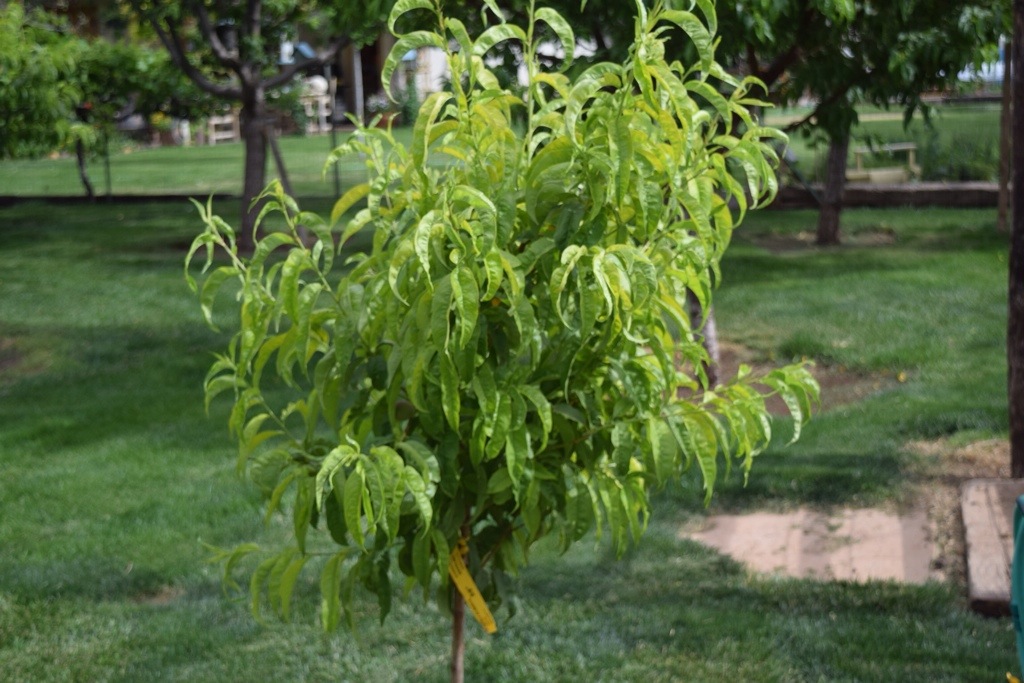
Beginning of Yellowing from Iron Deficiency on Young Peach Tree

When we first planted our orchard twenty-five years ago we didn’t know much about our soil we were putting the new little trees in, or for that matter what we should have done to improve it. There had been orchards all over our valley for decades and they all seemed to be doing great. In fact 40 years before we planted our orchard, there was a huge peach orchard right were we put in our little fruit orchard. But, the topsoil had been scraped, probably removed and sold, perhaps other soils brought in and if there were any original soil left, it was depleted. Within a few short years some of our trees started to show signs of iron deficiency. Yellowing leaves with green veins with the tips showing signs of burn. This is the first tell-tell sign of iron deficiency.
In our area we typically have a high content of iron in our native soils, but because the pH range is generally on the high side, around 7.5 to 8.0, plants can’t take up many of the nutrients in the soil needed for healthy growth and tasty fruit.
We have incorporated tree care regimens over the years and our newer fruit trees are healthier than ever and produce the best tasting fruits.
Every Spring (When trees begin to bud) the trees get a feeding of Azomite,  Rock Phosphate and Gypsum sprinkled around the drip line with a heavy layer of compost, but not covering the trunk of the tree. Once the trees begin to leaf out we carefully watch for any yellowing, which seems to happen here once a year to every other year. While we give them all that tender loving care, they still seem to have an iron deficient issue on occasions. This is because of our high pH.  Not only the soil’s pH is high, but  our water is also high in pH, so yes, we have succumbed to the fact that we can do every thing to insure a healthy tree, but because we live where we live, we just have to do a little more maintenance to keep our trees at their best. The first sign of yellowing I sprinkle Ferris Plus Iron around the drip line of the trees (from the trunk, out to where the canopy of the tree stops) and water in thoroughly. Ferri Plus Iron is a chelated iron that the trees can take up very quickly. Generally within a week or less! You can use as a foliar spray, but I choose the easiest methods…or it may not get done. Follow the instructions on the label for each tree. Each tree will require a different amount of iron, due to their size, age and canopy. Trees that are deficient in iron will first show signs of yellowing with green veins. As the problems increases, leaves tips will look as if they have been burnt. If deficiency is left to get worse, branch die back can occur and the loss the tree is possible.

We have learned over the years of orcharding that just sticking a tree in the ground may work for a while, but giving it a great start to insure a healthier tree with more vigor, better tasting fruit and longer life is an investment worth putting time into. Trees we have planted lately have been healthier and less prone to bugs. Compost is always mixed in the native soil, but not more than a cubic foot for five gallon sized trees. Mychorrhizae is used as well to give them the best boost they can get. We could place fertilizer in each hole as well, but we feel the compost and Mychorrhizae is enough and then they get the regular feeding when the rest of the trees get treated.
Giving plants the proper nutrients will improve flavor of the fruit. We have found that iron and mineral deficient trees will have fruit that taste a little bland as well. A good example is we planted a Saturn peach years ago, and I threaten to yank it out every year. The fruit was not what a fresh peach should taste like. After starting a good fertilizing and fruit tree care program, amazingly, the fruit was sweet, juicy and delicious!

Leave a comment

Filed under Fruits from the orchard

Pruning Tomato Plants

Pruning Heirloom Tomatoes

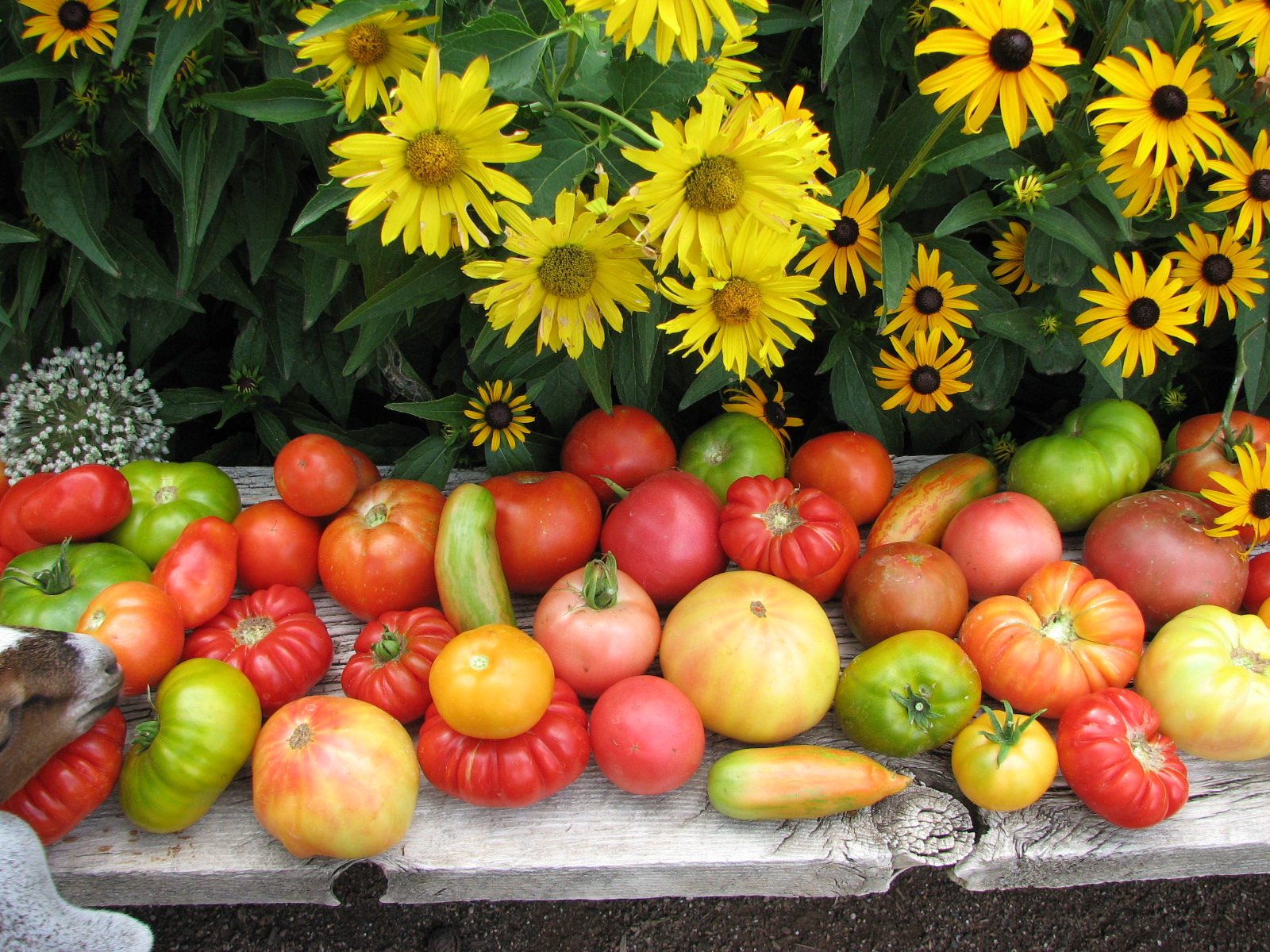
Heirloom Tomatoes

Over the years I have evolved into a completely different gardener.  Maybe a little more disciplined in some regards and a little more unruly in others.  There are a few crops that have received much more attention, such as my garlic and heirloom tomatoes.  When I first started growing heirloom tomatoes I would not stake them or prune them, I just let them bramble about wildly, while losing a few of them to rot, due to them touching the ground and just plan out ‘losing’ them in the thick mass of foliage.   They did produce more, but took much more room and tomatoes were in deed smaller.   There was definitely good and bad to this method, but I am totally converted now to training and pruning indeterminate tomatoes. Pruning definitely takes more time, but I think it’s well worth it.

Pruning tomatoes increases air flow and allows me to plant a larger variety of heirloom tomatoes closer together.  While I have a fairly large garden, it isn’t big enough for all the varieties of heirloom tomatoes I like to grow so I trellis my plants on cattle panels, spacing them about a foot apart.  That’s close, huh? By pruning tomato plants, it will put more energy into a concentrated area, increasing the size of each tomato produced.  It increases light, which helps with ripening and air flow that will help prevent diseases.  I like to leave 2-3 main stems that start close to the bottom of the plant.  Stems that start higher up will create fruits higher up and makes the plants rather top-heavy.   You can prune to one main stem, but here in the desert our sun is hot and a little more foliage helps the tomatoes from getting sunburn.

I keep all boughs from touching the soil (about 8-12″ off the ground).    By doing this, it helps protect the plant from soil-borne pathogens that might splash back onto the leaves during watering.  Also we have had better success with conquering curly leaf virus by doing this.  Because the soil is exposed more by pruning and training this way, it tends to dry out faster, so I will plant nasturtiums and other herbs that both repel bad insects and attract beneficial ones while keeping moisture in.  Kinda like what a mulch would do.    Plus, it’s very attractive in the garden.

DSC_0004

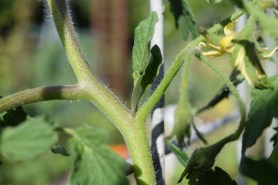
Where to Prune a Tomato Sucker

Pruning tomatoes should really only be done to indeterminate tomatoes and not to the smaller growing determinate varieties.  Pruning means pinching off the shoots/suckers that sprout from the stem in the crotch right above a leaf branch.  A sucker left to grow, simply becomes another large stem with its own blossoms, fruits and suckers.  Pruning is best done with staked or trellised tomatoes.  As the weather warms up, new suckers pop up all the time, even in the same place you may have already pinched once before.  I find myself once or twice a week pinching and securing the vines to keep the plants tidy and the chore not so overwhelming.  Pinching is easily done by bending the suckers over when they are very small, but once it becomes the size of a pencil, you might want to use a pair of garden snips so you don’t hurt the main stem.  Be sure to wipe or spray your snipers with a simple disinfectant each time you move to a new plant to “be on the safe side” and not spread any disease that could possibly be present.  Never work with you tomatoes when they are wet as well!

You can pinch off the tip of the main stem above the top blossom of indeterminate tomato varieties to keep a flourishing plant from getting taller, such as when a plant out grows its support or toward the end of a growing season when a taller plant won’t help much with increased production.  Pinching at this point will put the plants energy into ripening the tomatoes already on the vine rather than producing new tomatoes that more than likely become large enough to save.


1 Comment

Filed under Gardening, Heirlooms

Growing Potatoes

What a treat, digging up the first home-grown potato of the season!  If you never grown potatoes at home, you won’t believe the difference between an aged store-bought potato, and a freshly dug delight!

Start with the best!  There is a wide variety of cultivars to choose from – heirlooms and new.  Ask experienced growers what they have had the best success with in your area, but also experiment a little to find your favorite potatoes.  Always buy from a reputable source and make sure they are potatoes that are certified disease free and virus free.  Give them a little squeeze to make sure they are not soft, but nice and solid.  We only plant organic, GMO-free potatoes as well.

Here’s a word that will make people give you a second look, “chitting”.  I almost feel a little naughty just saying it!  Chitting is a process that helps you gain a few weeks while the weather is still unsuitable for planting, by laying the tubers in seed trays lined with newspaper, with the buds facing upwards.  Keep the tubers in a cool frost-free place with good light conditions but out of direct light.  Sprouts will develop a short, healthy green and a sturdy 1″ long growth by planting time.

To cut or not to cut!  You may want your seed potatoes to go a long way.  More bang for your buck!  By slicing your tuber into sections can achieve this, but make sure you have an ‘eye’ in each section.  I only cut my seed potatoes into thirds, leaving 3-4 eyes per section.  After slicing the potato, let it sit out for at least 6 hours to heal over before planting.  By doing this, it lessens the chance of wire worms and soil borne diseases from entering the healthy tuber.  When the potato has a leathery dark look on the cut end, its time to plant!

While you can grow potatoes  in buckets, grow bags and other container type methods, we have found that our extreme hot environment potatoes are best grown in the ground in a bed that we haven’t grown potatoes in for the past two to three years.    Potatoes like a moisture-retentive soil that has had plenty of organic compost added and cultivated deeply.  I apply an organic acidic fertilizer called ‘Acid Mix‘ at the rate of 5-10 pounds per 100 square foot.   Potatoes do best in slightly acidic soils that are reasonably fertile, so this fertilizer is a win win, feeds and lowers the pH slightly.  Now comes the hard part…not really!  I simply push the seed potatoes into the ground with the eyes up, until 2-3″ of soil are covering them.  Once they plants have grown to about 8″, I begin to earth up with compost.  Mound the compost around the plant, leaving the top leaves to see the sun.  I do this a couple more times during the growing season to increase the yield grown off the stem.  Once the potato plants start to flower, it’s time to increase the water.  This is when the tubers start to swell.

After plants have flowered, it’s time to start harvesting the early crop, which generally takes 12-14 weeks.  New Potatoes!  These are easily found by scraping the compost away you adding during the growing season .  Use these tasty, thin-skinned morsels right away.   The main-crop of larger potatoes will take around 16-20 weeks to fully develop large tubers.  These are found under all that compost you used to earth up around the main stem and can be lifted with a digging fork.  Cure potatoes in the sunshine for 3-4 hours to harden the skin and help them keep longer.

Some varieties that we have had very good success with are All Red, Yukon Gold and All Blue.  Most fingerlings don’t do best in our area, but the one we have had the most success growing is the banana fingerling.

We’ve planted nasturtium flowers near the potato plants and it has helped  repelled the Colorado Potato Beetle.  Plus it looks pretty in the garden!

Leave a comment

Filed under Gardening