Author Archives: Ali

Ali's avatar

About Ali

Gardening is a peaceful place for me. I have loved it since I was a very young child. I want to share with you my journey in my small half acre lot in the middle of our city what you can achieve, such as gowing a garden, orcharding, caring for bees, goats and poultry. Going back to the simple life. Using what you have to the best of your ability.

Growing Great Garlic

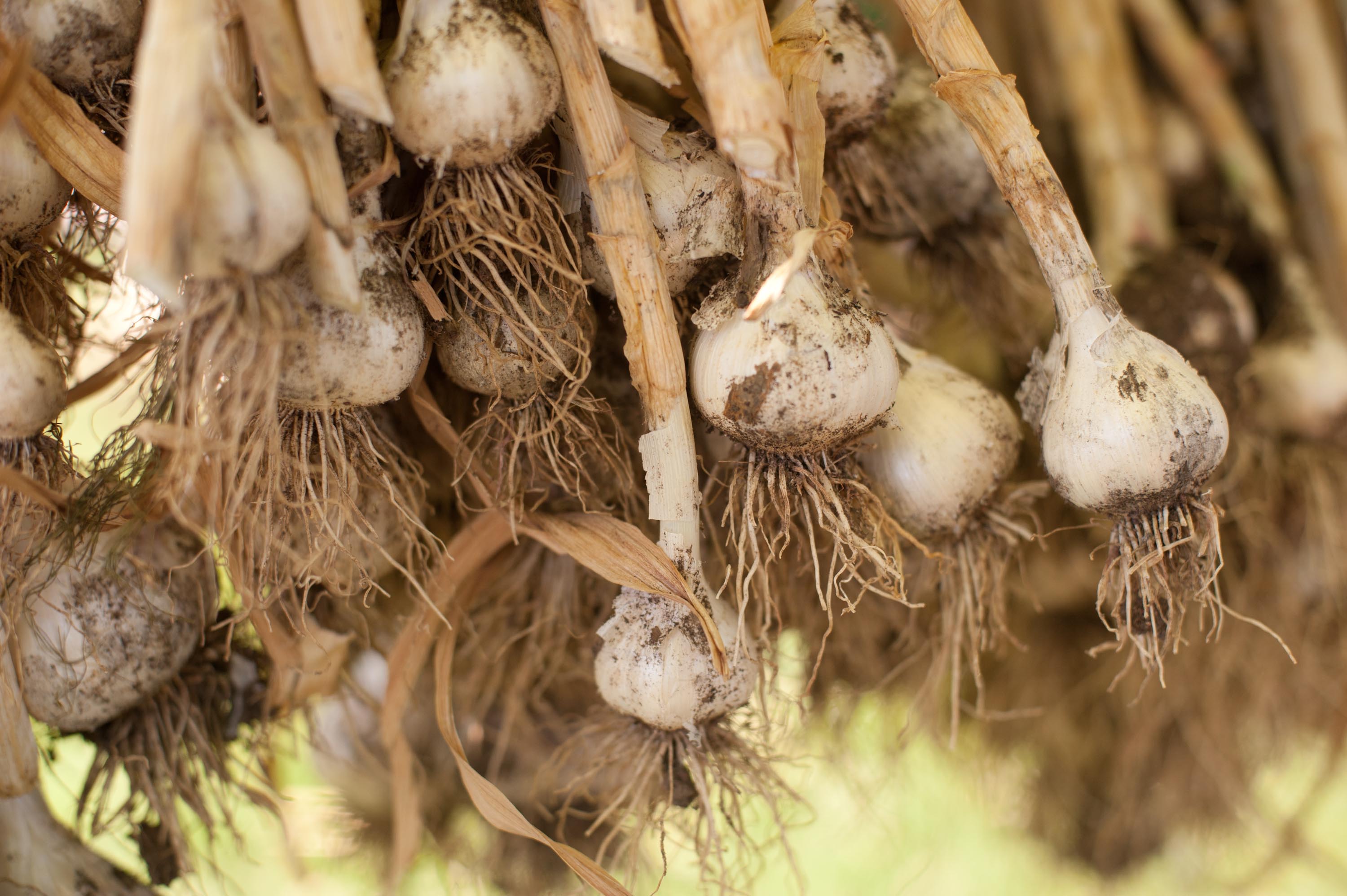
Garlic Hanging under a tree, out of the sun to dry.

October….My favorite month!  Why?  Because this is the month I wait for all year.  This is the month of GARLIC!  Who can live without garlic.  Not just to eat it, but to plant it, grow it, nurture it, watch it, harvest it and braid it!  With out a doubt Garlic IS my most loved crop.   When I first started growing garlic about 18 years ago, I planted just 3 or 4 varieties to start with, but since learning about garlic and the hundreds of varieties,  I have grown as many as 41 varieties at one time.  I have kept careful garlic “logs” of which does the best in my area, which does not and I am always looking for new and unusual types to grow every year.  The magical date this year for planting my garlic will be on October 12th.  Why then?  Because it’s a full moon.  I like to plant by the constellations when it comes to root crops and garlic especially.  This year I will be planting 31 varieties.  Now of course, planting about 150-250 cloves  of each variety, around 6,00 cloves total, will take some time and not all will be able to be planted on this date, but I really try to get them all in within a few days of the full moon.  I would love to plant acres if only I have the space!

Planting Garlic:

Over the years I have learned what makes the best tasting and the biggest garlic bulbs.  Good soil with good drainage is the first thing you need.  If you want good garlic and your soil is hard and compacted you may want to plant a cover crop and skip the first year to work your soil into a loamy haven.  You can add vermiculite or perlite to your soil to increase drainage.  Peat Moss will help retain nutrients and moisture.  AND… never forget to compost, compost, compost!  Yeah, I know I’ve never said that one!  Garlic likes a neutral pH range.  7.0 is best.  Garlic also likes nitrogen, so I always add Blood Meal or Feather Meal to the soil when planting.  Both work equally well.  10 pounds per 100 square foot.  With winter coming up the nitrogen will last until early spring (when the garlic starts to grow again) and at that time it will need another feeding of nitrogen.  Another thing that I add when planting is Greensand or Azomite.  I do not add any phosphorous.  As strange as it may seem, garlic does not respond to phosphorous, so why waste it.  Turn the soil over well and let it settle for a day before planting.  Pull the cloves apart no more than a day before planting.  If any earlier the garlic could dry out and wither.  I prepare a Kelp Meal tea to soak my cloves in.  It’s just 1/4 cup of dry Kelp Meal  steeped overnight with about 1 gallon of water.  1 hour before planting out I drop 1 tablespoon of baking soda and some Humic Acid into the kelp solution and soak the garlic for only an hour.  This basically awakens the garlic and the baking soda will help with any bad bacteria or fungus that may be present.  time to plant!  I like to have my garlic in its own space.  This is about the only thing that gets its own beds or rows.  Garlic does not like competition!  It does not like weeds either.  It’s not the only one!  Ha!  With the ground prepared and loose it’s easy to just push the garlic cloves into the soil about 2″ deep, pointed end up.  Make sure you mark your garlic varieties with a stake.  This is really important if you are growing many types.  If you live in a very cold climate you may want to cover your crop with some straw or leaves till spring time when it should be removed.  I skip this step here in zone 8.  Water your garlic if there is not chance of rainfall.  I find that I have to water a couple of times a month.  But I do live in a dry area.  The little cloves need to get their roots started to hold them into the ground if it freezes.  Planting garlic late in the season sometimes will result in the roots not getting hold and when the ground freezes it can heave up the cloves and damage or kill them.  Planting to early the garlic tops can get to big and get damaged by the freezing temperatures and cause the garlic to become smaller than it would have been.  So that is why October is the happy medium.  Around here our harvest time is mid-June, but further north they harvest towards the end of July.  So just giving a “date” won’t work of when to harvest.   There are some signs to look for.  Hardneck varieties will grow a scape.  This is a flower head trying to form.  When the scape first comes on, it will be curly.  Sometimes it will curl a couple of times.  Cut these scapes off and use them for garlic scape pesto or roast them.  They are delicious!  The more curls the better and more tender.  Once they start to straighten they become tough.  Anyway, leave just a couple of those scapes as an indicator of when your garlic is “ripe”.  Once they have straightened up, it’s time to harvest your hardback garlic.  What a great and easy sign!  With softneck garlic they don’t form a scape, so you have to watch the foliage.  Once the top 1/3 of the garlic leaves start to brown the time is near to harvest.  Some years I have found that I had to wait just a little longer, so I cheat.  I dig around the base to see if it has bulbed up.  This isn’t illegal!  You don’t want to wait to long to harvest because the paper around the garlic will start to decompose and then the garlic will not keep well.  Be careful to not bruise the garlic.  Bruised garlic never keeps as long.  Lift them out with a digging fork and hang to dry out of the sun.  The sun will scald the garlic making them unusable.  Soft neck varieties can keep for up to 10 months, whereas hardneck only keep up to 6 months.  Save your biggest bulbs for next October’s plantings.  Store them in a cool place, but not the refrigerator.  Braiding softneck varieties and hanging seems to help keep them.  I always have 3 or 4 braids in my kitchen.  Just pluck one-off the bottom as needed.  The braid will hold it’s shape.  I store hardneck varieties in the cool pantry and use them first as they don’t keep as long.

Some of my favorite garlic varieties that I will always grow in my garden are Applegate, Kettle River Giant, Inchelium Red, Siberian, Russian Red Toch, Duganskij, Music, Yugoslavian Red, Metechi, Kazakhstan, Burgundy and not to mention so many others.    5 new varieties this year that I am eagerly awaiting their arrival.  Elephant Garlic is another variety that I grow because it’s so huge and such a delight to lift up in the summer from the ground.  Technically Elephant Garlic is not a true garlic.  It is in the leek family, but I treat it the same anyway.  Don’t limit yourself with just one variety.  Buy from reputable companies and buy early, because garlic goes fast!

Anybody can grow garlic, but growing GREAT garlic is over the top!

Kelp MealBlood MealFeather Meal, Azomite, Greensand, Humic Acid (Humate Soil Conditioner)
1 Comment

Filed under Gardening

Growing and Using Arugula

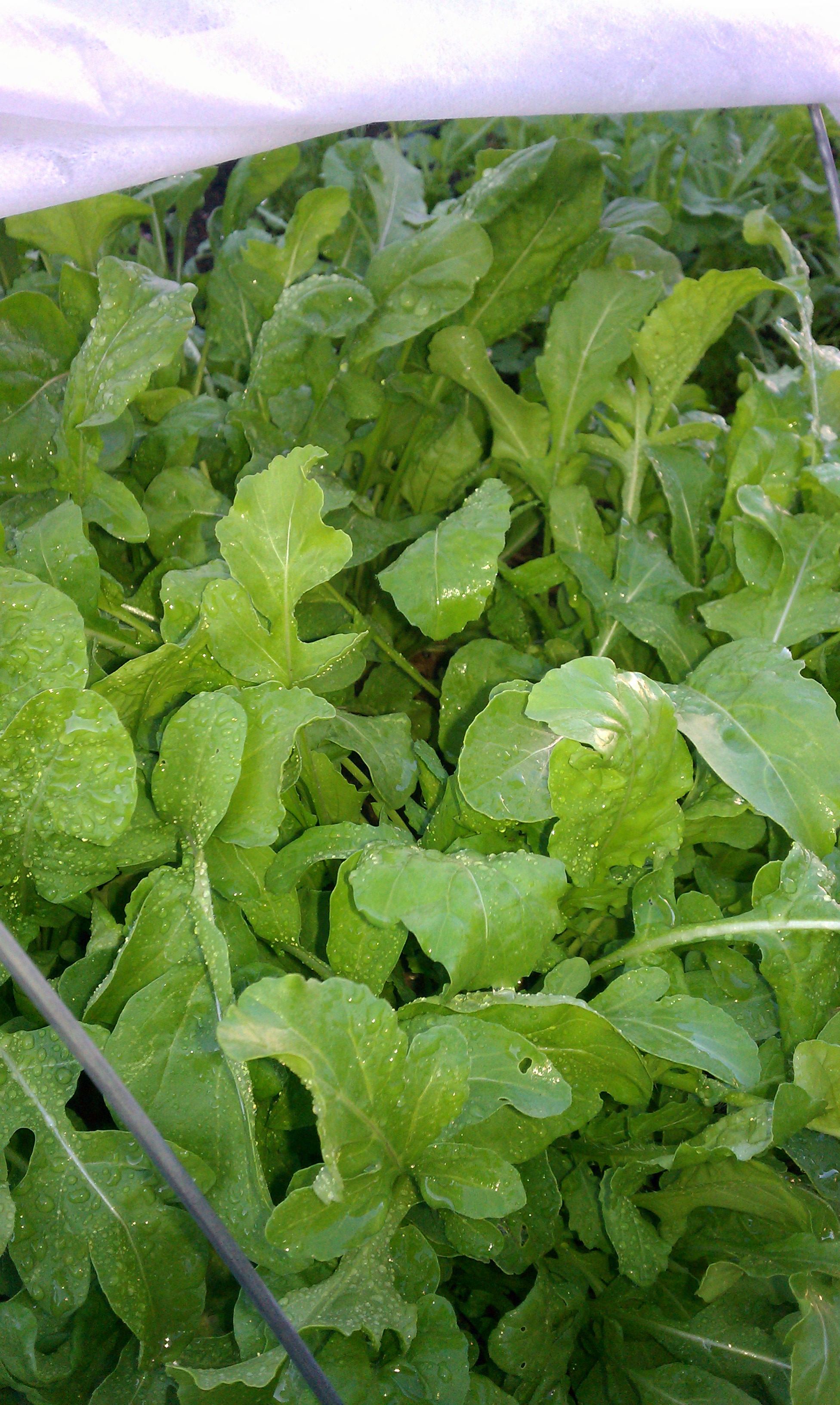
Arugula Greens in the garden

For years I have grown arugula in my garden, not for our consumption, but for the ease of growing it for market, the beauty in the garden and the beneficials insects it attracts when in bloom.  Not until recently I have learned to love the flavor and it’s adversity in the kitchen.  Arugula has a somewhat peppery taste with a “kick”.  I prefer to pick it when it is very young and tender.  The small leaves have much less of a bite then when they become more mature.  Once starts going to seed, I use the flowers to add a great peppery flavor to green salads or topped onto baked potatoes.  

Growing arugula is a breeze.  It likes cooler weather, so spring and fall crops are great for growing this straight forward green.   The small seeds can either be planted in a row or scattered across a small bed. If planted in a bed, dividing the bed into quarters might be considered if you want to plant successive crops that will give you a supply of fresh arugula well into summer, and perhaps beyond for cooler climates.  However you distribute the seeds, cover them with 1/4″ of fine soil and keep the soil moist until the seeds germinate, which usually will happen in a few days or about a week.  You will be surprised how fast they show themselves peeking out of the ground!  Once the arugula plants have reached a height of about an inch you can thin them out, spacing the seedlings 3′ to 4′ apart if you like. Some gardeners, including myself don’t bother to thin arugula, simply harvesting the young plants, and over time, thinning out the plants enough so that some seedlings will grow to their full size. If it is the very young leaves you want, growing arugula in pots or planters may work best for you. Arugula will keep in the refrigerator for a few days.  It does not keep long.  So pick only what you need.  I keep mine cut back to continue the new growth of new leaves.  Anything I don’t use right away I give to the chickens which love the treat of fresh greens from the garden. 

Growing Arugula for microgreens is another alternative which can be done indoors near a window all year-long.  Arugula is probably one of the easiest microgreens I have grown.  I use a small planting try (12×12), and fill it 3/4 full with a really good organic potting soil, Happy Frog is my favorite, moisten the soil, sprinkle arugula seeds over the soil rather thick,  then place a couple of moist paper towels right over the seeds.  Keep the paper towels moist, but not wet or mold will form.  You can use a spray bottle for this.  Once the seeds have germinated remove the paper towels.  Once your greens have grown to about one inch, it’s time to harvest.  A true microgreen is harvested when only the first two (cotyledon) leaves appear.  These little microgreens have such a great strong flavor and add an amazing zest when sprinkled on top of soups, salads or added to sandwiches.  Once you have cut back your arugula microgreens, they will not grow back.  You have cut their life line!  Dump the used soil into the compost and start fresh every time.  By the way…….You can grow any microgreen this way.

Super Arugula Recipe:  Green Couscous

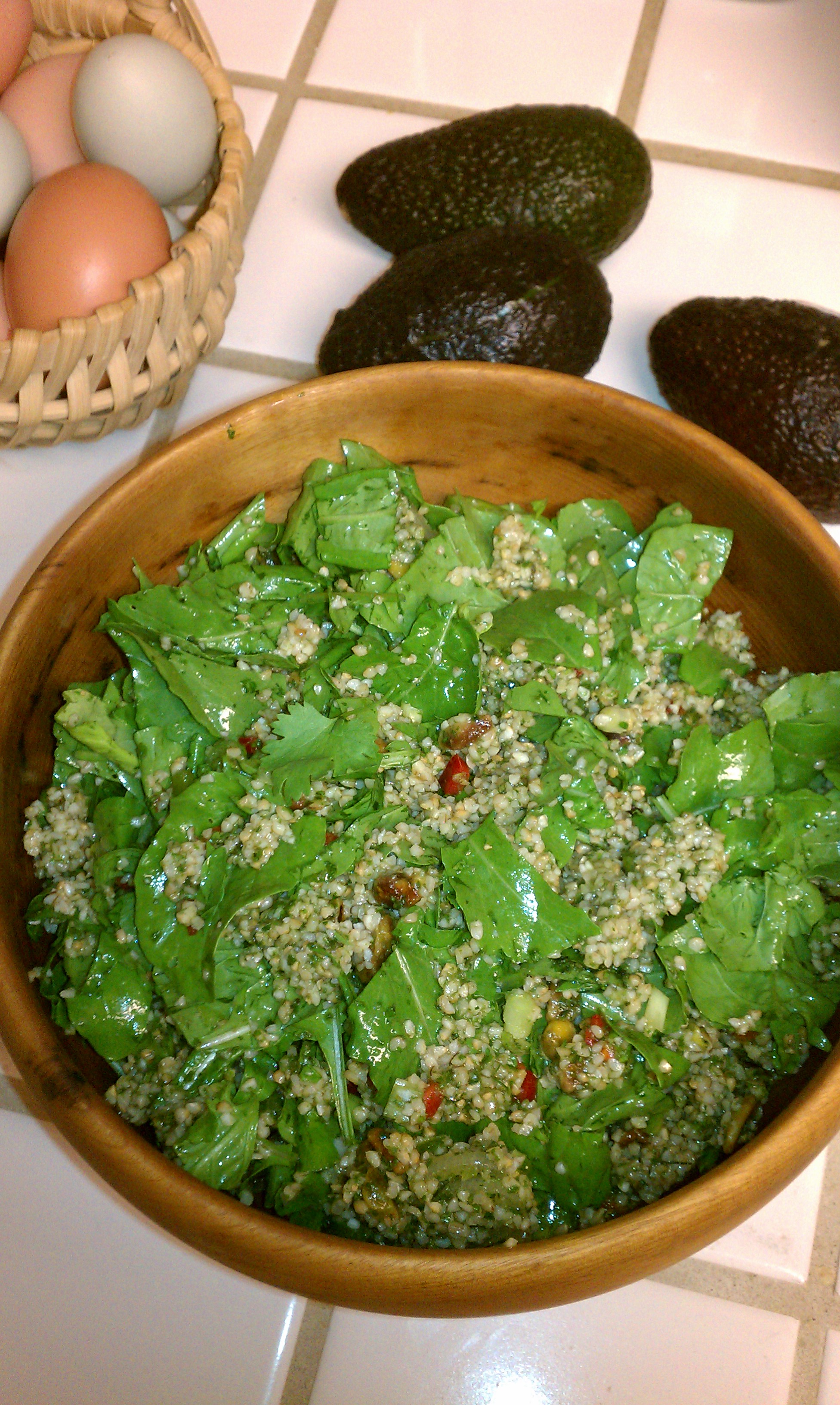
Green Couscous Arugula Salad

Place 1 cup couscous in a large bowl and cover with 3/4 cup boiling water or vegetable stock, cover bowl with plastic wrap and leave for 10 minutes.  Meanwhile, fry 1 small onion or 1 large shallot in 1 tablespoon of olive oil until golden and completely soft.  Add 1/4 tsp of salt and 1/4 tsp of ground cumin.  Mix with couscous.  Make a herb paste by adding the following ingredients into a food processor. 1/3 cup chopped parsley, 1 cup chopped cilantro, 2 tbsp chopped dill, 2 tbsp chopped mint and 6 tbsp olive oil.  Process until smooth.  Mix into the couscous.  Now add 1/2 cup unsalted pistachios that have been toasted and chopped roughly, 3 green onions finely sliced, 1 jalapeno pepper finely diced, and 1 1/4 cup of arugula fresh from the garden that has been chopped into about 1 inch pieces.  Mix together.  You can add a little olive oil if the salad seems to dry.  You can add some feta cheese if you like.  Serve at room temperature.  Enjoy

Happy Frog Potting Soil

1 Comment

Filed under Gardening, Recipes from the Garden

Not Growing a Fall Garden? Plant Cover Crops!

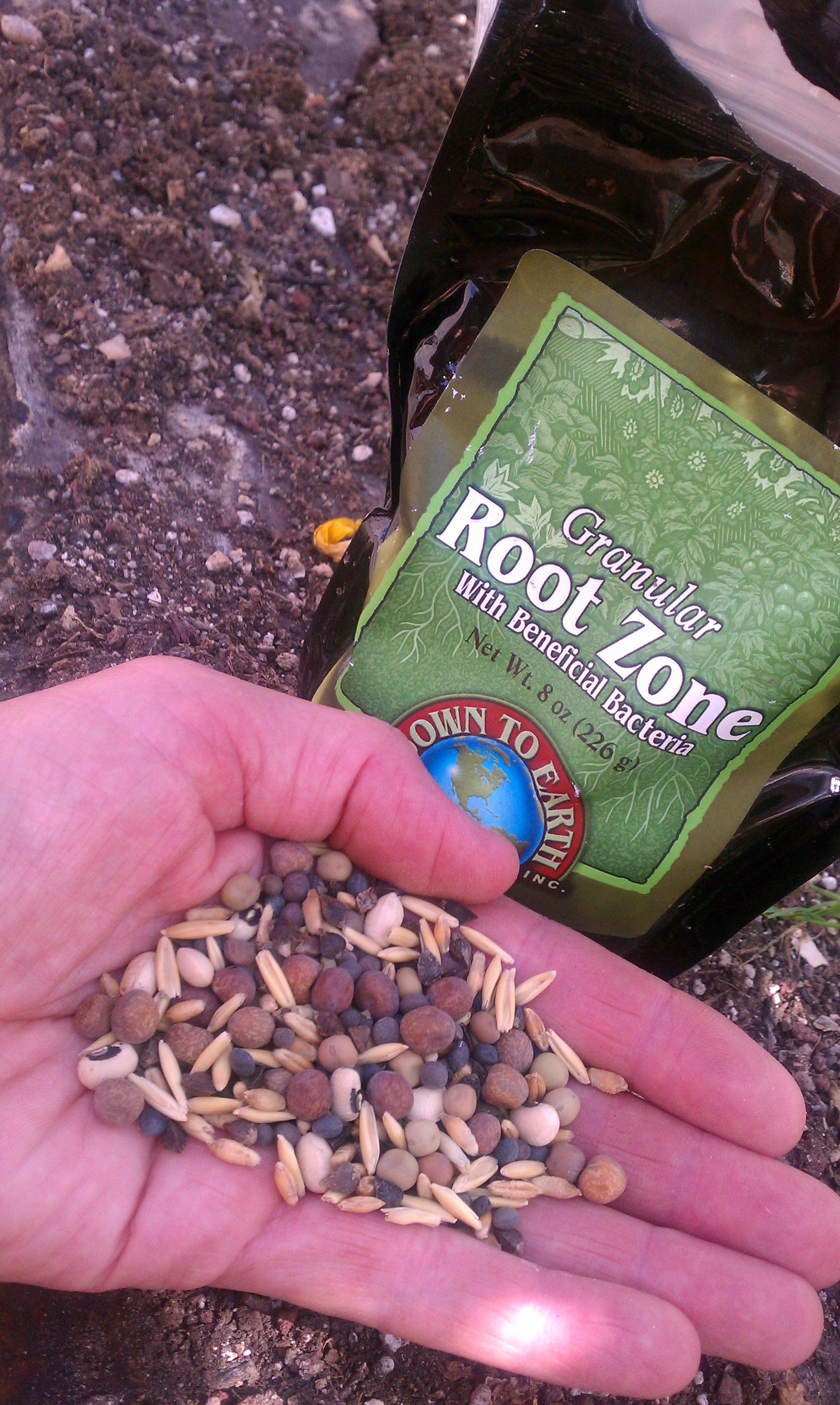
Cover Crop Seeds & Beneficial Bacteria

Cover crops, green manure, whatever you call it, fall is such a choice time to plant them.  Cover crops add nutrients, tilth, organic matter, suppress weeds, improve soil, prevent erosion, break up compacted soil and add microbial activity.  With all that, why wouldn’t you plant a cover crop this fall?  Besides, it sure is more appealing to look a lush patch of green than fallow ground.  Oh did I mention the beneficials it attracts?  Cover crops can be a mix of plants or just one variety.  Common crops are vetch, alfalfa, cow pes, fava beans, oats, clovers,  and field peas not to mention so many others.  I personally like a mix and always include legumes.   Legumes “fix nitrogen” from the air.  The roots of legumes basically pull nitrogen gas out of the air and store it in their plant tissues.  How easy it that?  Some cover crops suppress weeds chemically sort a speak, by relaxing compounds that help prevent the germination or growth of weed seeds.  Some of these crops are wheat, barley, hairy vetch, red clover and sorghum.  Deep rooted cover crops also bring up nutrients from the subsoil, making them more available in the top 12 inches of soil surface to succeeding crops.  Clover is known for this.   Cover crops can add to an acre of soil the equivalent of 10 tons of fresh manure matter.  WOW!  Maybe you only have a small garden and think cover crops are only for large farmers….Not so.  Cover crops will do the same thing to small gardens that they do to large farms.  Now have I convinced you to plant a cover crop yet? 

Planting cover crops is a one of the easiest crops you can plant.  

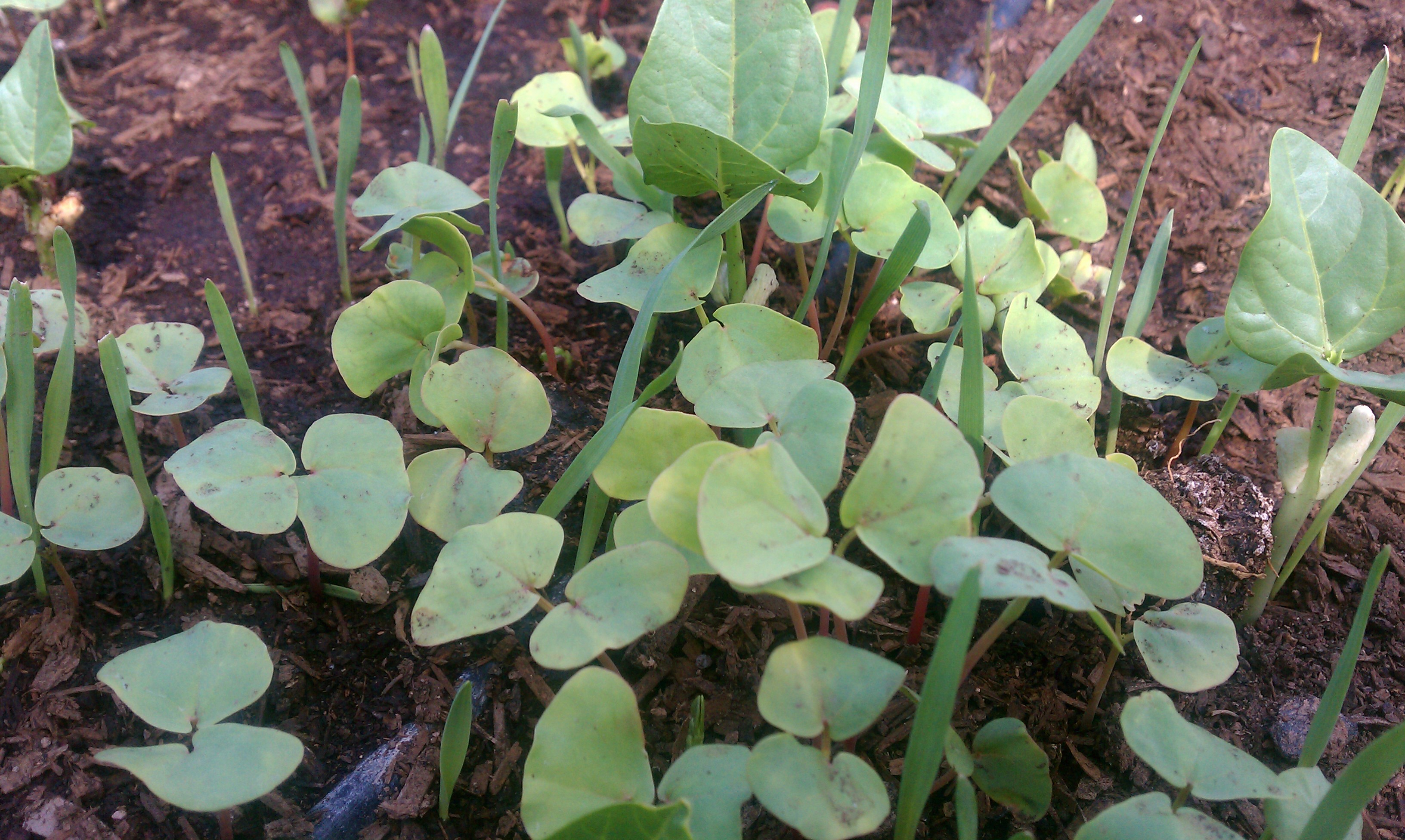
Cover Crops Emerging From The Soil After Just 4 Days

I like fall because that is the only time I have space in my garden for them.  Spring works great too!  Clear out old debris, toss diseased plants in the trash and compost the rest.  To give your cover crop seeds a boost, add a Beneficial Bacteria with your seeds just before planting.  Rake your area over and broadcast your seeds.  Work them in with a rake, hoe or your hand and tamp down (not by walking on them).  I like to cover mine with a layer of compost.   Water in.  Keep soil moist till seeds have germinated.  This is critical!  Then cut back on watering with fewer waterings as the season get cooler.  If your area is dry and no rainfall is in the forecast check the soil to see if you will need to give them a drink to keep them lush and green through the fall and winter. 

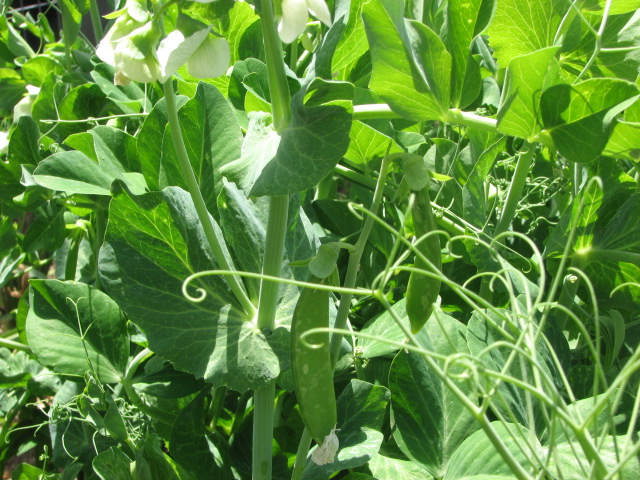
Legumes "Fix Nitrogen" in the soil.

Let the crops grow throughout the season.  Depending on where you live will depend on how long before your crop is ready.  Once flowers have emerged, it’s time to cut them down.  This is when they have the largest amounts of nutrients in them.  If you have a large area, you can use a mower or weed whacker.  Leave your cover crops sit for a week or so to dry out and then work them into the soil.  Now you are adding all those nutrients into the ground that your plants worked so hard to get for you!  Wait a month before planting.  This gives them some time to break down and feed your soil!   Microbial life is going crazy in your soil now.  Oh happy day! Every year you plant cover crops the better your soil will get.  One year is great, but if you continue these practices, each year you will see more and more amazing results!  Remember…………..Feed the Earth, That Feeds the Plants, That Feed YOU!  Do it organically!  Just do it!

Beneficial Bacteria

2 Comments

Filed under Gardening

Fall Gardening

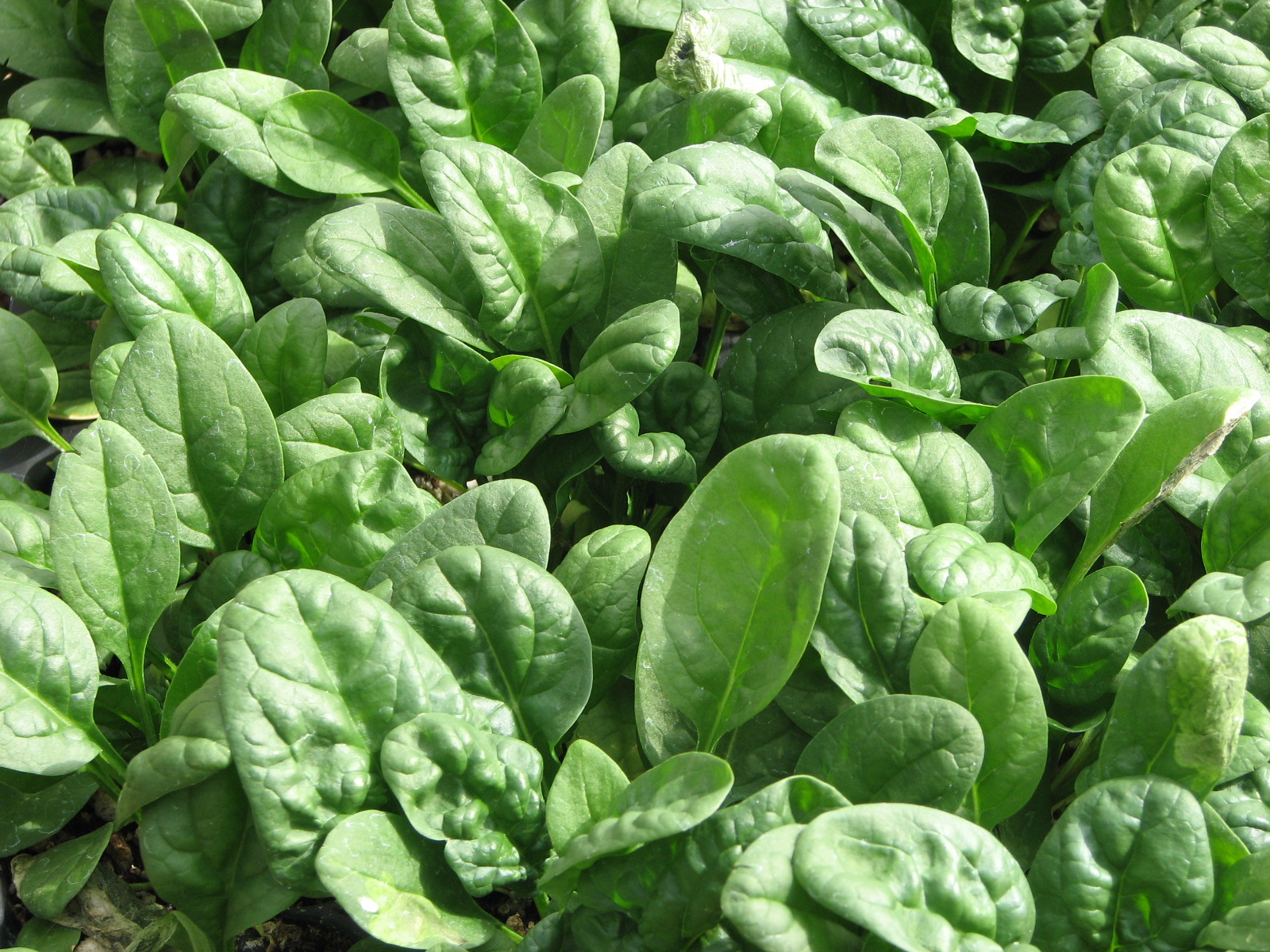
Fall Spinach, 2010

Wow, it’s hot out there and thinking about planting a Fall garden just doesn’t seem logical!  Well starting a fall garden in most areas take place just after the Summer solstice.  This is the time to start your fall transplants from seeds indoors or in a cooler greenhouse.  Starts such as, broccoli, cabbages, cauliflower, Brussel sprouts and kohlrabi.  These are planted late summer to be ready early fall. To determine when to start planting, find out the first average frost date, count back the number of days from the first frost date to the days to maturity of the veggie, which can be found on your seed packets.  I like to add a week, just in case.  Most everything you plant in the early spring you can plant in the fall.  Many vegetables flavor improves when nipped by a light frost.  Don’t forget about the root crops.  Carrots, beets, radishes, rutabagas and turnips.  Roots crops can be kept in the ground through the winter with a covering of straw  or mulch in milder climates.  I love to store root crops in the ground.  They are fresher, and no inside storage room needed! 

A few things to remember when planting in the fall is it is warm, warm enough that your plants and seeds will need watering more often. Much more often than in the spring!   Seeds won’t germinate if you soil surface stays dry more than a few hours.  I have to water several times a day to keep the soil moist here in Southern Utah.   When planting lettuce seeds you can plant and cover with a row cover right on top of the surface.  This will keep the soil cooler, moister and shade the seeds to help them to germinate.  You can water right over the top of row cover until the seeds have germinated and up about 1/2″.  This will also help to keep the seeds in place.  Once seeds have germinated you can cut back on watering and remove the cover in the evening time to prevent sun scorch.  This same cover can be used again when a freeze is expected.  Soil should stay moist, but not soggy.  When planting seeds in the fall, plant them just a little deeper than you would during the spring.  When planting in the spring the soil is cooler and the further down you go, the cooler the soil, the slower the germination.  Sometimes if planted to deep seeds can rot.  Fall soil is warmer, so planting just a little deeper will ensure the soil is cooler and  more moisture is there to help with the germination process.   Take peas.  In the spring I plant only 1/2″ deep and in the fall I plant a full 1″ deep.  The surface dries out very quickly in warm weather.   When transplanting your new tender starts out, do it in the evening.  If planted in the morning  they are more likely to wilt and be stressed.  Plants that have been stressed never produce to their potential. 

Planting Brassicas (broccoli, cabbage, Brussel sprouts, cauliflower):  When planting Brassicas, amend the soil with plenty of compost.  If your starts are a little spindly, plant them one inch deeper then the original soil level.  Work about 2 tablespoons of all-purpose fertilizer in the hole.  Make sure you mix the fertilizer with the soil.  You don’t want the fertilizer to be in direct contact with the roots.  One thing that I am always doing is experimenting in the garden.  Sometimes good and sometimes not so good.  But I never consider it a mistake, only a lesson learned.  Last year I used 1/2 teaspoon of granular mycorrhizal fungi  in each planting hole.  The results were amazing.  Twice the size of broccoli heads on the ones I used the michorizae .  This was side by side plantings in the same bed.  I will be using this on all my Brassica crops from now on.  All  Brassica benefit from a firm soil, so heel (firm the soil in around the plants) the plants in well.  Victorian master gardeners check whether plants are properly planted by gently tugging a leaf.  If it tears, the plants are nice and firm, if the plant pulls out of the ground….replant.  Cauliflowers are temperamental.  They do best in fertile soil, humus rich, moisture-retentive, free-draining soil in a sheltered, sunny part of the garden.  Cauliflowers need regular watering.  They are totally unforgiving, and you can allow them to dry out!  Kale is such a great crop to grow in the fall, because of its ease to grow and ability to hold over through the winter.  And if covered with row cover it will continue to grow all winter long in milder climates like mine.  Kohlrabi looks and tastes similar to a turnip (only better).  The bulbous edible portion grows just above the soil line.  I have used the bulb in place of cabbage for making cole slaw.  Fabulous!  Cabbages are heavy feeders that require fertile soil rich in organic matter and consistent moisture, especially close to harvest to prevent cracking.  Harvest when sizable and tight when squeezed.  Brussel sprouts should only be grown in milder climates in the fall and covered through the winter.  It takes about 3 months before sprouts first appear.  They take patience.  But then again, that is the whole gardening experience……….

Fall planting can be one of the most rewarding crops.  You don’t have near the bug or disease problems that you usually do in the spring and the weeds have slowed to a milder pace.  Fall is my absolute most favorite time of the year.  Some say it’s the end of the growing season, I call it just the beginning of another growing season.  If you haven’t grown a fall garden before, give it a try, enjoy the harvest!

All Purpose Fertilizer,  Mycorrhizal Fungi

Leave a comment

Filed under Gardening