Author Archives: Ali

Ali's avatar

About Ali

Gardening is a peaceful place for me. I have loved it since I was a very young child. I want to share with you my journey in my small half acre lot in the middle of our city what you can achieve, such as gowing a garden, orcharding, caring for bees, goats and poultry. Going back to the simple life. Using what you have to the best of your ability.

Putting Your Garden to Bed

Fall garden clean up is essential to the long-term health of your garden.  If you get your garden ready for winter properly, it will make a big difference next spring.  You won’t be dealing clean-up, catch-up and diseases, you will be enjoying the simple pleasures of planting early and enjoying the spring bulbs. 

Typically you want to start getting your garden ready for winter right after the first frost has killed off most of your tender veggies.  If your garden plants are no longer producing and earlier clean up can certainly be done.  My tomatoes and squash are no longer producing and there are no green one left on the vine.  So out they go today!
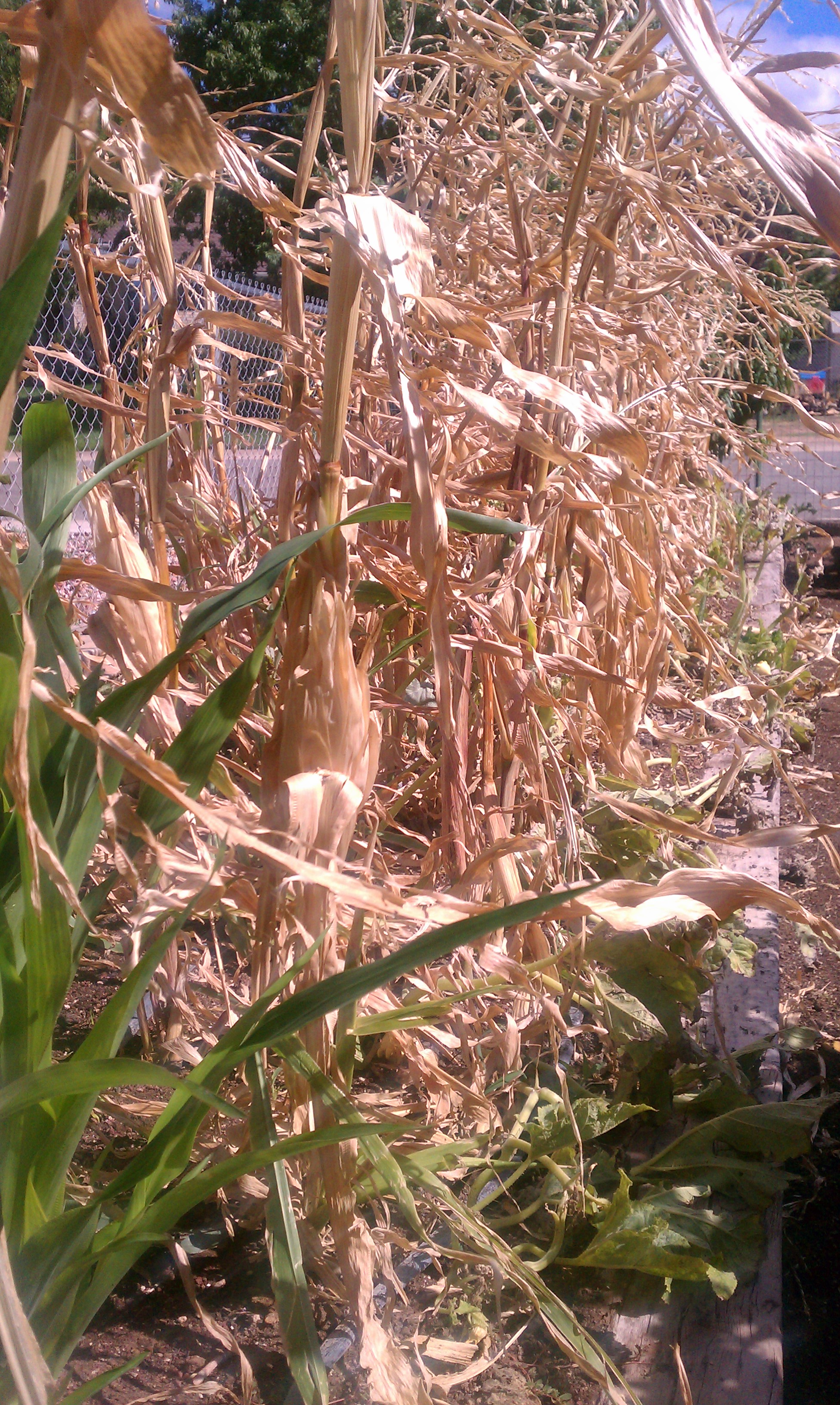
old corn should be removed before winter months

Pull up, spray off and put away any cages or stakes used in the garden.  Remove all of the spent plant material from the garden.  Dead plants, old fruit and vegetables and any diseased plants should be removed from the garden beds and disposed of.  If the spent plant material was healthy, it can be composted.  If any signs of disease, it should be disposed of either in the trash or by being burned.  You can risk re-infecting disease to your garden if you compost diseased plant material.  Rake any left over debris.  If left in the garden, insects and disease can overwinter in it.  I like to till to soil.  You can work some fall leaves into the vegetable garden soil at this time and they will break down over the winter.   Don’t just layer over the top and leave for the winter months.  Till it in!  This is the time to spread compost, composted manure or other fertilizers onto the vegetable beds.  By doing this now your soil will be looser and easier to work in the early spring months.  You can also plant a cover crop for the winter which will add tilth and fertility to your soil for future plantings.

Continue to water trees until the ground freezes if you haven’t receive fall rains.  Especially evergreens. 

Wrap the base of young fig trees with burlap.  Young trees can die back completely if the winter is extra cold.  I like to wrap loosely and fill with straw or leaves as an extra insulation.  Don’t uncover until ALL chances of frost are gone in the spring.

Rake leaves often.  The work can seem daunting if you only rake once.  A little here and there is certainly a lot more enjoyable.  Besides if leaves are left on the lawn to long, they can get slimy, smoother and weaken the  grass.  You can run your mower over the to break them down if done often or catch them in the bag and use the shredded leaves as a winter mulch in perennial  beds or just add them to the compost pile.  They are great for that!  Leaves that haven’t been shredded will take longer to break down and they can repel water and stay dry for years.  So shred them if possible either with a chipper shredder or running your mower over them.  Make leaf mould simply by piling shredded leaves with a sprinkle of water in layers and left to sit for several months.  Of course turning often and adding moisture will break them down faster.

Apply fertilizer to your lawn in the fall encourages winter hardiness and promotes quick greening in the spring.  I really like using Cotton Seed Meal for this.

Do one last weeding and discard any weeds that have weed seeds.  Any seeds left will germinate next year and come back to haunt you.  One crabgrass plant has the potential of producing 10,000 seeds in a season!  To bad they aren’t tasty!

Leave perennial seed heads for winter food for the birds

In the perennial gardens I like to leave some seed heads of my Rudbeckia, Echinacea and other perennials for winter interest and feeding the birds.  I do however,remove them after the seeds are gone.  This gives me a little sun and  time in the garden on warmer winter days.

Pull out all annuals that have been hit by frost and toss into the compost pile. 

Plant spring bulbs before the ground freezes.  Put a tablespoon of Bone Meal into the hole where the bulb is going.

Don’t cut back roses back yet.  This should be done early spring.

Preparing your garden, especially the vegetable garden will help your garden stay healthy from year to year!

1 Comment

Filed under Gardening

Cooler Weather Approaching

Ahhh Fall!  What’s not to enjoy?  Isn’t this the best season of all?  I enjoy fall time as the leaves begin to turn, weather  becomes cool and pleasant, mornings are crisp and the fall rains start to moisten the ground.  Gardening chores are at a low roar. Casper the Cat enjoys when I start to slow down and spend more time writing my blogs, studying gardening books and planning next years garden as he settles in to add some assistance by either sleeping on the keyboard or in the middle of the my book.  The hummingbirds are gone except an Annas hummingbird that stays over winter here on our little farm.  The chicken egg production is almost up to 100 percent.  Fall crops are just starting to set and just a few weeks out for fresh new greens.  It’s time to harvest the sweet potato crop before it freezes.  Garlic, leeks and shallots will be planted this month.  Pretty pansies, snaps and chrysanthemums are blooming.   Pumpkins, pumpkins, pumpkins…….  And the smell and sounds of fall!  Wouldn’t you agree?  This has to be the best time of year!

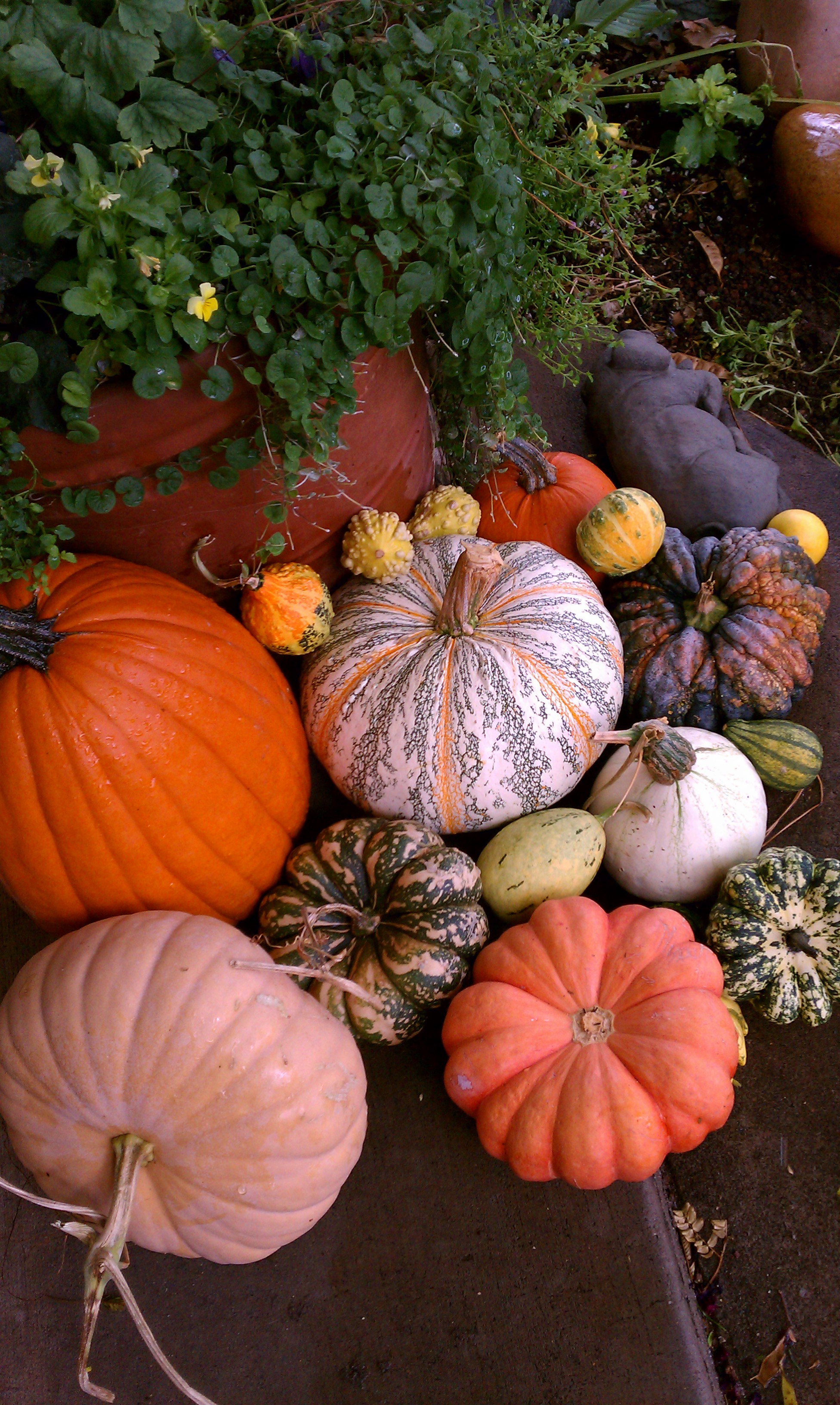
This is the time of year I love to cook and create foods that make you feel good inside.  Pumpkins are abundant during autumn and I love to decorate with them as well as cook with them.  Heirloom pumpkins are really just a pretty squash that taste great.  If you didn’t grow any this year check out your local farmers market and grab a dozen or so!  They are loaded with vitamins and minerals and they last for several months in cool temps.

Here is a simple and great side dish perfect for fall! 

Crusted Pumpkin Wedges

Ingredients: 1 1/2 lbs pumpkin, 1/2 freshly grated parmesan cheese, 2 T dried breadcrumbs, 6 T finely chopped fresh parsley, 1 1/2 tsp finely chopped thyme, grated zest of 2 large lemons, 2 large garlic cloves crushed, salt, white pepper, 1/4 cup olive oil, 1/2 cup sour cream, 1 T chopped dill. 

Preheat oven to 375 degrees.  

Cut pumpkin into 3/8 inch thick slices and lay them flat on a baking sheet that has been lined with parchment paper.  Mix together parmesan, breadcrumbs, parsley, thyme, half the lemon zest, garlic, and a small amount of salt and pepper.  Brush pumpkin with the olive oil and sprinkle with the crust mix making sure to cover all the pumpkin.  Pat the mix down to hold it in place.  Place the pan in the oven and roast for about 30 minutes or until tender.  If crust darkens too much you can tent with foil.  Mix sour cream with the dill and some salt and pepper.  Serve pumpkin warm with a sprinkle of remaining lemon zest and a dollop of sour cream on the side.

3 Comments

Filed under Casper the Cat, Life on the Farm, Recipes from the Garden

Chard All Season Long

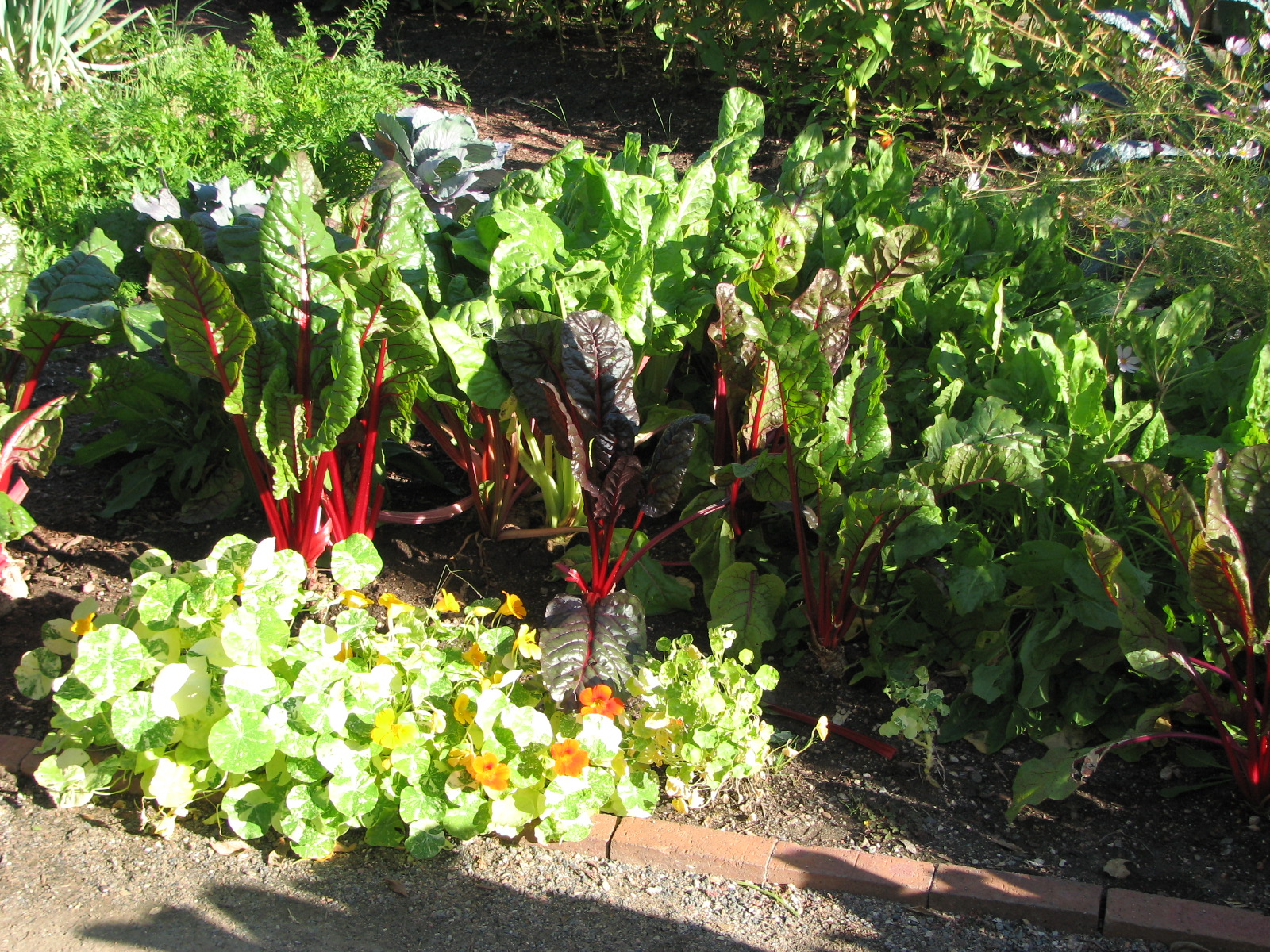
Chard holds a special place in my garden for its beauty, generous yields, and undemanding ways.  The tall sprays of deeply crinkled leaves and colorful, broad stalks are eye-catching, especially when grown among zinnias or other annuals.  Chard can make a summer garden look lush, even when the tomatoes are devastated and the beans are disappearing under hordes of Mexican bean beetles.  Unlike many greens, chard will produce steadily through the hottest days of summer and the first autumn frosts.

Chard is a biennial and a member of the beet family.  Although it will overwinter in most gardens, it will set seed during its second year, so it’s best to plant a new crop each year.  Sow chard seeds 1/2 inch deep directly into the ground when spring air turns warm or in the early fall.  In my Southern Utah area it’s around mid March for spring and late August for fall.  Chard started in pots are never as vigorous as those plants started directly in the ground.  Chard prefers soil that have been enriched with compost and a little nitrogen.  When seedlings are about 3 inches tall thin them to 6-12 inches apart.  Rainbow chard can be on the closer side whereas the stalky white chard need more room.  Chard needs regular watering when plants are young to make for a vigorous mature plant.  Once they are about a foot tall they are far more tolerant of dry conditions and seem to produce well whether pampered or neglected.  When summer hits a good mulching will undoubtedly help with drought.  Not to many pests seems to bother chard.  Leaf miners, slugs and aphids will sometimes attack.  I use a neem spray to knock out the insects and watch for slugs.  Pick the outer stalks, and new ones will emerge.  I use tiny chard leaves in salads, where their sweet flavor comes through.  Larger leaves are best when lightly steamed, and can be substituted for spinach in most recipes.  Chard stalks can be stemmed or stir-fried for a mild flavor and pleasant crunch.

Use chard as an accent among other vegetables or as a contrast to brightly colored annuals.  Pop a few Rainbow Chard in your flower beds or pots for added color, providing a bright, midsummer display.  Edible Landscape!

Leave a comment

Filed under Gardening

Growing Great Garlic

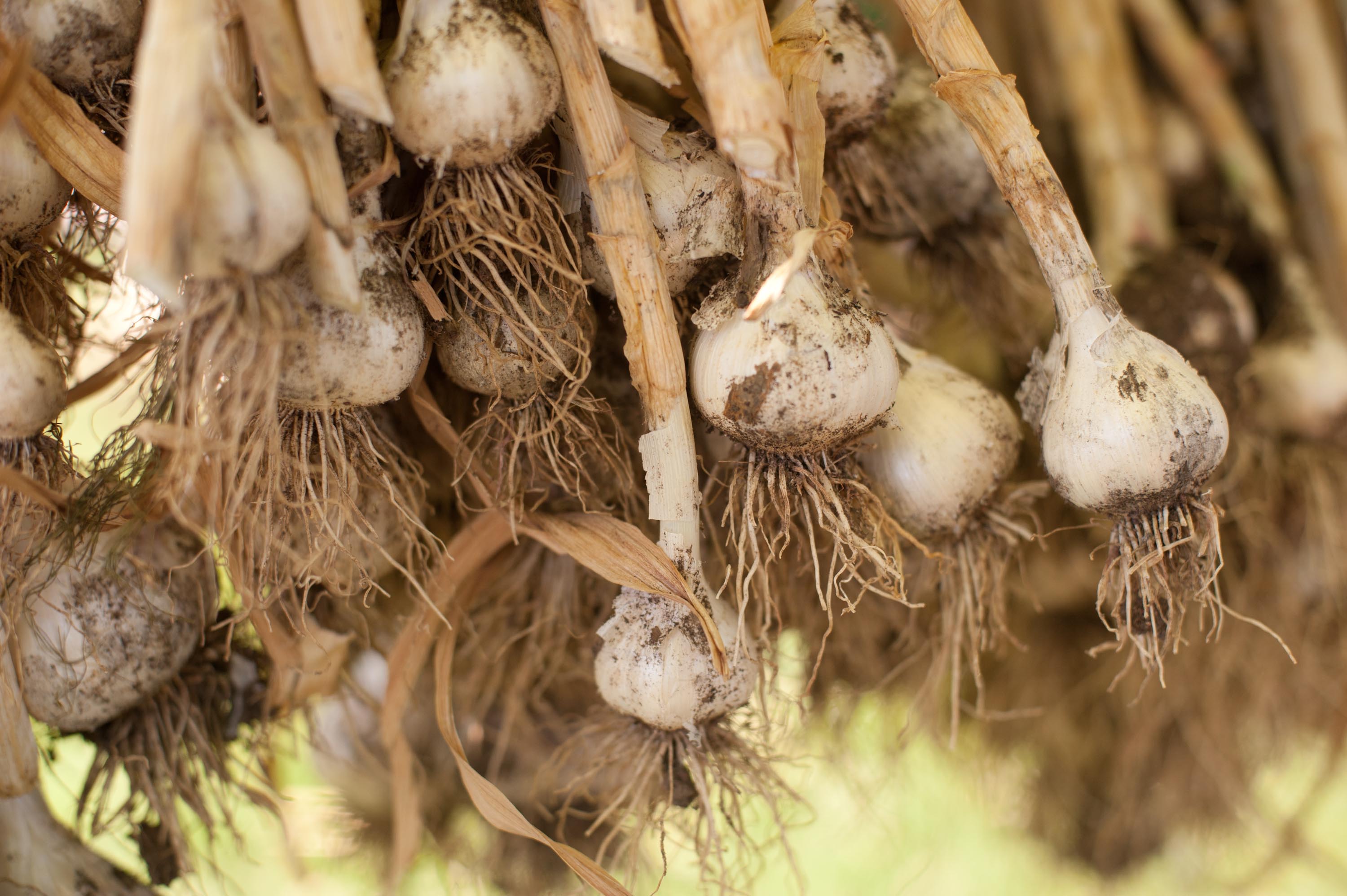
Garlic Hanging under a tree, out of the sun to dry.

October….My favorite month!  Why?  Because this is the month I wait for all year.  This is the month of GARLIC!  Who can live without garlic.  Not just to eat it, but to plant it, grow it, nurture it, watch it, harvest it and braid it!  With out a doubt Garlic IS my most loved crop.   When I first started growing garlic about 18 years ago, I planted just 3 or 4 varieties to start with, but since learning about garlic and the hundreds of varieties,  I have grown as many as 41 varieties at one time.  I have kept careful garlic “logs” of which does the best in my area, which does not and I am always looking for new and unusual types to grow every year.  The magical date this year for planting my garlic will be on October 12th.  Why then?  Because it’s a full moon.  I like to plant by the constellations when it comes to root crops and garlic especially.  This year I will be planting 31 varieties.  Now of course, planting about 150-250 cloves  of each variety, around 6,00 cloves total, will take some time and not all will be able to be planted on this date, but I really try to get them all in within a few days of the full moon.  I would love to plant acres if only I have the space!

Planting Garlic:

Over the years I have learned what makes the best tasting and the biggest garlic bulbs.  Good soil with good drainage is the first thing you need.  If you want good garlic and your soil is hard and compacted you may want to plant a cover crop and skip the first year to work your soil into a loamy haven.  You can add vermiculite or perlite to your soil to increase drainage.  Peat Moss will help retain nutrients and moisture.  AND… never forget to compost, compost, compost!  Yeah, I know I’ve never said that one!  Garlic likes a neutral pH range.  7.0 is best.  Garlic also likes nitrogen, so I always add Blood Meal or Feather Meal to the soil when planting.  Both work equally well.  10 pounds per 100 square foot.  With winter coming up the nitrogen will last until early spring (when the garlic starts to grow again) and at that time it will need another feeding of nitrogen.  Another thing that I add when planting is Greensand or Azomite.  I do not add any phosphorous.  As strange as it may seem, garlic does not respond to phosphorous, so why waste it.  Turn the soil over well and let it settle for a day before planting.  Pull the cloves apart no more than a day before planting.  If any earlier the garlic could dry out and wither.  I prepare a Kelp Meal tea to soak my cloves in.  It’s just 1/4 cup of dry Kelp Meal  steeped overnight with about 1 gallon of water.  1 hour before planting out I drop 1 tablespoon of baking soda and some Humic Acid into the kelp solution and soak the garlic for only an hour.  This basically awakens the garlic and the baking soda will help with any bad bacteria or fungus that may be present.  time to plant!  I like to have my garlic in its own space.  This is about the only thing that gets its own beds or rows.  Garlic does not like competition!  It does not like weeds either.  It’s not the only one!  Ha!  With the ground prepared and loose it’s easy to just push the garlic cloves into the soil about 2″ deep, pointed end up.  Make sure you mark your garlic varieties with a stake.  This is really important if you are growing many types.  If you live in a very cold climate you may want to cover your crop with some straw or leaves till spring time when it should be removed.  I skip this step here in zone 8.  Water your garlic if there is not chance of rainfall.  I find that I have to water a couple of times a month.  But I do live in a dry area.  The little cloves need to get their roots started to hold them into the ground if it freezes.  Planting garlic late in the season sometimes will result in the roots not getting hold and when the ground freezes it can heave up the cloves and damage or kill them.  Planting to early the garlic tops can get to big and get damaged by the freezing temperatures and cause the garlic to become smaller than it would have been.  So that is why October is the happy medium.  Around here our harvest time is mid-June, but further north they harvest towards the end of July.  So just giving a “date” won’t work of when to harvest.   There are some signs to look for.  Hardneck varieties will grow a scape.  This is a flower head trying to form.  When the scape first comes on, it will be curly.  Sometimes it will curl a couple of times.  Cut these scapes off and use them for garlic scape pesto or roast them.  They are delicious!  The more curls the better and more tender.  Once they start to straighten they become tough.  Anyway, leave just a couple of those scapes as an indicator of when your garlic is “ripe”.  Once they have straightened up, it’s time to harvest your hardback garlic.  What a great and easy sign!  With softneck garlic they don’t form a scape, so you have to watch the foliage.  Once the top 1/3 of the garlic leaves start to brown the time is near to harvest.  Some years I have found that I had to wait just a little longer, so I cheat.  I dig around the base to see if it has bulbed up.  This isn’t illegal!  You don’t want to wait to long to harvest because the paper around the garlic will start to decompose and then the garlic will not keep well.  Be careful to not bruise the garlic.  Bruised garlic never keeps as long.  Lift them out with a digging fork and hang to dry out of the sun.  The sun will scald the garlic making them unusable.  Soft neck varieties can keep for up to 10 months, whereas hardneck only keep up to 6 months.  Save your biggest bulbs for next October’s plantings.  Store them in a cool place, but not the refrigerator.  Braiding softneck varieties and hanging seems to help keep them.  I always have 3 or 4 braids in my kitchen.  Just pluck one-off the bottom as needed.  The braid will hold it’s shape.  I store hardneck varieties in the cool pantry and use them first as they don’t keep as long.

Some of my favorite garlic varieties that I will always grow in my garden are Applegate, Kettle River Giant, Inchelium Red, Siberian, Russian Red Toch, Duganskij, Music, Yugoslavian Red, Metechi, Kazakhstan, Burgundy and not to mention so many others.    5 new varieties this year that I am eagerly awaiting their arrival.  Elephant Garlic is another variety that I grow because it’s so huge and such a delight to lift up in the summer from the ground.  Technically Elephant Garlic is not a true garlic.  It is in the leek family, but I treat it the same anyway.  Don’t limit yourself with just one variety.  Buy from reputable companies and buy early, because garlic goes fast!

Anybody can grow garlic, but growing GREAT garlic is over the top!

Kelp MealBlood MealFeather Meal, Azomite, Greensand, Humic Acid (Humate Soil Conditioner)

1 Comment

Filed under Gardening