Category Archives: Gardening

Planting, Growing, Care

Tomatoes….Pure Bliss

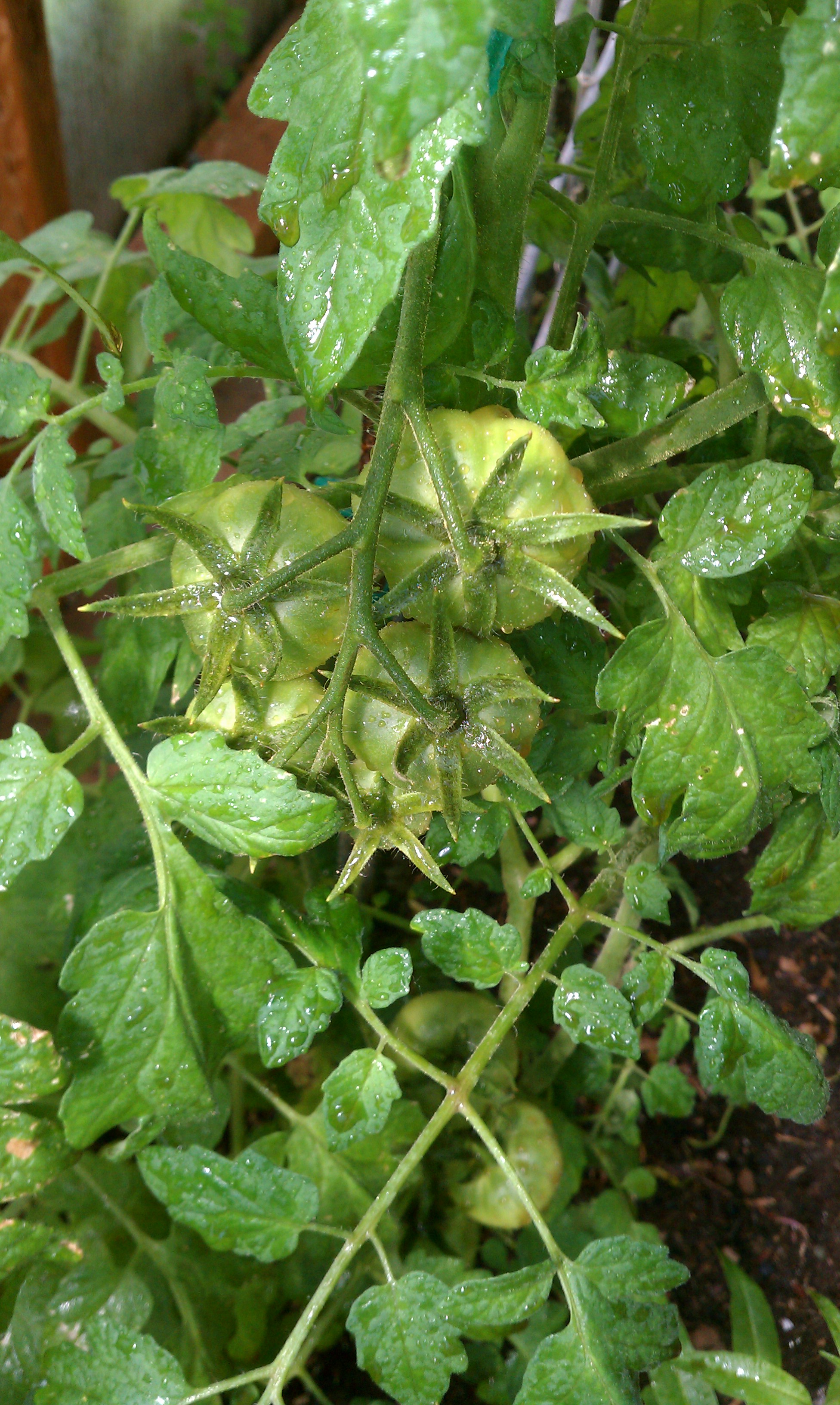
What garden is complete unless it has America’s favorite vegetable crop the tomato?  Beautiful shades of red, maroon, yellow, green and even striped tomatoes find their way into my kitchen (if they make it that far) starting as early as mid-June.   With a little TLC you will be well on your way to the succulent, sun-kissed taste you look forward to all year.

Soil Matters!  Tomatoes like a rich well-drained loamy soil with a pH of 6.5 to 7.0.   I add plenty of compost early spring along with phosphorous in the form of Soft Rock Phosphate and potassium in the form of Greensand.    If you have a problem with blossom end rot you can add lime if your pH is low and oyster shell if it is high.  I always use organic fertilizers in my garden to build up the soil to create a healthy environment for my veggies.  It truly makes a big difference in flavor too!  I just makes sense!

Tomatoes love sunshine, with a minimum of 6 hours of full, bright sunshine to soak in the rays.  Where I live in Southern Utah, however, tomatoes benefit from some afternoon shade.   The sun is intense and we will even use floating row cover that lets in 85% light to help protect our plants throughout the day starting late spring.  Without it, we have less production and more sun-scald.

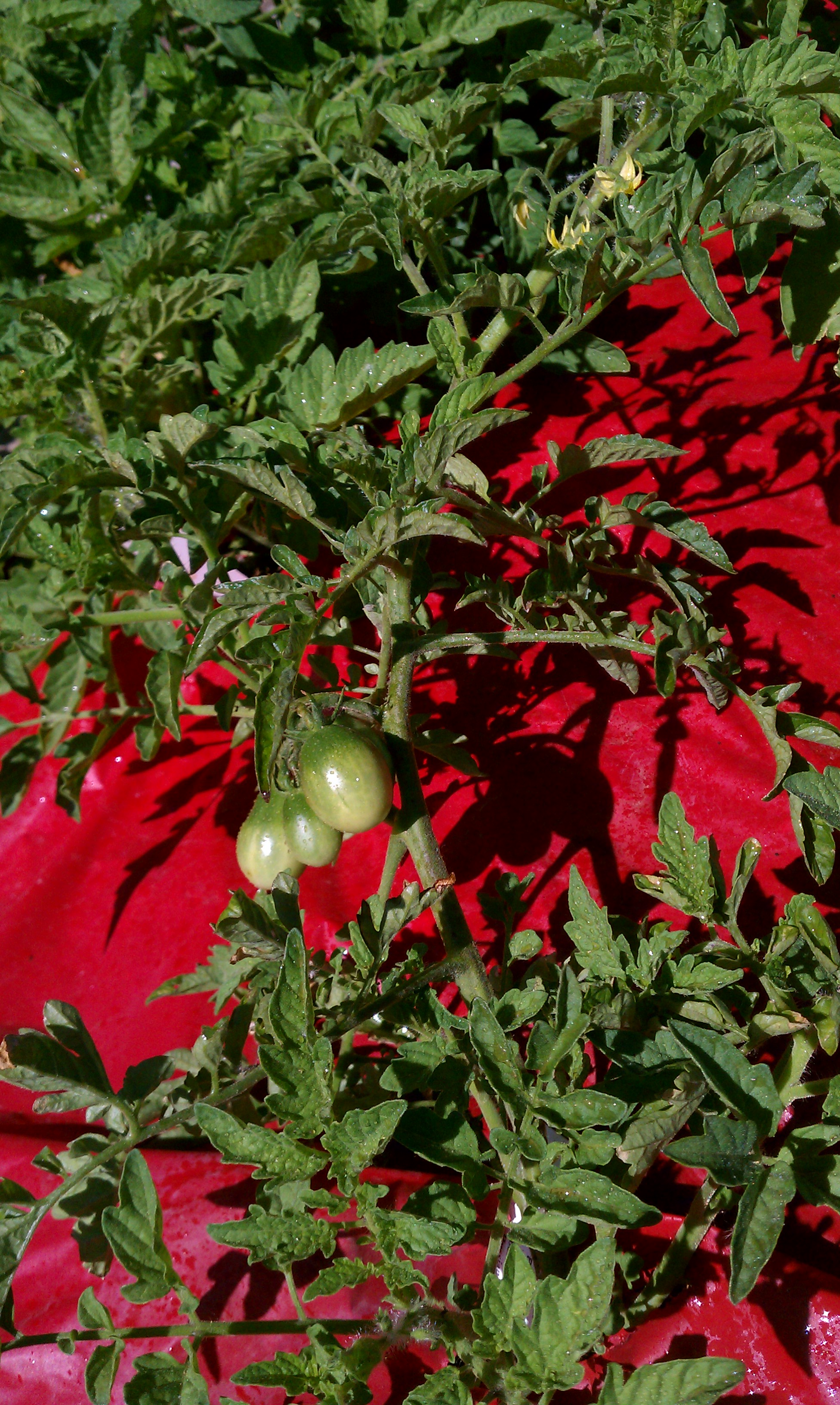
Once the days are longer and soil temperature in your garden reaches 60-65 degrees, it’s time to plant!  Make sure your little babies have been hardened off and always plant in the evening time or on cloudy non-windy days.  All tomato varieties will be happy and produce better if they have some kind of support, whether it be stakes, cages or trellises.  I space my tomato plants very close together.  Determinate varieties get planted 1 foot apart and indeterminate varieties are planted 2 foot apart.  Bio-intensive gardening baby!   Our area is very arid, so the problem of molds and mildews are rare and there is plenty of wind so we get ample air circulation.  If you live in a humid area, planting 3-4 apart is recommended.  By planting this close, it helps keep the roots cooler, helps prevent weeds and I can have a bigger variety in a small space.  Plant them deep!  If your plants are tall and spindly, plant them deep.  Others can be planted an inch or two deeper than the pot they are in.  Roots form along the buried portion of the them, giving better growth and they have less plant injury from to weak of a stem.  I’m not afraid to buy a tall skinny tomato plant as long as it’s healthy.   Press the soil around they transplants with a slight depression, this way you can give it a drink without the water running off.  At this time I like to feed with liquid kelp to help strengthen the plant and help with stress of transplanting.  A weekly foliar feeding of kelp will really give your plants a boost.  I have used the ‘red mulch’  and I am giving it a try again this year.  It’s just a red plastic you place right over the soil and  make slits to pop your transplants in.  It’s said to increase yields and make healthier plants.  I can say my plants do look really great this year and have plenty of blossoms, but so do the ones a few beds over!   Experimentation!  Priceless!

Water will depend on your area, soil and climate.  You can use mulch to help keep the soil moist.  I like to apply it a couple of times a growing season.  Allow the soil to slightly dry out between watering.   A steady supply will keep your tomatoes from cracking and getting blossom end rot, but too much water will cause your tomatoes flavor to be washed out.  Fertilizing should be done every 3-4 weeks with a good balanced fertilizer.  Carefully work  it in around the base of each plant without disturbing the roots.
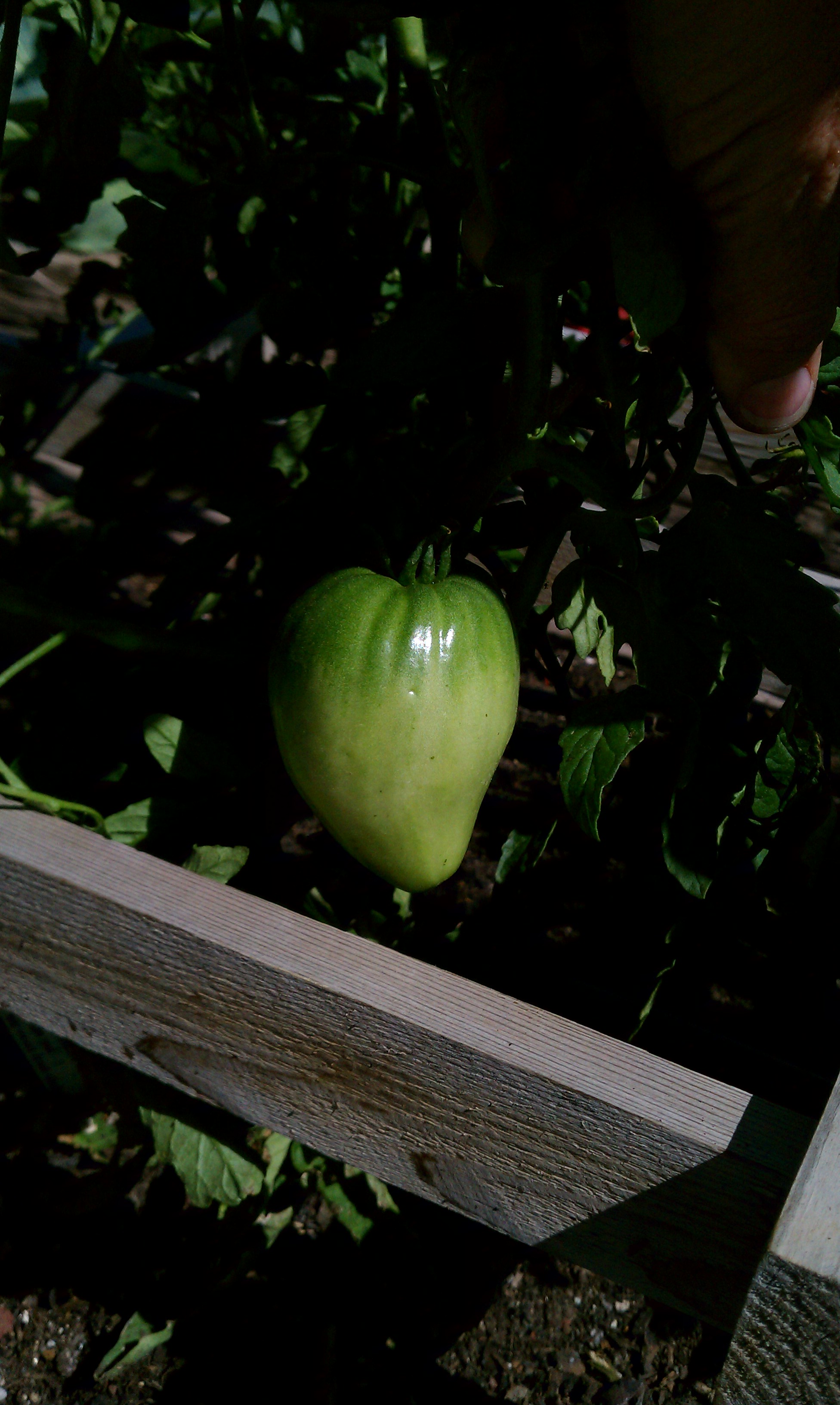
I love planting heirloom tomatoes!  Some big, scalloped, lobed,  stripped and some…..down right ugly like the Black Elephant!  But that is what is so fun about heirlooms.  I always add a few new varieties just to see how they perform.  Brandywine is a very popular tomato and many people ask for it, but it does not perform well in hot climates.  Potato leaf and the wispy fern-like leaf tomatoes do not perform well in my hot dry area, but 15 miles east they do just fine.  It’s just a trial and error to find the perfect heirloom tomato for your area.  Not all heirloom are created equal!  This year my new varieties that look outstanding so far and have many tomatoes on already are Orange Giraffe, Koralik, Orange Purple Smudge and Sub-Arctic.  Sub-Arctic is a variety that is good for cool regions, opposite of me, but because it is an early variety and I planted it out rather early (with some protection) and it already has many golf ball sized tomatoes.  And this is the beginning of May!  Even though I love heirlooms,  I will always plant a few hybrid tomatoes, kind of as a back up plan.  NOT GMO tomatoes though! Hybrids perform well in the heat and are more disease resistant then the heirlooms.  A couple of old-time favorites of my is Better Bush and Mountain Delight, both determinate.  Ask seasoned gardeners in your area which varieties have preformed well for them.

If you are in to saving seeds from these heirloom beauties, you will find that some varieties will adapt to your area and start to produce better and become more hardy.    Truly amazing plants!

Liquid Kelp, Greensand, All Purpose Fertilizer

Leave a comment

Filed under Gardening

Cilantro….Not Just for Salsa

Cilantro flowering

Mysterious Cilantro…or is it coriander?  Both!  Cilantro and coriander come from the same plant.  When the plant is cultivated for its pungent, aromatic leaves, it is called cilantro.  When is allowed to go to seed and cultivated for its citrus-flavored seeds, it is called coriander.  Two great spices all rolled up into one plant!

Cilantro is an annual grown during the cooler times of the year.  Once temperatures start to steadily stay warm the plant will start to bolt.  In our case here in Southern Utah that can be anywhere from the end of March to the end of May.  I like to plant cilantro seed in September (zone 8) and use a light row cover through the coldest months of winter to keep it from getting ‘freezer burn’ and it will continue to grow.  This way we will have fresh cilantro all winter long.  I usually get a second planting in come mid-January.  This way when the fall sowing has become tired out, the next session is ready to go.  You can shade your cilantro to help keep it from bolting as early with some row cover, but it will bolt when it wants to bolt!

Plant your seed 1/2 inch deep in well composted soil.  It will take 7-10 days to germinate at temperatures of 50-75 degrees.  I prefer planting from seed more than I do from a plant.  Plants will always bolt faster!  Plus you get a lot more bang for your buck with direct seed sowing.   Plant in full sun to part shade.  Cilantro is such a great crop, because it rarely has any pest or disease problems.  I don’t recommend that you fertilize much other then adding some compost, rock phosphate and greensand at the time of sowing the seed.  If you give cilantro too much nitrogen, it will reduce the pungent flavor.  You can sow seeds every two weeks during the spring to have an extended harvest.  If you live in a cool area, your season will last through the summer.  Lucky!  We are just to hot here to have fresh cilantro out in the garden when the tomatoes are ripe!  Keep cutting back and using the plant through the growing season.  By doing this it will also slow the bolting a bit.  Once your plant starts to send up seed stocks it’s time to keep an eye on it so you can collect seeds for coriander spice or replanting.  After the plant goes to seed and the seeds turn yellowish-brown, bunch the seed heads together, place upside down in a paper bag, then allow seeds to ripen until they drop into the bag.  Coriander seeds will stay viable for about 5 years.

Use cilantro leaves fresh in salads, salsa, marinades, stir-fries, rice, pasta, or vinegar and with fish and shellfish.  Add leaves to guacamole or to Chinese soups and Asian chicken dishes.  Try growing cilantro for micro greens.  Use coriander seed to flavor confections, bread, cakes biscuits and mexican dishes.  Don’t forget to garnish!

Here is a high-five for cilantro!   1 fistful of organic cilantro (of course you wouldn’t use anything else….Right?) a day for 10 days straight will flush your body of serious heavy metals that can accumulate in your body these days.  There is a compound in cilantro that mercury (and other heavy metals) binds to and then gets released through the urine as a natural chelation technique. The body will not function properly with heavy metals and cilantro is cheap, easy, safe and could be available right in your garden.  Another great reason to grow cilantro!  Okay.. Not enough to get you growing it?  Think about this;  Cilantro will also help promote healthy liver function, lower blood sugar, ward off urinary tract infections, aid digestion and it’s an anti-inflammatory plus so many other benefits.  Well you get the picture!  Cilantro is not just for salsa!

3 Comments

Filed under Gardening, Herbs

Growing Globe Artichokes

ImageAt At the ends of my long raised beds, tucked here and there through out my yard are silver leaved perennials that look almost prehistoric.  They are the artichokes!   Reaching up to 4 foot tall with a spread of over 5 feet when full grown.  Artichokes are not only grown in my garden for drama, but for there immature seed heads which are eaten cooked.  Once cooked they can be served warm or cold with our favorite, melted butter and scraping the tender fleshed petal through your teeth.  Artichokes are prized for serving with pastas and Mediterranean dishes.  No wonder, they are native to the Mediterranean and have been cultivated for years.  As forbidding as the artichoke looks with it’s armor of fibrous, thorny leaves, this thistle bud offers a culinary treasure with a tender, delicious heart.

Bear in mind, when planting artichokes, they need a substantial amount of space!  Globe artichokes do best in a sunny, sheltered site in well-drained soil, with plenty of well decomposed compost.  ‘THE ARTICHOKE IS TO BE PLANTED IN A FAT AND FRUITFUL SOILE: THEY DOE LOVE WATER AND MOIST GROUND.’  Gerard’s Herbal, 1597.  Artichokes grow best in area where the winter temperatures are mild.  You can mulch or heap leaves or straw above the roots during winter to help warm the plants.  In hot, dry regions, buds can become tough or open too soon.  In our hot Southern Utah area they enjoy afternoon shade with moist conditions.  Propagation can be done by divisions or by seed.  When planting from seed start indoors 8 weeks before the last spring frost at the depth of 1/4″ with soil temperatures of 70-80 degrees and 10-14 days to germination.  For a jump start, buy larger plants which can produce chokes the first year whereas starting from seed,  it could take a year or more to produce.  Don’t be fooled by the looks of your artichoke!  They may seem like they would be drought tolerant, but they enjoy liquid!  Keep the soil moist.  Never allow roots to dry out, but don’t saturate the ground or leave standing water either.  If the plants are allowed to dry out and wilt they can become weak and die or their bud production will be few if any at all.  Fertilize when you first plant your artichokes with compost and blood meal.  Fertilize established plants in the spring and autumn with a good dose of low-nitrogen fertilizer such as soft rock phosphate and minerals like azomite.  In spring time I will apply Kelp Meal made into a tea or just directly around the base every 2 weeks to give the buds a big boost.  Pick chokes when they are firm, but not opening up yet for best tenderness and flavor.  This is usually mid-summer time.  Cut back the stalks as low as possible after all artichokes have been picked.  This will send energy to the root system.  I even cut out the larger leaves that become yellow and raggedy looking after harvest.  If you are growing for the ornamental purposes, the flowers are amazing!  I always leave behind a few buds just for the incredibly bright flowers that the bees love too!Image

Aphids can be a problem.  If this is the case use a strong jet of water to knock them off.  If they persist you can use a insecticidal soap to control them. Another very annoying pest is the earwig.  I simply sprinkle Diatomaceous Earth around the base of the plants and also when the buds are forming I will sprinkle it over the bud to prevent the earwigs from entering.

Umm…Delish dipping sauce!  Try this with your artichokes they next time you fix them.  Steam artichokes until tender. 30-50 min.  Meanwhile, whisk 1 large egg yolk and 1/2 tsp water in a small bowl.  When mixture thickens and turns opaque, add 1 cup olive oil in a steady drizzle, whisking constantly.  Stir in 2 T of fresh dill chopped and 2 tsp fresh lemon juice.  Season with salt.

Azomite, Blood Meal, Soft Rock Phosphate, Kelp Meal, insecticidal Soap, Diatomaceous Earth

1 Comment

Filed under Gardening

Why Won’t My Seeds Germinate?

One of the most frustrating things that can happen when planting a garden is low or no seed germination. Here are a few things that can cause seeds to fail or even plants to hardly grow after germination.

Planting to early or to late.  Timing is everything with seeds.  Seeds will wait until they have the right temperature and day length to germinate.  As an example:  when planting lettuce seed in the heat of summer when temperatures are over 90 degrees, the germination is few and far between.  Lettuce likes cooler temperatures to germinate.  Planting a cucumber in the cool season when the days are shorter, if it even germinates, it probably won’t grow until the night-time temperatures are at or above 50 degrees and the day light is longer.  Seeds can rot in the ground if the conditions aren’t right to germinate.  Boy, this doesn’t seem to happen with weed seeds, does it?

The use of weed killers or soil sterilizer.  I know this is a no brainer, but many weed killers can limit the growth in a garden long after they are supposed to degrade.  Weed killers can have an effect for two years, sometimes more, while sterilizers can last easily up to 20 years.  This is another reason to never use poisons in the yard/garden.

Using a raw wood chip mulch.  Although it is a good soil conditioner, it contains a growth inhibitor that can keep seeds from germinating or plants from growing well.  This is especially true to red wood chips.  If the chips have been well composted for over a year it can used in the garden as a mulch or conditioner.  Red wood mulch is a good product to use in paths or a place you don’t want weed seeds to germinate.

Using old seeds or seeds that have been stored in high temperatures or fluctuating temperatures.  Some seeds will germinate even after years of storage, but many times they do not perform well if they even do germinate.  Fresh is best!  Store seeds in a cool place and learn more on the length of each seeds storage life. Generally smaller seeds have lesser viable life span.

Planting in soil that is to wet.  If the soil is to wet, it will restrict oxygen, which is required for root growth.  Seed rot can also happen if the soil stays wet.  Wet is different from moist…  Moisture is needed for the seed to germinate.

Birds!  Birds love to dig up seeds for food.  These little feathered friends seem know right where and when you have planted and feast, sometimes without you even knowing.  Using a light row cover will eliminate the bird issue!

Allowing seeds to dry out.  If the seed starts to germinate under the soil and we forget to water them for one reason or another, they can wither up and die.  Seeds need extra attention until they have developed a root system.  Going on vacation the day after planting your garden from seed might not be the best idea.  Around here we fight to keep things moist in the spring due to our winds drying out the top soil and again in the summer, because of the heat.  Sometimes they require a couple of light waterings a day. Using a row cover right over the soil will help keep the moisture in.  Remember, seeds are only on the surface for now and shallow watering is best and water should be deeper only when the seedlings are grown up a bit!

Sowing seeds to deeply or to shallowly.  The smaller the seeds the shallower they should be planted.  Follow your seed packets guidelines.

HOT soil.  What I mean by this is you can create a problem with adding to much manure making the soil to rich and high in nitrogen which will burn the seedlings as soon as they germinate.  I never add manure that hasn’t been compost first.  And WELL composted.   If you do add it, till it in, in the fall so it will have time to break down over the winter with the rains and soil microbes.  Also adding to much fertilizer isn’t the answer to low fertility.  Only add as much as the product’s label calls for.  Remember, it’s better to add less than more!  Seeds will rot in “hot” soil.

Larger seeds can be soaked for better germination, but never soak more than 10-12 hours or they will start to decompose.  I actually never soak my seeds for more than 6 hours, and I never soak small seeds like carrots and lettuce.

Earwigs!  This year in our garden the  earwigs are out early and are in full force.  These little buggers will nip off seedlings at the first crack of the soil.   Sometimes you don’t even know that your seeds have ever germinated.  If you suspect earwigs, sprinkle diatomaceous earth or earwig bait around your seedling beds.  Earwigs are nocturnal and you may not even know they are there.

We have all had times when we had spotty germination for one reason or another.  You can easily correct this by filling in the gaps with a little more seed in blank areas.

2 Comments

Filed under Gardening