Category Archives: Gardening

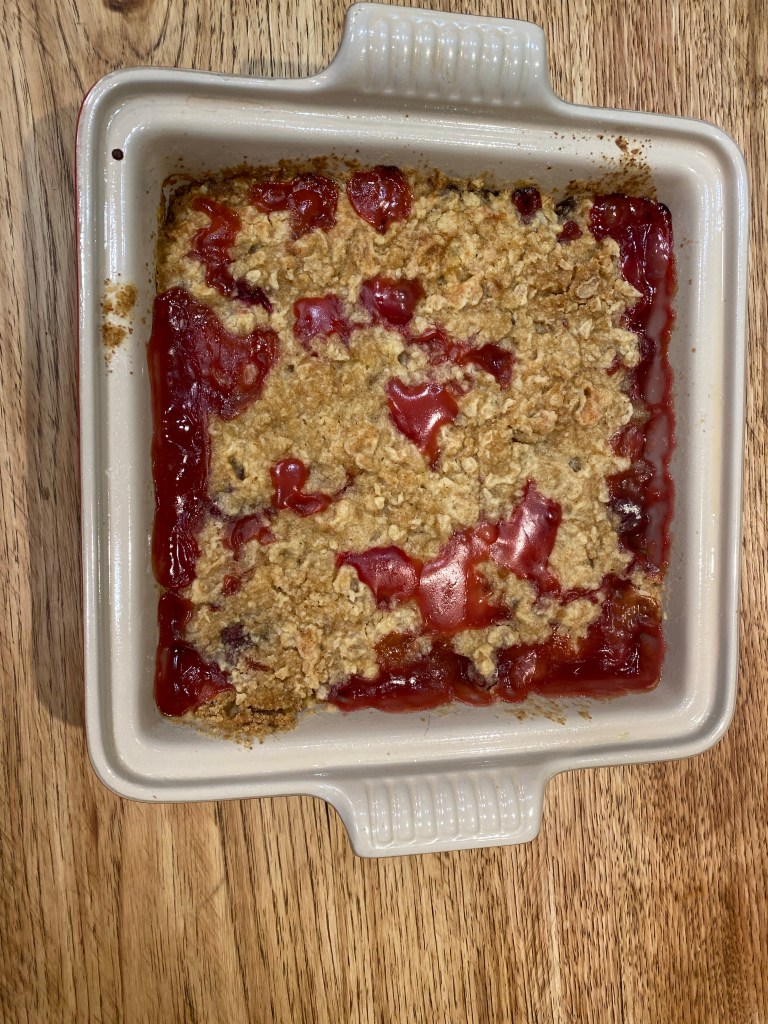
Gooseberry Crisp (Crumble)

Gooseberry crumble is the perfect summertime desert to eat with some good old fashioned ice cream! Gooseberries are juicy, tart and delicious prepared this way.

Grease a 8 x 8 baking dish

Preheat oven to 375°

Gooseberry Filling

Clean 4 to 5 cups of gooseberries, ends removed and put in a bowl.

Mix in 1/4 cup to 1/2 cup sugar with berries, depending on your sweet tooth.

Add zest of 1 lemon, juice of 1/2 lemon.

Add 2 tablespoons of cornstarch.

Mix to combine.

Crumble Topping

In a bowl mix together:

2/3 cup flour, 1/3 brown sugar, 1/8 teaspoon fresh ground nutmeg, pinch of salt.

Using a pastry blender, cut in 1/3 cup of cold cubbed butter to dry crumble ingredients until coarse crumbles and you can still see some buttery clumps.

Sprinkle crumble topping over the gooseberry filling. Place in oven and bake for about 50 minutes or until bubbly and the top is golden brown and crispy.

Allow to rest for 30 minutes before serving. Eat plan or serve with ice cream. Enjoy!

Leave a comment

Filed under Gardening

Essential January Jobs for the Vegetable Garden

January can have some nice days that allow us to get outside, breath in fresh air, take in some sunshine and get a jumpstart on the beginning of planting season.

  • Plan ahead.  Work out what to grow where next growing season.  Aim to try something new and bear in mind the principles of crop rotation.
  • Now is a great time to top up mulches if you haven’t already done so.  Add well-rotted manure or garden compost on the soil surface, rake it out the leave for the frost and worms to break down and incorporate.  Aim to cover the ground to a depth of at least an inch.
  • Prune trees.  Winter prune apples and pears, remove any crossing branches then concentrate on the three Ds: dead, damaged and diseased wood. 
  • Plant fruit.  Begin to plant fruit trees, bushes and canes, but only if your soil isn’t saturated or frozen.  Mulch around the area after planting. 
  • Force Rhubarb.  Place a forcing pot, bucket or large pot with the drainage holes covered of rhubarb crops to force an earlier crop of tender pale stems. 
  • Set up new raised beds.  January is an excellent time to get those raised beds set up so you can be ready at planting time. 
  • Order Seeds.  Who doesn’t love pursuing seeds.  Now is the time to think about the coming season.  Check stored seed packets and order fresh seeds in good time to have the best selection as seed varieties lessen as the season goes. 
  • Order needed supplies.  Check over your garden supplies such as tags, labels, twine, supports, fertilizers and pest control and get organized before the busy growing season begins.  It’s easy to become overwhelmed when you are in the height of the season and there is “one more thing” to do.  Being prepared for the coming season makes gardening much more enjoyable and successful!

Leave a comment

Filed under Gardening

Growing Nutritious Microgreens

Microgreens are a fantastic way of enjoying delicious fresh salad leaves throughout the year. There are many types to try and if you have a bright spot or windowsill, they couldn’t be easier to grow.  

  1. Sow the seeds thickly into trays or pots filled with 1 inch of moist soil mix.  We use Fox Farm Salamander Potting Mix. Lightly cover seeds with potting mix. Tip: Use organic microgreen seed packages. They contain more seeds and are money saving. Never use treated seeds! 
  2. Place clean paper towels (bleach-free) over the entire surface and mist with water. We also use a dome to help keep moisture in and help control even temperature. Keep in a warm place. A sunny windowsill will be beneficial when seeds have sprouted. Keep the towels moist by misting when they begin to dry out, being careful to not allow the soil to become too wet or soggy.  Use a spray bottle for best results. Check daily and remove the paper towels when seedlings start to appear. Tip: You can use a heat mat to speed germination. Warmer soil means faster germination and the sooner microgreens will be ready to harvest. 
  3. Seedlings grow quickly and most types will develop their first proper pairs of leaves just days after germinating. Keep them moist at all times. There is no need to feed them.
  4. Microgreens are ready to harvest once they have grown two or three pairs of leaves, or are large enough to handle easily. Don’t allow them to grow any larger. Young leaves taste the best!
  5. To harvest microgreens simply cut them off at the base just above the soil and discard the roots and soil to the compost.
  6. Eat right away or store microgreens in a container of your choice (plastic bag, glass storage) for up to a week in the refrigerator. Tip: If you rinse before storing, be sure to remove all moisture or microgreens will not keep.

There are many choices of microgreens to grow. Brassica crops are the easiest for beginners. Mellow Blend and Jazzy Blend super fast and simple to start out with.  Basil takes the longest to grow, but well worth the time. Beets add a great flavor and color. Sunflowers have a delicious nutty flavor and add a crunch to salads and sandwiches.

A mix of microgreen varieties

Leave a comment

Filed under Gardening

Growing and Using Calendula

Calendula will add beauty, color and usefulness to anyones garden! Calendula officinalis is an everblooming hardy annual (sometimes acts as a perennial). In warmer climates calendula blooms throughout the year, opening and closing with the sun. It is an excellent companion plant for the vegetable garden while attracting beneficial bees and hoverflies for pollination. It has a sticky substance on it stems, making a great catch and control for aphids. It aids in keeping other plants disease and insect free.

Calendula likes rich soil for the best production of flowers. Amend soil with compost. Grow in a sunny location. Begin to harvest just before the blossoms open completely for the best medicinal resins. I harvest every other day. Once you stop harvesting the plant will slow or even stop producing buds to make seeds, so continue that harvest as long as you can or until you want seed. The entire flower is edible, but petals are the best for salads. Dry calendula flowers all summer long for winter use and making of medicines and salves. Add dried flowers to tea mixes! Growing your own calendula has so many benefits, it’s easy and great for kids to help get involved.

Single Calendula

Calendula is an important medicinal plant. Commonly found in salves, oils, and tinctures, the bright orange and yellow blossoms contain powerful antioxidants and anti-inflammatory properties that promote cell regeneration and hasten wound healing. The flower petals are also edible and lovely added to salads, soups and even omelets. Calendula is helpful with moving the lymph system.

Make a healing calendula salve. It’s great for skin infections, diaper rash, and wounds. Plus, it’s super easy and fun to make.

Place 1/2 cup dried calendula flowers and 1 1/4 cup olive oil in a saucepan and bring to a simmer over very low heat. Do not allow to boil. Let herbs infuse until oil becomes a rich golden color, usually 45 minutes. Strain out blossoms. Be sure to press out all the oil and then add 1/4 cup beeswax to warm oil, stirring until melted. Before pouring, check the consistency by placing 1 tablespoon salve in the fridge too cool. If too hard, add a little more oil, if too soft, add a little more beeswax. Pour into small jars or tins and label. It will last for several months. Store in a cool dry place.

Find Calendula Seed Here

Double Calendula

Leave a comment

Filed under Gardening