Jerusalem Artichokes

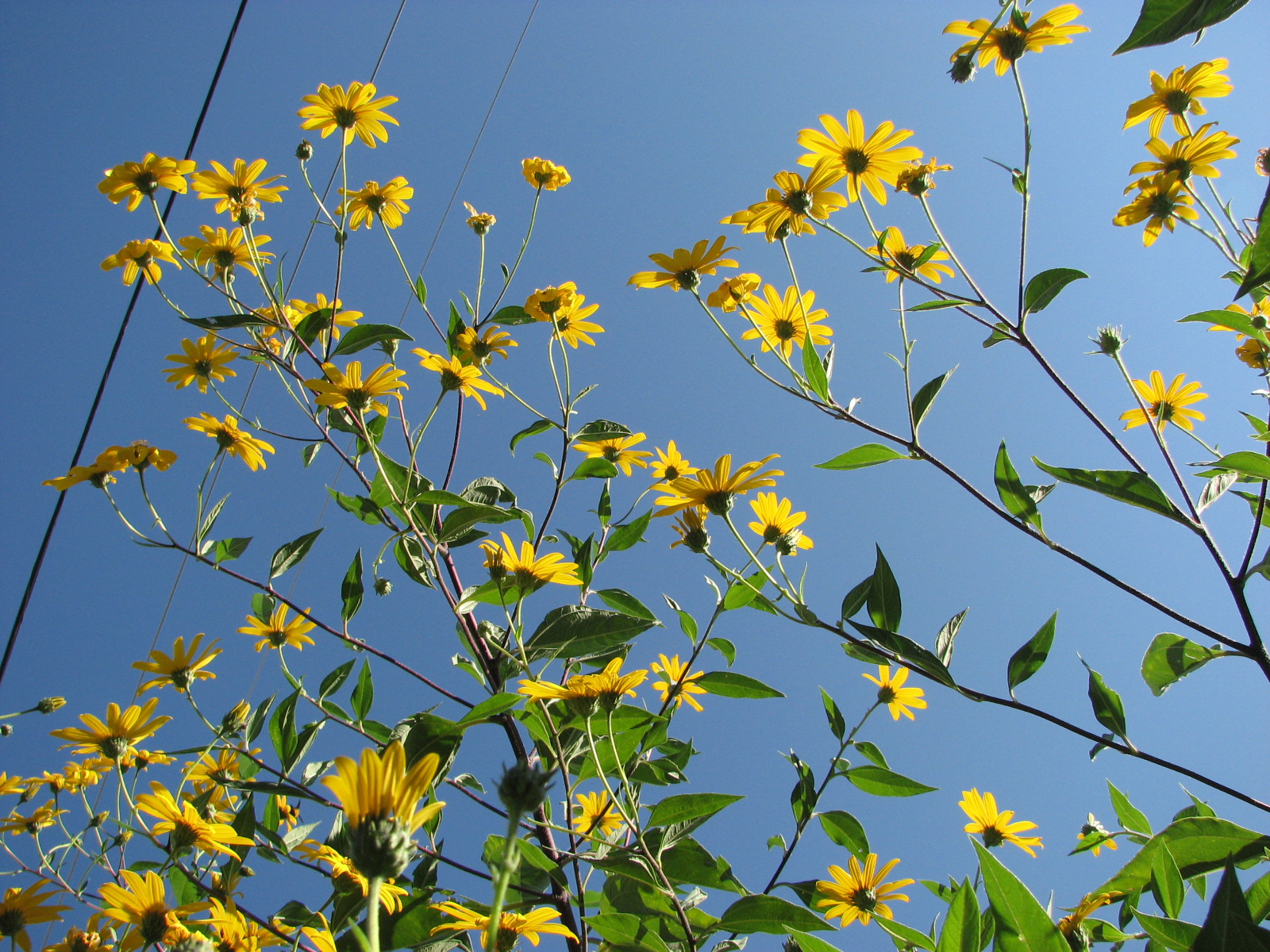
Jerusalem Artichoke Flowers

What a name to give such a strange-looking vegetable. Jerusalem Artichokes have no relation to globe artichokes and they are not from Jerusalem and are often called Sunchokes. They are close relatives to sunflowers with beautiful yellow fall color. They make an excellent summer and fall screen and wind break along edges of fields and gardens becoming 12 foot tall or even taller with ample water. But beware! They can take over in few years and become an invasive weed if you don’t remove the tubers. I grow mine in a raised bed and this helps contain them from becoming a weed. I have always said that if times got hard this is one crop I could rely on.  It is pretty much a fool-proof crop that is very productive and can survive with little water if need be, although tubers will be smaller.

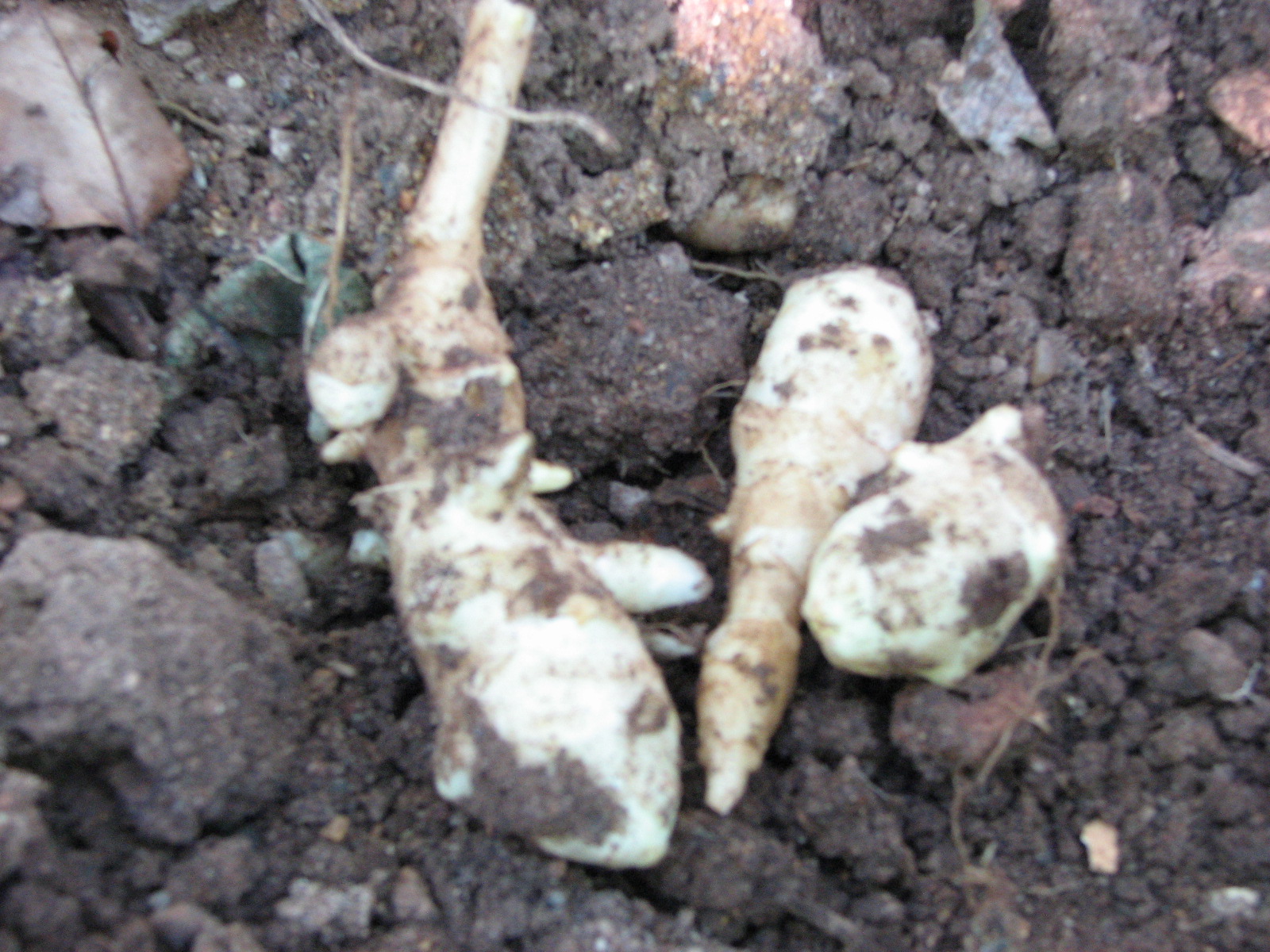
Jerusalem Artichokes are brown, nubby and irregular with bumpy protrusions.

New Jerusalem Artichoke tubers

Their taste is similar to water chestnuts with a nutty flavored flare. In the 1920’s they were a commercial source of fructose and were expected to replace beet and cane as a source of sugar. They are an excellent source of carbohydrates.

Jerusalem artichokes are a breeze to grow even in the worst soil. They prefer a sunny location but will grow in shade. They will grow in heavy clay soil as long as it is not to acidic or subject to water-logging. The fibrous root system helps break up uncultivated ground. Although if grown in sandy soils they will grow bigger and they will be easier to harvest.  Add compost at the time of planting to make for bigger, tastier tubers. So easy they won’t need much in the way of fertilizer, but they will benefit from Soft Rock Phosphate applied once during the growing season. Spring is the best time to plant tubers, but you can start from a plant almost anytime of the year, but if planted late summer or fall wait to harvest until the following year.   Another way to increase the size of the tubers and to keep them from sending out new runners underground is to cut back the stalks to 5-6 foot tall. This will put energy into the already existing tubers.  I love to have a few blooms for cutting though, so I cut back the front of the row and let the back bloom like crazy. Regardless of what you do, in fall when the foliage turns yellow, cut back the stems to 3-6 inches above the ground. These stumps will also leave you a marker as where to dig. It’s time to harvest! You can leave the tubers in the ground, which they will keep better this way anyhow and harvest as needed. Use a digging fork to lift the tubers.  Mulch in colder climates to help protect the tubers and keep the soil warmer for ease of harvest. They will keep in a refrigerator in a bag with breathing holes for up to a month or you can cellar them in moist peat or sand. When Jerusalem Artichokes are left out they dry and shrivel rather quickly.  I just like to let nature be my cellar in this case. Fresh tubers have a better flavor when freshly dug.

There is no need to peel them unless you want a very smooth, creamy-white puree. Scrubbing them right after lifting will make your job so much easier. The vitamins in Jerusalem Artichokes are just below the skin. If you do peel them it’s easier to use a knife then a vegetable peeler because of their knobby shape.

I like to slice Jerusalem Artichokes thinly and toss them in a garden salad. You can use the in the place of potatoes for ‘mashed potatoes’, but personally, I prefer to use half and half.  Half potatoes and half Jerusalem Artichokes.  Try them raw, roasted or cooked or creamed!

Jerusalem Artichokes can reach 12′ tall or taller

 Soft Rock Phospate

1 Comment

Filed under Gardening

Spider Mites In the Garden…Urgg!

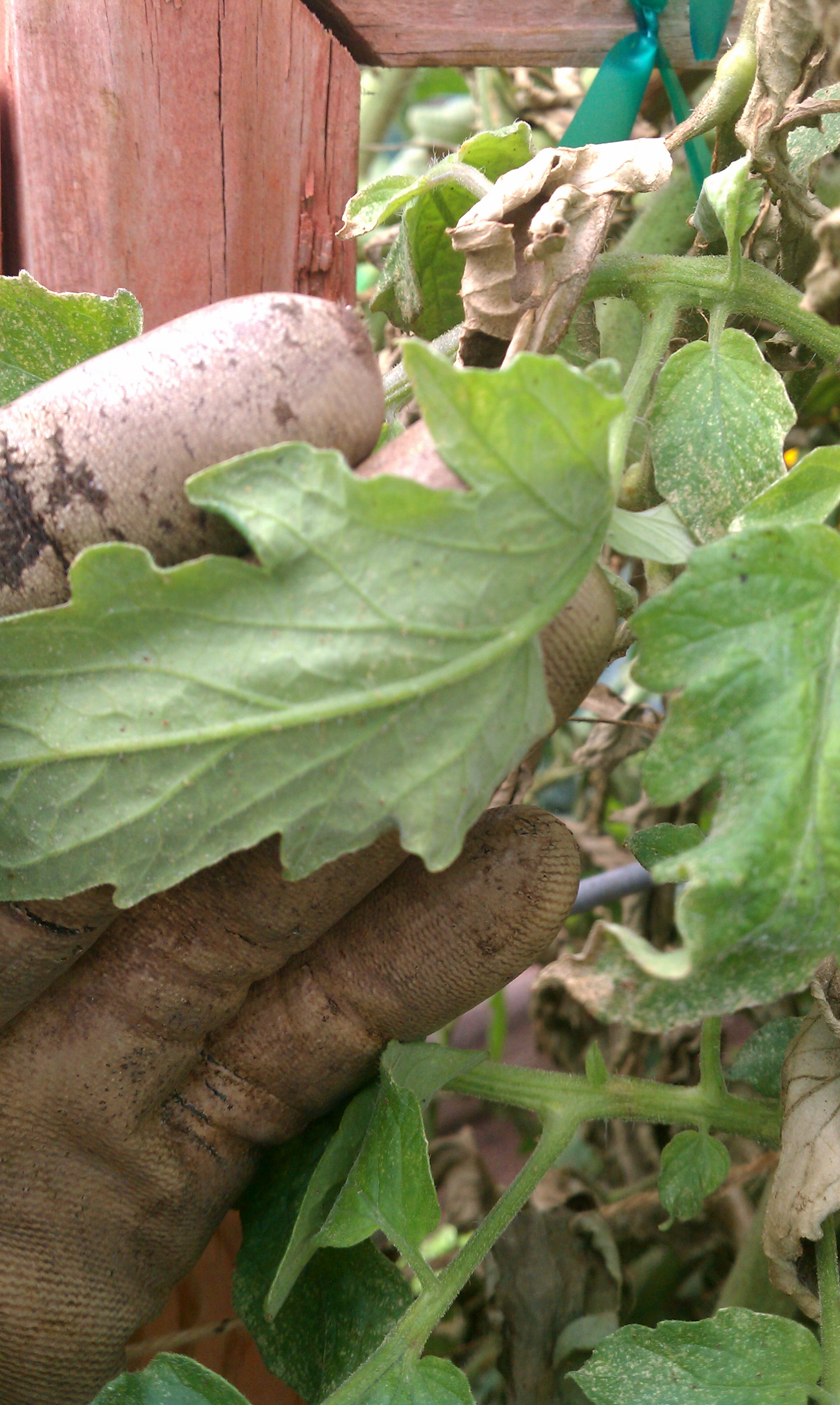
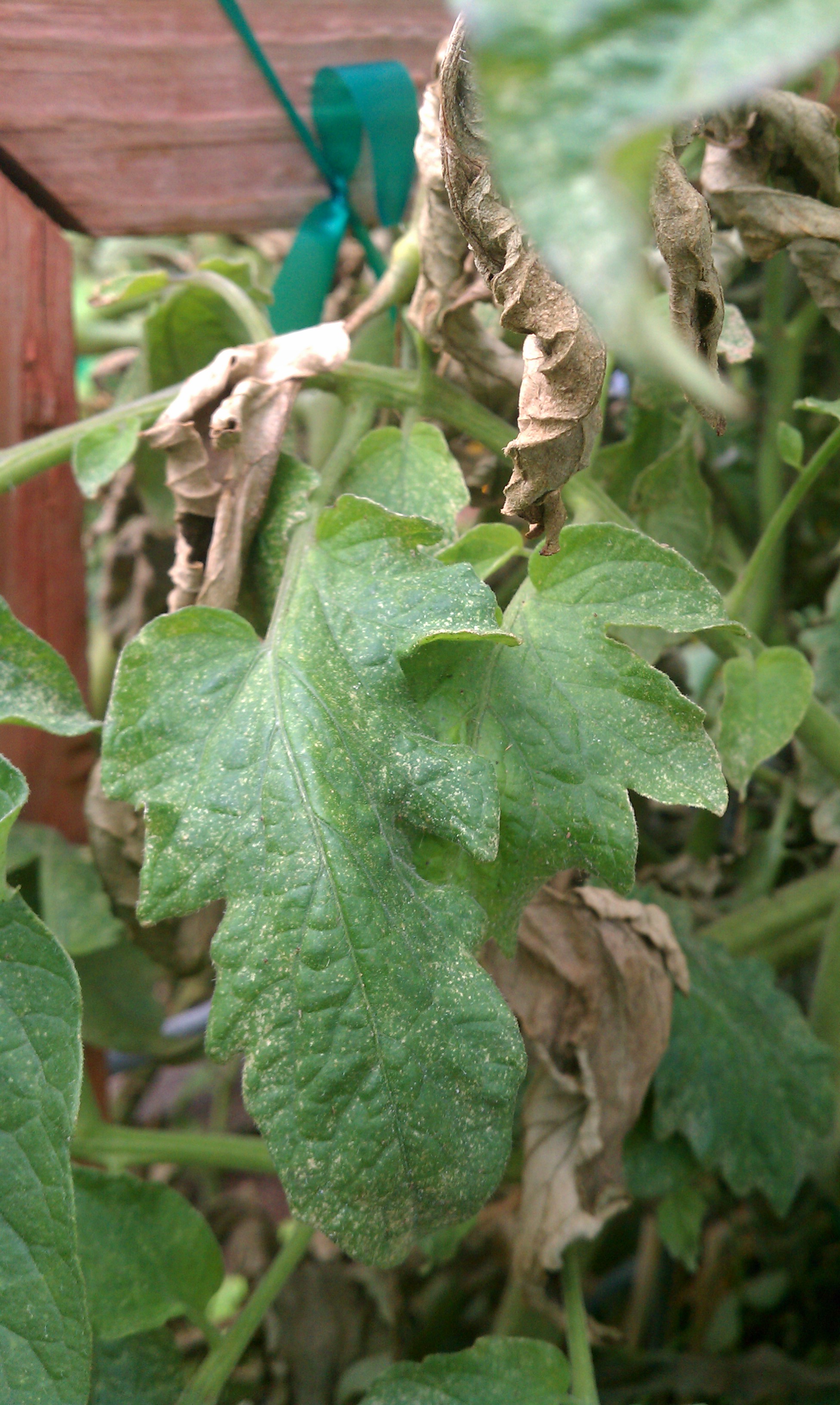
Spider Mites! How can something so small be so destructive?  Gardens in our area are very susceptible to spider mites.   Spider mites are also called web-spinning mites. They commonly feed on fruit trees, vines, berries, vegetables and ornamental plants. Spider mites look like tiny, moving dots, smaller than 1/20 of an inch. They live in colonies, mostly on the under-surfaces of leaves. Webbing is an easy way to distinguish them from other types of small insects, but you may not always see the webbing. These little buggers produce rapidly in hot weather in the months June through September. If temperatures and food supplies are favorable, a generation can be completed in less than a week! So you can see how they can get out of hand very quickly! They prefer hot, dusty, conditions. They will also attack plants that are under water stress. Wind is also another way spider mites disperse to other plants. When cooler weather hits mites will start to decline.

Spider Mites suck the life out of plants causing light stippling dots on the leaves. Most of the time you won’t even notice you have spider mites until the plant starts to decline. As feeding continues, leaves will sometimes take on a bronze color. Yellowing and leaf drop will follow. Damage will worsen if plants suffer water stress.   Greenhouses, even though it’s a humid environment, can get overtaken quickly, especially on tomato plants.

Even though spider mites in small numbers won’t do to much damage, I still have to get a hold of them quickly. They seem to damage vegetable crops much quicker than ornamentals. Sprays of water will help keep the moisture level up by removing the dusty conditions they like. Don’t forget to spray the ground around the plant to. Insecticidal soaps are a safe way to eliminate these bad guys, but you have to get the underside of the leaves or they will just continues to reproduce. Don’t use insectididal soap on water stress plants or when tempertures are higher than 90 degrees or you can damage your plants. A second application may be needed. The chances of getting them all and their eggs can be rather hard the first go around.

Here is another reason to go organic! Spider mites frequently become a problem after applying insecticides. Outbreaks are commonly a result of of using carbaryl (Sevin) because it simulates mite reproduction. This product favors spider mites by increasing the level of nitrogen in leaves. Sounds rather odd, but I have seen it!

1 Comment

Filed under Garden Bugs, Gardening

July’s End

What a busy month! We jumped into July with sailing temperatures at 112 degrees. Pretty typical for July in Southern Utah, just always hard to get used to! Our garden stressed, wilted, but somehow it again survived. The heirloom tomatoes have produced like no other year! I would like to think my new planting mix did the trick. But I can’t dismiss the fact that I was very diligent about spraying kelp tea and liquid bone meal, covering with row cover and treating them like a baby.  We have had beautiful heirlooms of every color shape and size. I have my favorites again this year. Golden King of Siberia, a HUGE yellow heirloom. Although it has only produced a slight bit more than a dozen tomatoes, they have all been over 1-1/2 pound fruit. This one is not acidic, but it is very sweet. Bread & Salt is another huge tomato that produced heavy with several weighing in at just over 2 pounds. One of my most productive tomatoes so far this year was the Orange Fleshed Purple Smudge. The purple smudge, is just that, a fun little smudge on the shoulders. Off of one plant we probably picked over 4 dozen tomatoes, and it’s still going strong. Beautiful, although it’s not my favorite, others who tried, enjoyed the flavor. There is a tomato for everyone! Everyone’s favorite this year is the Kiwi. Resembling its color, not so much the flavor. Mild, but still that great old-fashioned tomato flavor with a twist! You might think it is not ripe, but once convinced green is ripe with this guy, you will be hooked!

Just when we thought we couldn’t take the heat any more we were hit with moisture and lots of it! We did get hail the size of a nickel, but luckily this year there was not much damage. Before the July rains, our rainfall for 2012 was only 3″! We have received over 3.5″ of rain within the last few weeks. Oh, the vegetable garden has greened up, grown like crazy with the lightning storms which has helped the plants grab the nitrogen!

Our dairy goat, Ivy is producing over 3/4 a gallon per milking. This is her first year, so she is doing super.  She does get the best hay, organic grain and plenty of healthy bites from the garden. Both her twins are growing like weeds. If you have never had a baby goat, you are missing out in the amusing show of jumping around the barn yard full of energy (energy I wish I could bottle).  We have made kefir, feta, summer cheese and buttermilk. This is when the chores pay off!

We had chaos in the milking barn when our mother rabbit escaped, and when I opened the door to the barn she bolted in and disappeared behind the hay storage. Yup! She’s a rabbit! 5 new babies. We had little fast hoppers running in an out of the hay until my daughter sat patiently with me till we had them all caught. Even though we have homes for all of them, well…..She’s mama is a AGAIN! You know that old saying…They breed like rabbits. It’s true, she certainly has it figured out!!!

Casper (the perfect cat) wasn’t feeling well, so off to the vet we went.  The poor little guy had to have all but a few teeth removed. The few that are left are for decoration purpose only. It’s only been three weeks he is back to normal. Sleeping on the cash register, roof of the barn, and tomato patch and screaming for food. Not up to being a farm cat, but then again, he never was! Maybe this will slow him down on chewing my nursery stock of herbs! Doubt that!

Bottling tomatoes, drying fruit, preserving currants and roasting peppers have been big on the list of chores with peaches, pears, figs and apples on their way to ripen. The constant fallen fruit pick up is a must so we don’t get brown rot in our fruit in years to follow. Good hygiene in the garden is added work right now, but well worth it in the long run. We have fewer disease, pest and problems when old fruit and veggies are removed and tossed into the compost pile. Tomatoes, or anything else for that matter that has dead leaves, should be removed in case of blight or other disease. This stops or at least slows the problem. Don’t use diseased plant matter as a mulch!  Remove it from the garden.

Believe it or not the greenhouse is back in swing! Several flats of brassica are started and getting sized up for fall planting. Keeping the little seedlings wet is so important! Brassica family, especially cauliflower does not produce well later on if they are allowed to dry out at any time of their life!

This is the time of year where the heat ‘peters’ us out, but if we can preserver, fall is just around the corner and this is sometimes the best of all the harvests. Tomatoes aren’t as watery, peppers don’t get sunscald and flavor seems to improve. Keep weeds in check to save yourself time later. Even if all you can do is cut off the seed heads. Deadhead your perennials for lasting blooms. Start to fertilize again when new blooms develop. Remove diseased plants so as not to spread. Side dress with compost. Compost will help keep the soil moist, cool and add tilth. If you have plants that are struggling, give them a hair cut to revive them and boost them with some kelp tea.

Enjoy the rest of the summer. Sit down in the evening with a glass of lemonade in your garden and watch the sunset.

Leave a comment

Filed under Gardening, Goats, Heirlooms, Life on the Farm

Lovin’ Lovage

Young Lovage Plant just started in the greenhouse

Yes Lovage is a plant.  Grown for centuries, but not very well-known that long!  Lovage has always reminded me of celery.  The smell, taste,  even they way it looks.    When used infused in soups it will give them a creamy taste, adding a nice rich flavor.   My favorite is to add it to our morning carrot juice or even tomato-based drinks.  The Leaves, stems and all.  Using the small inner leaves for salads will get you hooked!  Lovage seeds can be used to garnish food.  The seeds are great as a bread/roll topper instead of poppy-seed or caraway.

I grow lovage in my greenhouse so I can have something fresh all winter.  I have grown it outside, but our winters a cold enough to stop the growth or even cause die back, but it is hardy so it will generally return come warmer days.  A cold frame works well to grow lovage in during the cold months.  Lovage is a perennial that enjoys relief from the afternoon sun so it won’t get sunscald. One clump can spread 3 feet and launch towers of flower stalks, so give it some space.  When planting lovage will appreciate a little prep to the soil.  Add a shovel full of compost and a handful of kelp meal to the planting hole and mix with the existing earth.

When starting lovage from seed, use fresh seed.  Seed that is less than two years old.  Use a soil-less soil mix.  Fill the pots with the moist potting mix up to 1″ from the top of the pot.  Place two or three seeds into each pot and cover with 1/4-inch of soil.  If you’re not growing in a greenhouse you can cover the pot with plastic wrap and give it some bottom heat.  Once the seeds germinate in about 12 days, (it can take up to three weeks) remove the plastic and give the little plants sunlight for at least 8 hours a day or supplement with a grow light.  Once it is about 4-5 inches tall it can be transplanted to its permanent spot.

Most insects steer clear of lovage, but leaf miners can be a problem at times.  They tunnel through the leaves and that makes it hard to spray.  If the problem gets to bad, you can just simply cut back away the leaves and they will grow again.

Heat Matt , Kelp Meal

Leave a comment

Filed under Gardening, Herbs