
-
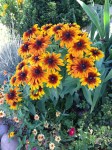
- Rudbeckia
-
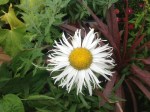
- Leucanthemum
-

- Gaillardia
-
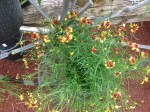
- Coreopsis

-

- Rudbeckia Maxima
-

- Heuchera
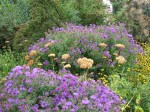
I love perennials and this is the time of year most of them are bursting with color! Unusual Rudbeckia, Salvia and Echinacea are some of my most loved sun perennials. Perennials are considered low maintenance plants, but as any perennial gardener knows, this does not mean no maintenance. The biggest plus side is you don’t plant them every year, they last for years and they get better and better as they become more mature.
Most perennials need food, water, dividing and deadheading to keep performing well. Perennials can be planted in the spring or fall when the weather is kinder to transplanting. When planting them, amend the soil well with compost and add a couple of tablespoons of fertilizer (preferably a slow release organic fertilizer) in each planting hole. This gives them a good jump-start. Keep them watered well to begin with. They need to get their roots established before they can withstand fewer waterings. Some are more drought tolerant then others, so read your tag and let the plant tell you what it need.
Make sure you plant your sun loving perennials in the sun. Several years ago I planted a beautiful sun-loving perennial bed loaded with beautiful plants like Joe Pye Weed, Echinacea, Hardy Hibiscus, Rudbeckia and others. The trees have now grown up and the bed has become very shady. These sun lovers are now lanky and have small blossoms. They need their sunshine to thrive. Later this fall these perennials will be lifted, shared, re-potted and…..probably put into a “new” sunny perennial bed. As my husband would say “imagine that, another flower bed!”.
The same thing goes for shade perennials. When shade plants are planted in too much sun, the leaves burn, plants will stress and possibly die. Here in our hot climate, if the tag says part to full shade, I will always put in full shade. The intense sun rays will burn the plant in the middle of summer even in the morning. Shade plants don’t have huge blooms. They are generally more subtle, being smaller in size and not as bright with a few exceptions. But you I can’t imagine not having plants like Heuchera or Hostas. The whimsical airy flowers are slightly fragrant and charming.
Deadheading……..arggg…..Yes you should do this if you want BIG blooms. When a perennial flower is left it will produce seed. Producing seed takes energy. Energy that is need to produce more flowers. Unless you are wanting to collect the seed you should deadhead. In other words, cut off the blooms that are past their prime. Don’t just cut the top of the flower off leaving an unsightly stem, cut it off just above a leaf. I prefer to cut down further where there is a bud. I found some great little scissors that are perfect for deadheading. Here is a link to check them out. They are sharp and they spring back making it easier on your hands. While this may seem tedious, if it’s done on an evening garden stroll weekly it can be conquered rather quickly in a few short minutes.
After the perennials freeze, cut back the dead growth about an inch above the soil level. I like to spread a layer of mulch or compost for winter protection. This acts a an insulator for the roots and lessens the chance of damage to extreme cold weather. I have found my perennials come back healthier and sooner in the spring when I do this.
Keeping my perennial beds pretty in the early spring is easy! While most of my perennials are sleeping, I still have plenty of spring color splashed throughout the beds to keep spring bright and beautiful. Pansies, primroses and bulbs are a bright and cheery site while the later bloomers are just peeking through the ground. By the time the pansies and bulbs are finished for the season the perennials take a bold stand and bloom through the summer into the first frost.
Perennials are usually found abundantly in the fall as established plants. Look for rich healthy growth and get them in the ground and enjoy them for many years to come! Now, I’m headed out to do some perennial maintenance of my own!


 Out Standing In The Garden