Author Archives: Ali

Ali's avatar

About Ali

Gardening is a peaceful place for me. I have loved it since I was a very young child. I want to share with you my journey in my small half acre lot in the middle of our city what you can achieve, such as gowing a garden, orcharding, caring for bees, goats and poultry. Going back to the simple life. Using what you have to the best of your ability.

Growing Your Own Fresh Figs and Using Them

I have to admit that I was never fond of figs until about 10 years ago. But, the silly thing is I never knew why! How could I have not have liked figs if I never tried a fresh fig. Heck, I liked fig newtons! I even planted a fig tree in my orchard. Okay, so I am a stubborn creature…. Luckily I finally gave them a whorl once the tree started to produce and now it is one of my favorite trees in the orchard.

Figs are a Mediterranean plant. They are hardy in Zones 8 to 10, but can be grown in pots that can be brought in out of the harsh cold winters or planted on the south sides of buildings for extra winter warmth and protection from harsh winds and should be bundled with a thick layer of hay or straw and burlap. A properly wrapped fig tree should survive winters even down to Zone 6 sometimes colder. When temperatures drop below 10 degrees Fahrenheit without proper protection, figs will be lost to the cold! Moral of the story is, if you live in zone 7 or lower and you are not good at doing protective covering, you might be better off planting figs in containers.

There are over 200 fig cultivars grown in North America with a wide range of color and shapes. Most figs are self-pollinating, outside of a few odd balls, so no need for a pollinator! I have grown several varieties here, but have found my favorites are Black Mission, Kadota, Brown Turkey and Celeste. These cultivars do well here and are full of flavor.
Figs will fruit two, seldom three, different times during the season on new wood. The first starts here in June, giving off the biggest best fruits and the second is late summer. Although the second harvest is smaller fruits, it always seems to last a little longer in the season sometimes continuing a month. Many times in mid to late September new fruit starts to set. Because of the cold weather they tend to grow slow and rarely do they ever mature unless we have a very late frost.

Luckily for us, figs like a more alkaline soil and lots of sun! If you live were the soil is more on the acidic side, apply lime around the base of the tree. Keep figs well watered during the fruiting season to assure proper ripening and larger fruit. Apply rock phosphate around the base of the tree in early spring and mulch with plenty of compost.

I was told once to dip my finger into olive oil and coat the bottom of each fig to hasten the ripening. Well, when you have thousands of figs on one tree, that hardly seems sensible, but for potted figs, I can assure you, it really does the trick! The figs touched with olive oil mature and ripen ahead of others.

Harvest often! The warmer the weather, the faster they ripen. Figs will become soft to the touch when ripe and sometimes the skin will begin to split. Know the color of your figs while some are a light golden-green and others are dark brown or blue/black when ripe.

As far as pruning figs, Keep the suckers that sprout at the base of the tree and any suckers that form from the roots. Keeping fig trees open makes them much easier to harvest the fruit. Figs will grow rather informal, so prune to keep under control and open. Keep dead and damaged branches removed. Figs can be espaliered, but you have to keep on them all time to manage a good-looking espalier tree.

Figs are generally disease and insect free. Our biggest problem is ants that climb up the branches to feed on the fruit, but a layer of wood ashes keeps them at bay. Birds can be a serious pest problem. Once they taste the ripe fruit, well they are on it like BIRDS! Netting works well for smaller or containers figs trees.

What to do with all those figs…..Figs will spoil rather quickly. Making a puree out of figs by simmering them with a touch of honey and lemon for 20 minutes then running them though the food processor and freezing them makes a great filling for cookies like fig bars or it can be spread on toast.
Dehydrating them is a super quick and easy way to preserve figs for winter snacks, or even chopped up and put in whole wheat breads.
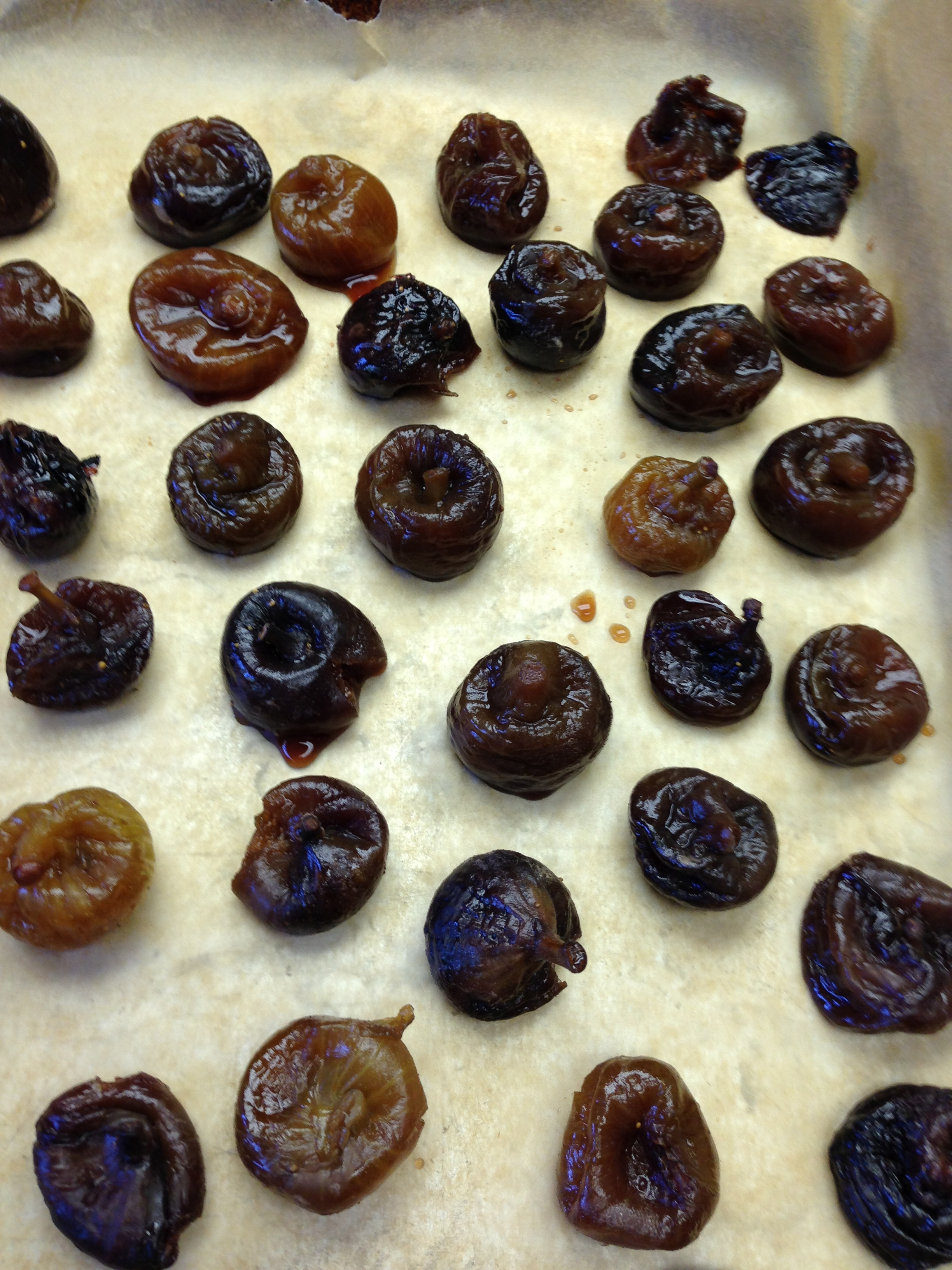
Carmel Candied Figs

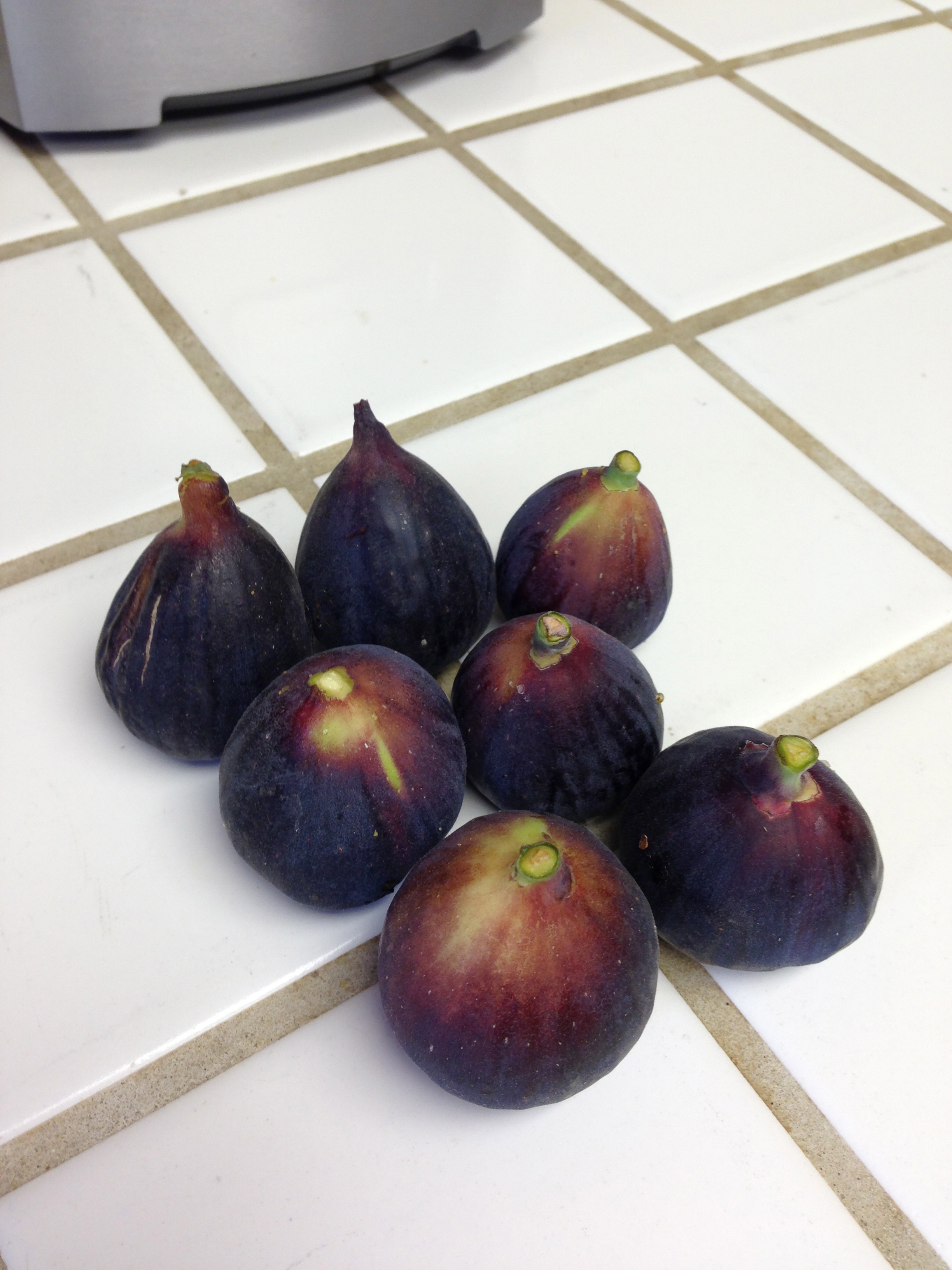
Fresh Black Mission Figs

Fresh Black Mission Figs

Left over fig juices

Save the left over fig liquid reduce with balsamic vinegar for balsamic vinegar.


A friend of mine shared a recipe with me this year and I have enjoyed it more than anything I have done with figs. It’s called Carmel Candied Figs. While it takes days to make, it is a very easy process. Day One; Place 6 pounds of figs in a heavy stock pot, adding 1 cup honey, 1 cup water and simmer with a lid on for 1 hour. Swirl the liquid, but don’t stir the figs or they will tear. Let sit overnight. Whole spices can be added like, cinnamon, star anise or allspice, but it is not necessary at all! Day two; simmer figs without lid for 1 hour. Let sit overnight. Day Three; simmer figs without lid for 1 hour. Cool. Line 2 cookie sheets with parchment paper. Place figs, stem up, flattening slightly on cookie sheet and place in an oven with pilot light. Turn figs over, belly side up, the next day, turning a few times a day from stem side to belly. do this until figs are chewy. It usually takes about three days, depending on the humidity. I store mine in glass containers with a lid, but leave the lid ajar for a week to remove any extra moisture. Extra moisture will cause mold….You don’t want that to happen. They can also be frozen at this stage. These delicious figs can be eaten like this alone or can be added to fall breads, muffins, scones, custards or whatever you set your mind too!  TIP:  Save the left over liquid form cooking the figs down and add to two cups of regular balsamic vinegar, reduce by simmering for several hours.  Here is your own fig vinegar for making the best salad dressing you’ve ever had!
4 Comments

Filed under Fruits from the orchard, Preserving

Flavored Vinegars

When summers bounty is at its peak, I seem to get the urge to create my own concoctions. Whether it be preserving my harvest a little different then last year or just trying something new for the dinner table. Flavored vinegars are always on the to-do list to add a distinctive flavor to foods from prosciutto salad to bulgar wheat.
You can buy some pretty bottles or reuse old vinegar or small neck bottles to keep you vinegars in.
Raspberry vinegar is probably one of our favorite flavors. We use it as a salad dressing when mixed with a little olive oil. It’s also very delish when used with pomegranate salad. Use either red wine vinegar or white wine vinegar for best flavor. Combine 1 1/2 pints of wine vinegar, 4 T sugar and 1 cup of raspberries. Simmer for 15 minutes. Can be reduced to intensify the flavor. Strain the mixture through a fine sieve and pour hot into a sterilized bottle.
Herb vinegars are probably the most popular. You can pick any herbs fresh from your garden. Herb vinegars release all their stored aromas. Bring 4 cups of cider vinegar to a simmer and add a handful of chosen herbs. T

urn off heat right after adding clean dry herbs and leave to cool and then strain and pour into a sterile bottle.

Rosehip Vinegar

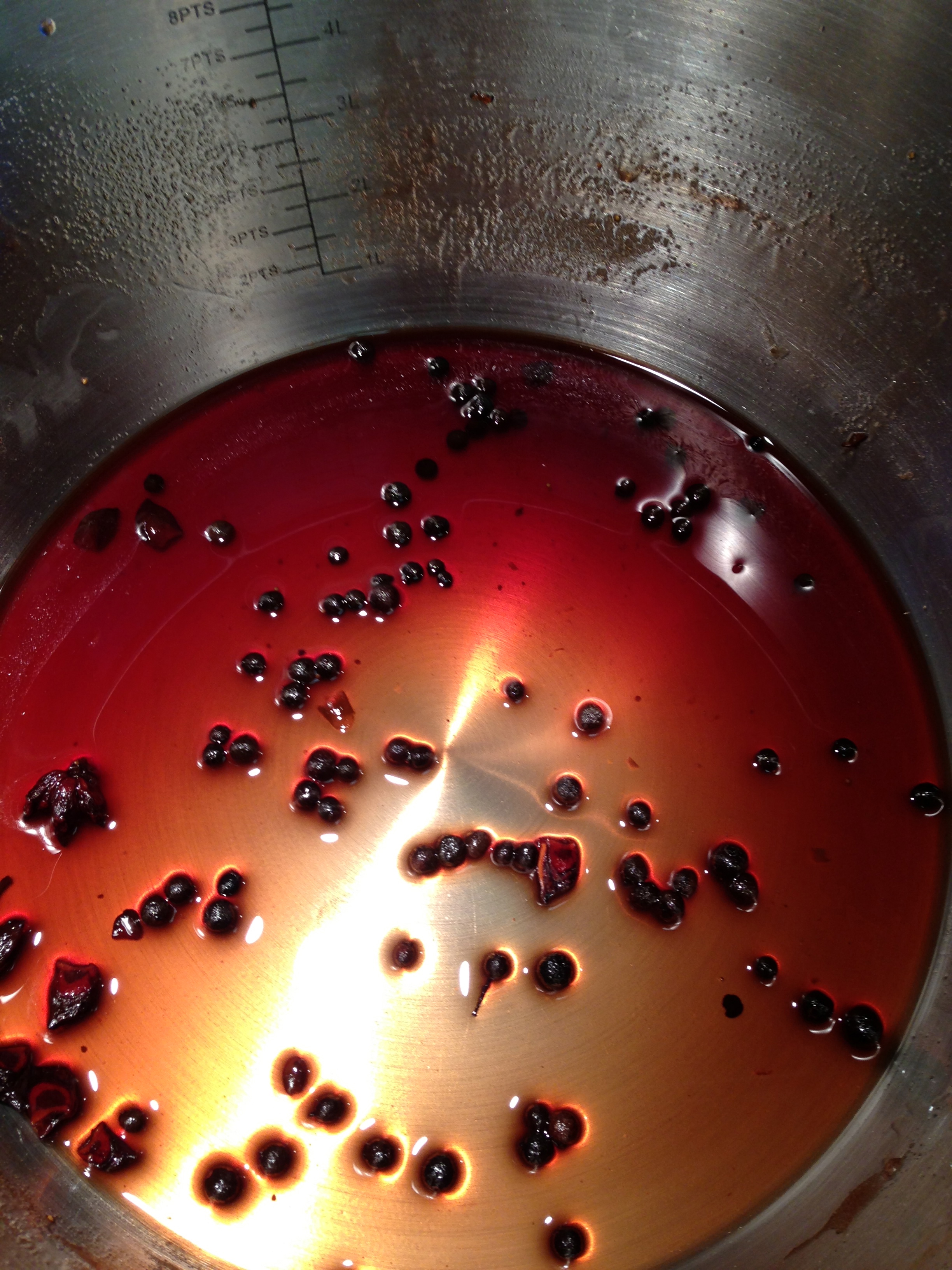
Rose-hip Vinegar

Have you ever thought about using lavender or nasturtiums to make flavored vinegar? Prepare the same way as making herb vinegars.
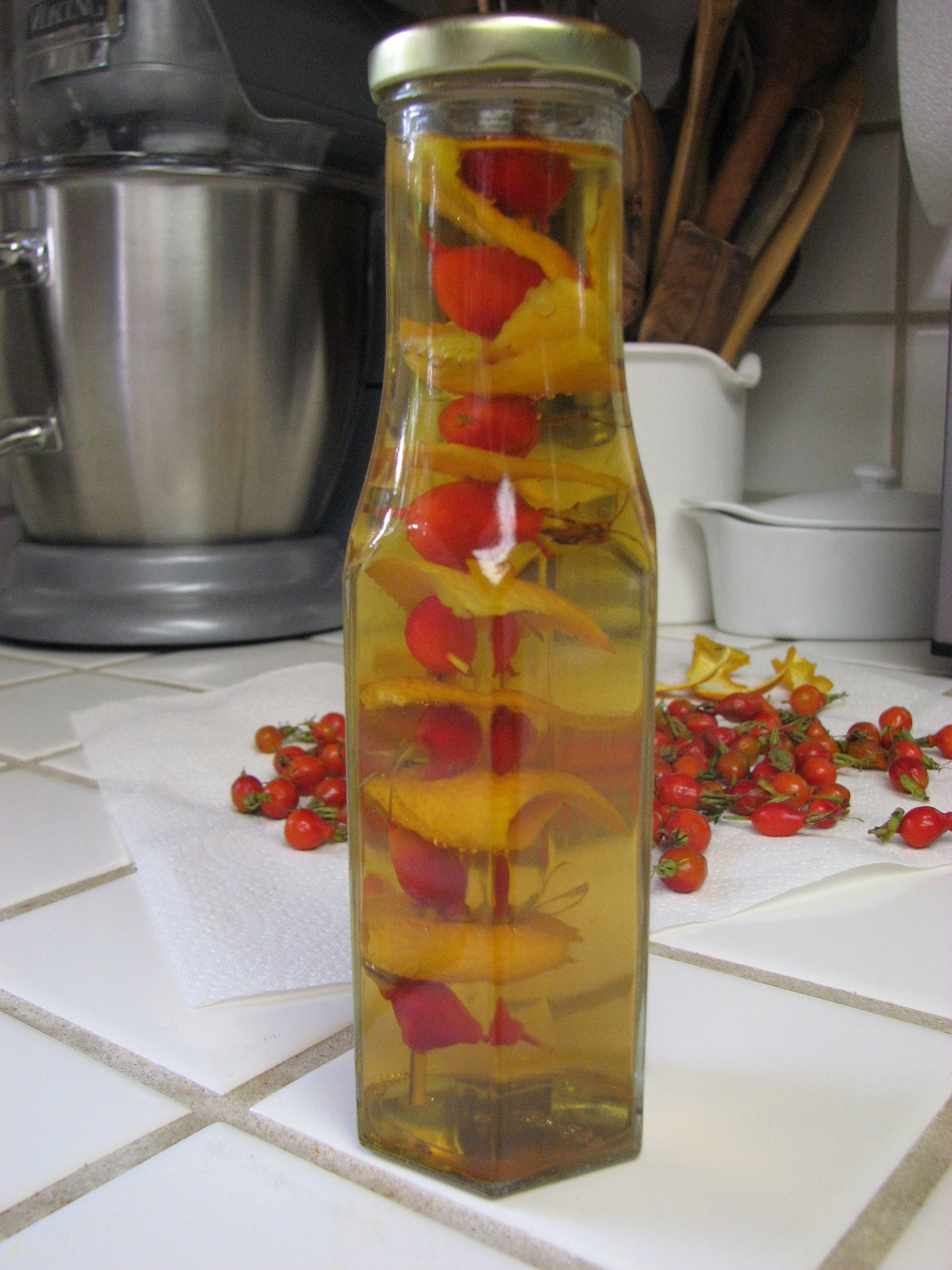
If you are looking for something special to liven up a melon and prosciutto salad, try making rose-hip vinegar. Not only is it beautiful on the counter, but it adds a great zing. Heat 4 cups of cider vinegar, and 4 T of sugar until dissolved. Allow to cool. Thread rose-hips and orange peel pieces onto a skewer alternating. Place skewer into a sterile bottle and pour in the vinegar. Cap off and let sit for at least two to three weeks for flavor to become infused.
These vinegars should be used within a year of making.  Just in time for a new season and preserving!

Leave a comment

Filed under Preserving, Recipes from the Garden

Who Would Purposely Plant Stinging Nettle?

Stining Nettle

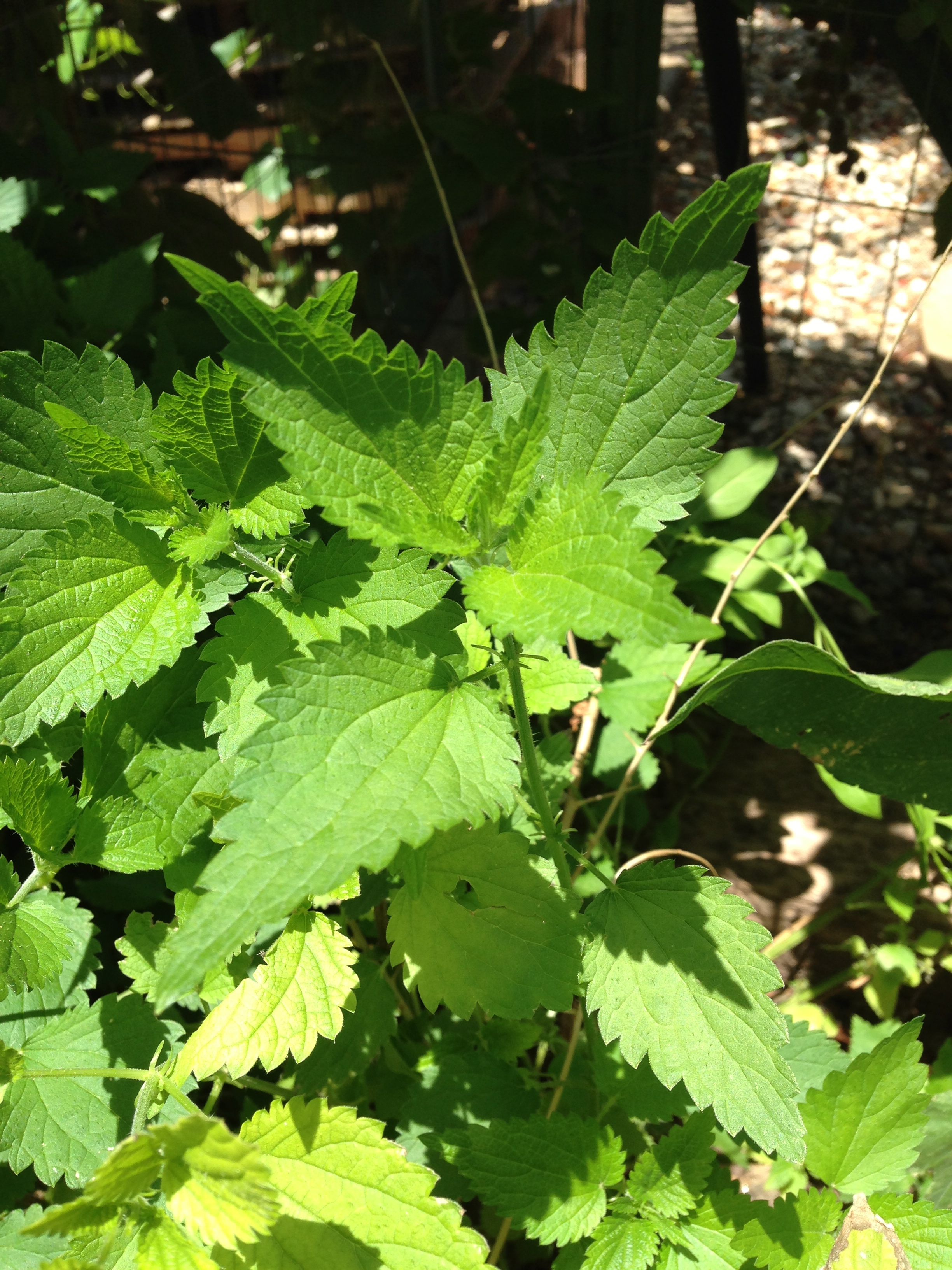
Stinging Nettle Leaves

Well, lets see….I would! Of course I haven’t always had a love for this plant of nature.  When I was a child I had many experiences of floating or running up and down the irrigation ditches, only to unknowingly brush up against the nasty leaves of nettle and quickly break out into a stinging rash, earning its name. Little did I know of its healing properties when handled with loving care!

Stinging Nettle has been used for many a years for allergy relief, soothing headaches, treating asthma and high blood pressure, dissolve kidney stones, expel toxins from the body, relieve skin inflammations (ironic), anemia and even coughing.  And not to mention all the minerals and protein it packs.

Nettle leaves can be used many ways to get all those benefits, but my favorite is just to make a simple brew of tea.  1/2 cup of leaves steeped in 2 cups of water for 5 minutes, adding a squeeze of fresh lemon juice and touch honey.   Don’t worry!  Once the plant has been simmered the stinging hairs will no longer have an affect.

Take the bite out of harvesting by wearing gloves.  Pick the top, most tender leaves with scissors.  Cutting leaves can be done in the spring or fall.

I started my nettle plant easily from seed, but cuttings can be done as well, but in the fall before winter die back.  My upright nettle plant stands in the very back of the barn, where there is very little worry about anyone coming in contact with its needle-like stinging hairs.  Give it plenty of room.  This guy, if allowed can reach 6′ easily with a spread of 4-6′.  I do keep mine under control to a height of 3′.  Perhaps it’s from cutting it back all the time, drying the leaves for later winter use.

Nettle grown in the wild here in Southern Utah often times is accompanied by mullein growing nearby.  Ahh, I wish I knew that as a kid!  Know your plants and if you happen to tangle with nettle, look around quickly for mullein leaves.  The mullein leaves rubbed on affected area will ease the sting almost instantly!

Stinging Nettle Seed

4 Comments

Filed under Herbs

Quiet Sunrise

There is nothing better than a summer morning, just as the sun rises and being in the garden!  The sound of business only come from the birds chirping and the occasional crow from our little rooster.  The air is still cool and calm.  Bliss!

First stop is the goats. Getting their morning ration of hay, grain and giving Ivy a check, which is due to kid any day now.  She is nice and round, but no signs that she will be giving birth today.  The anticipation of new little kids hopping around keeps me going to the barn several times a day with excitement.

Watering chores are done early before the heat to arrives.  My favorite tool is a watering wand, the gentle flow of water is soothing to me and with the many potted plants around the garden, a little joy in a chore never hurts.

Checking the potato crop, I noticed the purple blooms. So a little digging around in the deep mulch layer found a handful of new potatoes for dinner tonight.   These are my favorite type of potatoes.  While the potato crop grows, I continue to mulch with compost around the plant, piling higher and higher until the compost reaches about a foot thick, making a perfect bed for new potatoes and a super easy harvest.  New potatoes are so succulent and tender, they melt in your mouth.  Their little skin just falls right off with the slightest rub.  Cut into fourths, tossed with some fresh herbs and olive oil, grilled or  baked makes a great easy side dish for a summer supper.  Fresh!  Luckily we will harvest new potatoes for the new several weeks until the foliage starts to die back, then it’s time for the main harvest.

Boysenberries are in full swing now and picking daily is a must!  Purple hands are a dead give away where I has hiding out this morning.  Morning is the best time to pick most crops, as they are usually sweeter and juicier.   A rustic berry tart is on the dessert menu tonight!  They get an extra drink of water while they are fruiting.  We are looking forward to the Triple Crown Blackberry harvest coming up shortly.  They are loaded with green berries and white blossoms. I planted a Triple Crown Blackberry on our back patio winding around one of the pillars.  What a fun focal point. And, you can eat it too!  A toss of some acidic rich fertilizer for the last time this year and a layer of compost over the top gives them a boost and promotes healthy new growth for next years berries as well.

My two garden helpers, Casper and Mabes are on the prowl lurking around the bushes

as we go from spot to spot making sure they don’t miss out on anything.  Casper is getting up there in years, but still enjoys the garden. While we adopted Mabes, a six-year-old active cat about two months ago, hoping for a mouser, when in deed, again, another cats whose only interest is in the delectable food easy captured in her bowl, but chasing butterflies seem to be a favorite. As well as Casper, Mabes has keen typing skills (computer terrors) as well. She has been a fun addition to the little farm.

The last of the peas were harvested this morning.  Hot temperatures slowed up the crops enough to warrant a new crop in their place.  Pickling cucumbers will replace their spot after a good amendment of compost goes in.  In six weeks time we will be adding to the  pantry, dilly pickles, bread and butter pickles and some sweet gherkins.

Light pruning, weeding and harvesting every morning keep things under control and while these could be daunting at times if not kept under control, a little work in the morning goes a long way and brings peace to the soul.

5 Comments

Filed under Casper the Cat, Fruits from the orchard, Gardening, Goats, Life on the Farm