
 Even here where the temperatures reach above 100 degrees for more than three months and winter months dropping in the teens, these succulents grow and spread across the bench cheering up a blank space in a corner of the yard. Simply cover the seat of the bench and up the back a ways in burlap and then a layer of thick weed mat. Burlap is more appealing to look at then the weed mat, so that is the only reason for using it. Use a good potting soil to fill in the seat and up the back and start planting your favorite succulents. They will fill in with time but for an instant look plant thickly. Tuck the burlap in and around the plants to cover any potting soil and weed mat. Water in! I only water about 2 to 3 times a week here in the desert and no water during the winter unless we have had a complete drought. Use Hen and Chicks, Dragons Blood Sedums, Stonecrop and anything available. Once they start to crowd out, thin out and share with a friend for their new bench.
Author Archives: Ali

Creating a Succulent Garden Bench
Filed under Garden Whimsy, Gardening
Putting My Backyard to Work
When we moved into our home 23 years ago this coming July I never imagined I would be integrating so many things on our little 1/4 acre. I soon filled our plot with a garden, fruit trees, shade trees, grass and flower beds. I quickly ran out of room! We had an adjoining lot that was a 1/4 acre also and it had been vacant since we moved in. After filling up our little plot I soon decided to plant a small garden, 4 ft wide by 50 ft on the edge of that lot. And yes, of course it did indeed go up for sale. Isn’t that the way! We never planned on buying that lot and soon found out we were destined to own it. And that’s where it all began. My husband brought home 3 baby chicks from the local feed store and that opened the doors. Soon to follow were more chicks, ducks, goats, rabbits,bees, 2 cats, a dog and now even a small cow. An orchard of 35 fruits trees were to start us off on that 1/4 acre lot now 48 fruit trees dwell within. 16 grape vines, a greenhouse, berry patches, cold frames, compost bins, chicken coop, barn, garden and a small retail cottage organic garden business all within that small 1/4 acre lot. My husband probably wonders “what if” he didn’t bring home those 3 innocent chicks that April day. I’m sure he never planned on such a life. Just three chicks for the kids and a few eggs.
We have been organic for 15 years now and found this is the only way to grow in harmony with our land. Our garden, orchard and animals are defiantly work, but I can’t think of anything more rewarding in my life. Today the “Urban Farm” is being more than just a way to supply your family with fresh produce, but it’s a becoming a movement I think we should all try!
Making Hypertufa Pots

Small Hypertufa Pot
Making Hypertufa Pots
So what exactly is Hypertufa (which is pronounced hyper-toofa) Well Hypertufa is the name for an artificial stone. It is used to make a substance similar to the natural volcanic rock called Tufa. Tufa is used to make planting troughs, bird baths, and other things but has become a difficult rock to get.
Hypertufa started being used in the mid 19th century by mixing sand, peat, various volcanic aggregates and cement. It is much lighter than stone or concrete and can withstand cold winter temperatures and blazing summer heat equally well.
Since most Tufa deposits have been depleted the Hypertufa mixture is becoming more and more popular. This mixture also has the advantage that it can be molded and carved into any shape that you want.
1. Wearing rubber gloves and a dust mask to avoid breathing cement dust, mix 3 parts perlite, 3 parts peat moss, and 2 parts Portland cement in a plastic tub. If desired, add cement pigment for color. If making a large pot, add acrylic fibers or chicken wire for strength.
2. Add water to tub, a bit at a time, until the mixture has the consistency of moist cottage cheese.
3. Line Mold with a plastic bag for ease of removal. Placing leaves or sticks around the outside of the mold before putting in the mix will give texture to your pot. Spray inside of mold with cooking oil. Push a handful of wet hypertufa mixture firmly against the bottom of the mold. Repeat until you have made a bottom base that is approximately 1 inch thick. Push handfuls of wet hypertufa mixture firmly against the sides of container approximately 3/4 inches in thickness. Continue until rim of mold is reached. Press bottom and sides firmly to remove air pockets.
4. Create drainage hole by pushing finger or small dowell through the bottom of mold so that it penetrates the hypertufa mixture.
5. Cover with plastic bag, let dry for about 48 hours, depending on the weather.
6. Take off plastic bag and remove pot from mold (pot with be slightly wet). Handle with both hands to assure you don’t break the pot. Using a wire brush, stick or sandpaper, rough up the surface of the hypertufa for a more rustic appearance. Let sit for 2 to 3 weeks to dry completely.
Filed under Garden Crafts
Growing Garden Peas
One of my favorite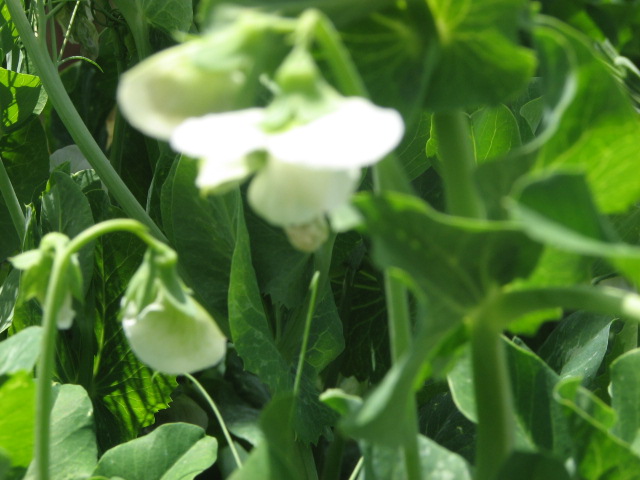 memories as a child in the garden was eating fresh home-grown peas. No garden should be without! Peas are one of the oldest food crops that were commonly grown in home gardens in colonial times. Thomas Jefferson reported to have cataloged at least fifty varieties and grown at least thirty. Records indicate that he competed with fellow growers as to see who could serve the first bowl of peas each spring. There are shelling peas (a kids and my own favorite), snow peas and snap peas. In my area I can plant peas around January weather permitting. I do watch the soil temperature, making sure that it is at least 40 degrees F. If the weather is so cold and the forecast for the next week looks like ugly (like this year) I will wait. Peas do best in cooler weather. Once summer sets in, peas stop producing. I also plant a crop in autumn 60 to 90 days before your first hard frost date, and then we enjoy peas late fall and into early winter. I like to plant the low growing varieties. The wind here can really whips the babies around. As with any new crop you should prep your soil with compost and a good fertilizer. I till in about 4″ of compost and use a well balance organic fertilizer. When peas begin to bloom I give them another feeding of fertilizer. I also like to sprinkle them with compost tea I brew often for the hungry plants. Most packages will tell you to plant 1″ deep. During spring plantings I only poke the seeds in the ground about 1/2″ and fall time, I will plant the full 1″. The soil is cooler the further down you go, so I bring the seeds closer to the surface where it’s warmer during the early spring. Sow the seed thickly in a rectangular block , and the vines will grow together into a fairly stable mass and help support each other. Harvesting involves reaching into the block and picking the pods, no big deal. You can produce a lot of peas in a small space this way. Make successive planting every two weeks for a steady supply of peas. Peas need water most when germinating and when the are blooming. Check the plants daily. Pods form quickly, and you want to pick them just as the peas have filled out the shells but before they start getting too mature and starchy. Keeping the pods picked also extends the peas’ productive season. When left on the vine the plant puts all of its energy into producing seed for survival. By choosing the right variety, planting when the soil is warm enough, and harvesting at the right moment, you can enjoy that sweet, fresh taste available only to those who grow their own peas.
Filed under Gardening


 Out Standing In The Garden