Author Archives: Ali

Ali's avatar

About Ali

Gardening is a peaceful place for me. I have loved it since I was a very young child. I want to share with you my journey in my small half acre lot in the middle of our city what you can achieve, such as gowing a garden, orcharding, caring for bees, goats and poultry. Going back to the simple life. Using what you have to the best of your ability.

Seeds… A Lesson Sometimes Hard To Learn

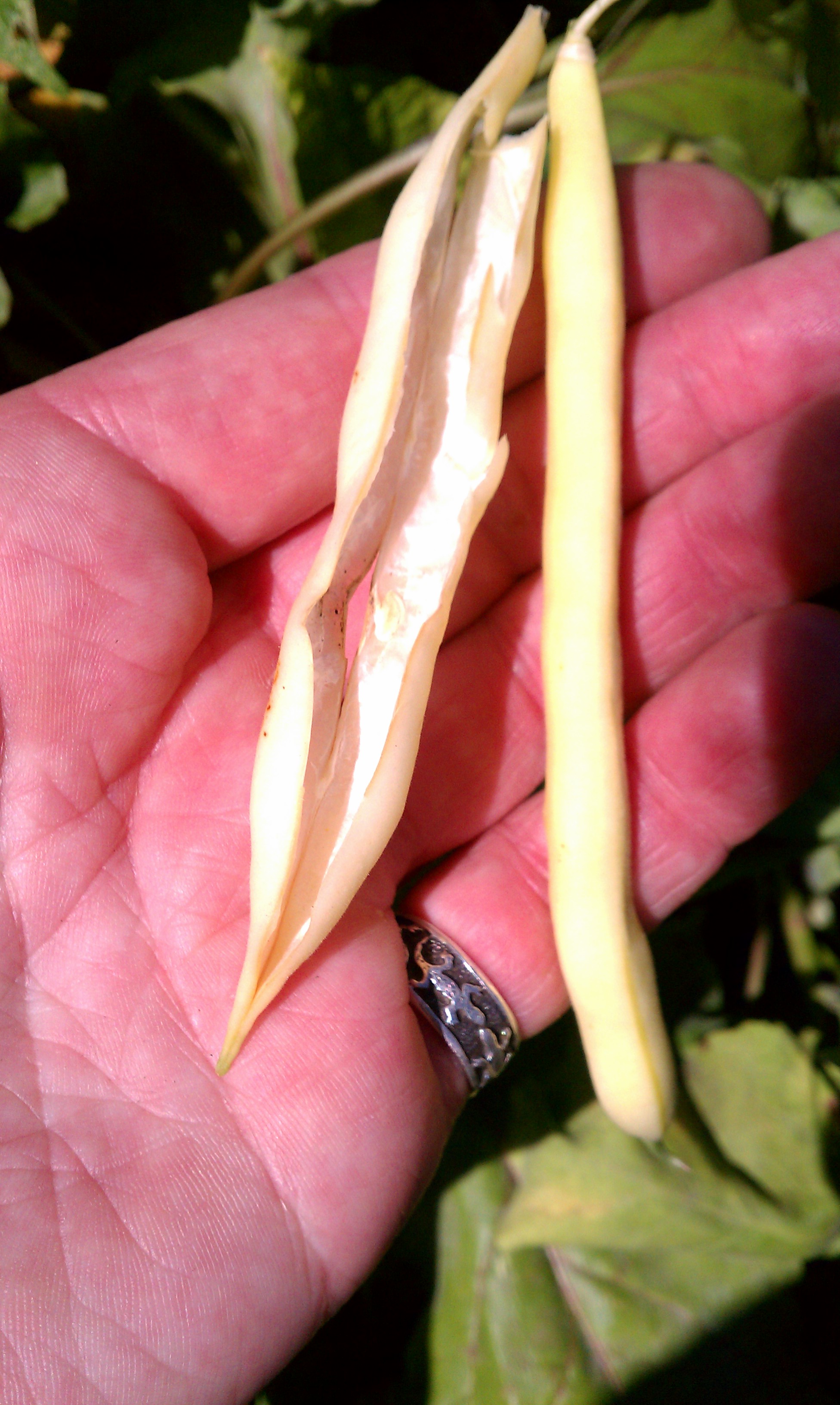
Gold Rush Beans with Empty Pods

This morning while in the garden doing the usual chores, weeding, pulling out spent plants, fertilizing.  I came across my crop of yellow beans, hummm.  Every year I plant yellow beans.    They are pretty canned, delightful to the palate and just a nice addition to the garden.  One of my favorites, among others is  Gold Rush.   7  years ago I bought a bulk bag of these seeds.  Figuring they would last for about 3 years and by then they would be all used up.  I always date my seed as soon as I get them.  This is a really good habit to get into.  Well they got stuffed in the bottom of my seed container and forgotten.  When I came upon them early summer I thought, why waste good seeds, right?  I have always taught rotation, rotation, rotation in  seed saving.   Well, did I listen to my own words of advice?  Not hardly.  I spent good money on those seeds, and by darn I wasn’t going to go buy more and toss those!  They looked  pretty good and they were stored at a cool temperature.  They came up fairly well,  slow to germinate and some yellowing.  Once they grow to the size ready to be picked, a nice side dish was planned.  Only one problem. The beautiful yellow beans were hallow, light weight, limp and lifeless.  The taste was bland, and not something to be proud of.  A common problem you can get with old seeds.  Humbling experience 9,089.  Yup, I may be a seasoned  gardener but I to make mistakes that I hope you can learn from!  Moral of the story is, rotate your seed stash.  They are living, viable and have a life cycle.  Yes, they may germinate, grow and even produce well, but I used up precious water, time, space and energy for something that I know better than to do.  I could have used those seeds a few years earlier and had them replaced with new seeds  that would perform with vigor.  My morning chores were finished off by pulling up the plants and sending them to the compost bin (I guess not a total loss).  I  did harvest the first two crops hoping for better results with the later harvests.  Something to remember…  Sometimes, crops aren’t so wonderful when they first come on and then they can better with time, so do give them a little time before ripping and tearing.  In this case that wasn’t so.  As seeds get older they lose their strength sort of speak.  Sometimes they just don’t germinate, or they are slow to do so.  Sometimes the plant it self seems to struggle inviting disease and insects and require extra attention.   Old seeds can create poor quality fruits and can carry that trait to their offspring the following years.

Old legume seeds can be grown as a cover crop in the fall mixed with other seed in case of inferior germination which no doubt you will get.  So not all is lost.  I should have done this instead!

Store seeds in the refrigerator (for vegetable seed) or freezer (for flower seed).  They basically go dormant and this will make seed last longer.  I also think you get better germination when doing this, even if only for a few short weeks of storage in cool conditions.

Store seeds in airtight containers.  If storing seeds in the freezer, let seeds come to room temperature before opening container.  This assures no moisture will develop as things do after being brought from freezing, to room temp.  Moisture on seeds sends them a message to germinate!  Don’t bring seeds to room temp and back into the cold and then back to room temp over and over!

Seeds that are stored in temperatures that fluctuate will lose their ability to germinate.

Don’t plant seeds that are shriveled, discolored, much smaller than the rest or broken seeds.

Canning jars, with new lids are a great way to store seeds.  Screw lids on tightly.  I like to use small half pint size jars for loose seeds.  Use sterile jars.

If you have old seeds, you can use them as a cover crop instead of throwing them away.  In the past I just mixed them up and plant ed them in the fall.  Once they have reached  6″ to a foot tall I simply turn them into the soil.  This is  considered a green manure.  I alway mix them with new cover crop seeds in case of poor germination.  I don’t feel so wasteful when doing this.  This is a different theory, but it does work.  I don’t use nightshade seeds though.  Legumes are the best.

Always date your seeds and don’t mix old seeds with new!  You can keep them in their original package so you still have all the information. 

One more word on old seeds.  Sometimes you may get and old heirloom seed that is priceless.  Please don’t throw them away.  I once was very lucky to have the opportunity to grow  Anasazi bean seeds that came from a cave and they were supposed to be 800 year old seeds. Priceless!  I carefully prepared my garden bed and gave these seeds the best attention possible.  They were treated like my own children, only I kept them away from other bean friends.  I only had a few dozen seeds and three germinated.  That was still so exciting!  They struggled, and grow slow.  At the end of the season we finally got a few blossoms.  They did indeed get a few pods with few seeds in each before the season was over.  Normally you will start to harvest beans from 50-70 days depending on the variety.  These beans took a 165 days to reach dry bean harvest.  I am so glad we live in an area that has a  long growing season.  From two dozen seeds we went down to 6 new viable seeds.   But they were new seeds from our past!  Each year they grow a little stronger, gaining few at a time.  After 12 years I have 41 seeds.  This is preserving our heritage seeds, not performing dinner for 20.   I hope you can see the difference in keeping seed for production and keeping seed for heritage.  Maybe eventually the Anasazi bean seed will someday reach vim and vigor again, but for now it is purely grown for the novelty of it.

A fabulous book on saving seeds is Suzanne Ashworth’s book, Seed to Seed.  She teaches you how to save and preserve your own vegetable seeds.

2 Comments

Filed under Gardening, Heirlooms

My Favorite Perennial Flowers

This slideshow requires JavaScript.

I can pick two perennial flowers that will always be at the top of the list for my favorites.  Not just because of their beauty or their ability to grow great just about anywhere (here in the hot desert of Southern Utah), but because they look absolutely stunning together and they come in so many varieties these days.  I just think the two together are rather romantic!  Rudbeckia is an old-time favorite.  When you hear the word “Rudbeckia” you probably aren’t sure of what flower that is, but a common Rudbeckia is the “black-eyed Susan, Goldstrum”, one of which I’m sure many know.  Yes,  I love the good old black-eyed Susan, but lets step outside the box for a minute.    Prairie Sun, Chim Chiminee, Chocolate Orange, Denver Daisy, Solar Eclipse, Maxima, and so many others with and amazing array of rich colors.  You just can’t have one!  Echinacea the other sturdy, everlasting choice also known as coneflower and for its roots medicinally.   Again, there are so many to choose from.  I have several that I grow just because of their names, like; Green Wizard.  Not a flashy one but truly unique.  Milkshake, as you can imagine white, but this one has a double center as does the Hot Papaya’, but splashing with color.

Both Echinacea and Rudbeckia like the same type of soil, water conditions and light, so it’s easy to grow them together in groups.  Although the soil conditions don’t have to be great, your perennials will thrive if you give your soil a little love and care before planting.  I always add compost to the planting spot and work it in to loosen the soil.  Plant these long living jewels about 1 ft apart and water in well.  They will spread over the years, so give them some room.  I don’t like to grow these in pots.  The first year they are establishing their root system so they will require plenty of water to get them off to a good start.  Evenly moist soil will do the trick.   After about a year they can dry out in between watering without any damage.  Planting them in full sun will give them the best blooms, but even a little shade they will tolerate.  The great gift of these perennials is that they usually bloom beautifully the first year, so they don’t necessarily follow the old rule of perennials,  Which is:  The first year they sleep, the second they creep, and the third they leap.  Both of these varieties bloom from summer till frost, assuming you give them a little bit of care of deadheading them.  Just simply clip off the spent, or almost spent flowers just above the next bud in line.  This will keep your plant looking fabulous and healthy.  Perennials, including both Rudbeckia and Echinacea are considered low maintenance, but not, no maintenance.  Everything needs a little love, care and nourishment to remain happy.  After frost, cut them back to ground level.  Make sure they are marked so you don’t disturb the roots while dormant.  `Rudbeckia and Echinacea both make great cut flowers too!  What a pretty center piece for a casual outside dinner.   I like to feed mine an organic flower food during bloom time, but once seems to be plenty during the season with an application of compost every spring.  Few pests seem to enjoy feasting on the flowers, but grasshoppers  like the leaves, so pay attention early.  As an extra, butterflies are often found spending a leisure afternoon on the tantalizing flowers.  What a picture!

If you haven’t already found a spot to plant two new favorites I’m sure you will enjoy for years to come, do it this evening, or heck…NOW! 

Organic Flower Fertilizer,  Nolo Bait for Grasshoppers

1 Comment

Filed under Flower Gardens

Oh, those pesky squash bugs………..

This slideshow requires JavaScript.

This is the time of year your squash is or has been producing loads of squash.  Then one morning you go out to your garden to pick and there they are…..The dreaded squash bug.  YUCK! 

Squash bugs literally suck the life out of your plants. Squash bugs damage crops by sucking the sap from the leaves of the squash or pumpkin. They pierce the leaves with their mouth parts to feed on the plant. If the plant cannot withstand the amount of feeding, you will start to see damaged leaves around your garden . Leaves wilt rapidly and eventually turn yellow and then brown and crispy. In the early growing season, young plants are especially susceptible to death by squash bugs. Older plants are hardier, but excessive feeding will still kill them.  Female squash bugs begin to lay their eggs in early June through summer.  Eggs hatch within ten days and the nymph will become an adult within four weeks.

When I first started my garden I had, what felt like millions of squash bugs roaming my garden and destroying all my squash plants.  Over the years I have built my soil up by adding compost, organic fertilizers and nothing chemical to break down the soil, but rather, build up the soil and feed the earth.  The plants have become healthier due to the soil and therefore they are more resistant to bugs and diseases.  Last year I planted a pumpkin patch in an area that was a driveway/parking spot for 22 years.  Very compacted and no nutrients in the soil.  Once again I had a battle of squash bugs in that spot and just 40 feet away in my amended garden, not one squash bug dared enter.  But there are several organic choices to help you repel the squash bug.  Prevention is the first step to take. Once the little squash plants have emerged from the ground I sprinkle kelp meal around the base of the plant.  Not only does it feed the plant and give it the minerals it needs, the squash bugs don’t seem to like the smell of it and stay away.  I only use a couple of tablespoons and sprinkle once a week.  I have used with good success an organic spray called End All and another called Neem Py.  Both of these will kill nymphs, but seem to have little effect on adult as does a chemical, but they are a great spray to repel and kill the little ones.  I spray every 7-10 days through the season, but I never spray the flowers!  The flowers have visitors (your pollinators) and I don’t want to make them sick or discourage them.  It’s best to spray in the evening time.

It’s so important to pay close attention to your plants.  A couple of missed days can mean an infestation..  I inspect mine early morning.  Living in an arid climate I can give my plants a spray of water and come back a few minutes later and if there is squash bugs present, they will surface.  They don’t like the water and they run to the tops of the plants.  If you live in an area that is humid or cool, you won’t want to do this because you can cause powdery mildews.  Look under the leaves for movement.  Don’t let one of those little buggers get away!  If your squimish and don’t want to squish them, carry a jar with a little water in it to dump them in.  I had an old farmer tell me a trick he uses to get rid of his bugs, and for years I thought of it as silly.  Finally after I came to my senses and decided not to be close minded I thought I would give it a try……..Oh my goodness, it really works.  I have put a video on this blog so you can see how easy it is and how it works.  It’s a torch to burn the bugs.  Use a quick movement over the squash bug.  It quickly singes the bug without hurting the plant.  You don’t want to hold the torch in on spot or you WILL burn your plant of course, but a quick movement will do the trick.  The torch I use is (I robbed it out of my husbands tool box…shhhh!) is a bernzomatic TS 400.  It has an electric pizeo lighter which makes it quick to light and get the job done.   You can use it on the eggs as well, but you have to hold the flame on a little longer to kill the eggs, so it will scorch to leaves a little bit.

Over the years of amending your soil and learning fertilizing techniques to make healthier plants you will se a decline in squash bugs.  Remember that prevention is worth a pound of cure! Be patient and keep after those stinky little buggers!

15 Comments

Filed under Gardening

Heirloom Vegetables

This slideshow requires JavaScript.

I have been fascinated for years by heirloom vegetables.  The flavor can’t be beat out by the new and old hybrids on the market today.  The colors and variety is amazing.  Most veggies in the grocery stores are now hybrids which seem to lack the robust flavor of the good old varieties that grandma and grandpa once grow.  When you think of heirloom vegetables you might think of the tomato.  While the tomato is probably the most common and prized for as an heirloom there is a vast range of other veggies that are superior and should be considered in the garden.  The taste alone should be all the reason for growing them, but sometimes the names of heirloom vegetables are pretty fun to.  Such as the tiger melon, moneymaker tomato, cocozella di napoli squash, great white tomato, moon & stars watermelon and persimmon tomato.  There are thousands of varieties to tempt the gardener.  Most Heirlooms come with great stories on how they were named.  Take the ‘Mortgage Lifter’ tomato.  It was said that a farmers was able to sell enough tomatoes to pay off his mortgage.  Or the ‘Hubbard’ squash, for example.  There really was a Mrs. Hubbard who found this variety, which was later popularized by seedsman James J. H. Gregory.  The ‘Caseknife’ bean was developed in Italy during the seventeenth century, this bean is one of the oldest documented pole beans cultivated in American kitchen gardens.  Its name refers to the broad, slightly curing table knives once used in the late seventeenth century. 

Heirloom vegetables are old,  open-pollinated cultivars.   Meaning that a particular cultivar can be grown from seed and will come back “true to type” if not cross pollinated.  The next generation will look just like its parent.  Heirloom vegetables are those introduced before 1951, when modern plant breeders introduced the first hybrids, but many date from the 1920’s and earlier.  Many are 100-150 years old, and some are much much older.  Hybrids, sometimes labeled as F-1, will not come back true if the seed is saved.  Sometimes the seed  can be sterile and not sprout at all, but if it does sprout, the young plants will probably not have many of the characteristics that made its parent noteworthy and who knows what you will get.  Hybrids do have some outstanding qualities such as disease resistance, but reproducing themselves is clearly not one of them.

Every year I try several new varieties of heirlooms.  I always keep record of varieties that have produced well and the ones I probably won’t try again.  Some varieties may or may not be suited for your area and some my be susceptible to problems unknown to earlier gardeners.  Trial and error.  Of course that is gardening, isn’t it?  That’s how we learn.  Ask other gardeners which variety has done well for them or just try a few new ones each year.  In our area there are few heirloom tomatoes that produce remarkably well due to our long hot summers,  but I can’t imagine not having heirloom tomatoes in my garden!  Don’t plant all one variety.   Try a few new ones and plant some of the old standbys just in case.  Try other heirloom vegetables beyond the tomato.  For the first time this year I am trying the ‘Rutgers’ tomato, a common heirloom.  So far it has produced more tomatoes on it than any of my other tomatoes bushes.  I wish I would have planted more!  I tried a new cabbage last year, ‘Cour Di Bue’.  Without a doubt I have missed out over the years on this strange shaped, but yet beautiful large cabbage with a point on top and it has a fabulous flavor to.   I had to create a new growing area for a pumpkin patch with heirlooms like ‘Thai Small, Turner Family, Shamrock, Survivor and Speckled Hound’. 

Protecting our seeds is now more important than ever with the commercial agriculture market with genetically engineered (GMO) seeds.  Support seed companies that take pride in preserving our seed heritage.  Learn to preserve your own seeds for the future!  Grow Heirlooms!

1 Comment

Filed under Gardening, Heirlooms