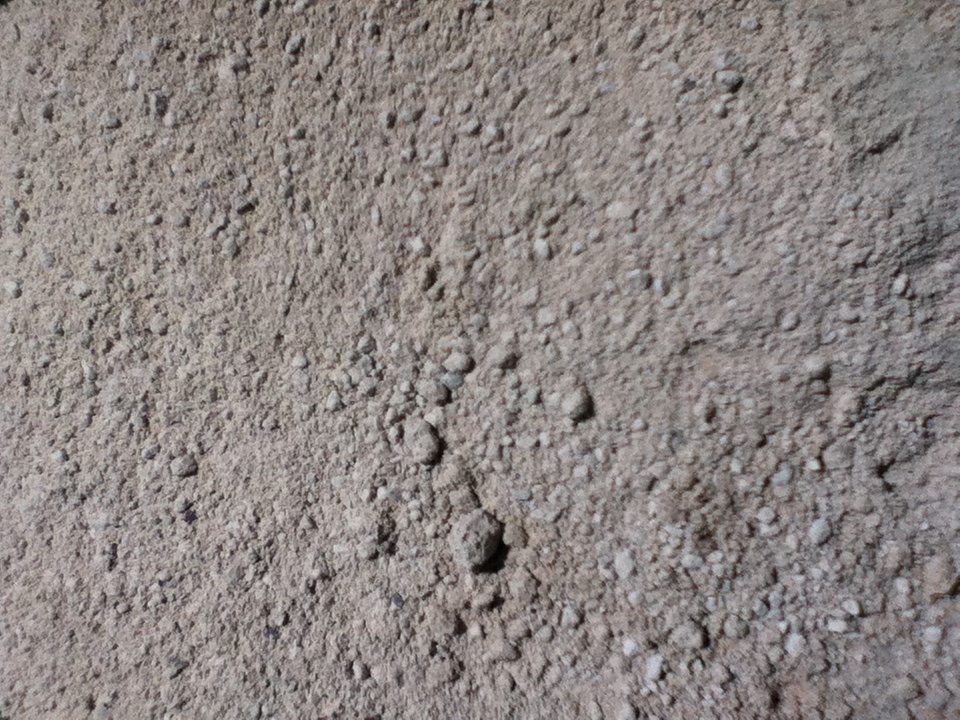
What’s All the Fuss About Rock Dust?

Rock dust… The new gardening phase…Well its not new, it’s ancient!  If you were to ask me what is my favorite rock dust I would probably say Rock Phosphate, or.. Azomite, or.. Gaia Glacier, or.. Greensand.    I have seen a HUGE change over the years of my gardening since I started using them over 15 years ago.  They are organic, slow release, and loaded with essential nutrients that your plants need to be healthy through-out the growing season.  It will encourage the root systems of trees, lawns, roses, vegetable gardens.  Rock dust aren’t just for vegetable gardens.  When you use them in your flower beds you will see increased blooms, larger flowers and healthier growth.  Roses love rock dusts to!  Vegetables will have fewer bugs, increased yields and I think, better flavor!  The mineral nutrients in these powdered rock products work with the soil rather than against like chemical fertilizers, therefore they will nourish the soil and make these nutrients available to plants at a balance rate.  Rock dusts should be applied  during the spring once per year, but can be applied seasonally for intensive growing.   General first application is about 10 pounds per 100 square feet, but always find the application rates on the product label.  You can also add them into your compost heap.  By doing this it enhances their availability for plant use.  The soluble acids in humus formation begin to dissolve the rock nutrients.  So when you apply your compost, it will make up for minerals removed from the soil when you harvest!  Yup, minerals don’t last forever in the soil.  Taking a vitamin once doesn’t mean it will last your whole life. 

Limestone is made from finely ground limestone rock.  It contains mostly calcium carbonate.  Lime should only be used on acidic soils.  If your pH is higher than 6.0, I would not add limestone.  Most plants function best in a pH range between 6.0 and 7.0, of course with a few exceptions.  Have your soil tested before jumping in and adding lime.

Rock phosphate is mined from clay deposits containing phosphorus.  Bone meal is a good substitution for a slow-release phosphorus if you can’t find rock phosphate.  It is important for root growth, bud, flower and fruit development.

Greensand is mined from old sea-bottom deposits.  It is an excellent source of potassium and many trace elements.  Potassium is important for the overall health of the plant.  Some of greensands trace elements are zinc, copper, molybdenum, boron and manganese.

Azomite is probably one of the newest rock dusts to me.  I have only been using it for the last 4 years, but I can’t believe the difference it has made in my garden and potted plants.   Azomite is silica clay that is mined in Utah from deposits left by an ancient volcano eruption that was ejected out of the side of a mountain and filled a nearby lake bed.  It contains over 70 active minerals and  trace elements.  It can be used in animal feeds as well.

Gaia Glacial Rock Dust is a natural mineral product which is produced over many thousands of years by glacial action. A wide variety of rocks which contain a broad spectrum of trace minerals are collected and pulverized by the expansion/contraction action of the glacier.  It also raises pH in acid soils, so using using in alkaline soils may not be the best idea.

You can also make a rock dust milk by adding 1 cup rock dust to a fine mesh bag or material, tie into a ball and suspend in a gallon of water. Allow to sit over night. Pour into sprayer and spray leaves.  This gives your plants a jump-start or helps with any stress. Bugs seem to find this unattractive and move along, so it works as a repellent as well. Snails are repelled by its high silica content, so by sprinkling  small amounts around the base of will not only feed the plant, but it will deter these pests.  Add a couple of tablespoons  to your potting mix to improve overall health, especially azomite.

While chemical fertilizers may produce more immediate visual results, when you add  Rock dust you are adding a huge range of minerals and trace elements for long-term soil health, your plants and most importantly, YOU!
Rock phosphate, Azomite, Bone Meal, greensand

13 Comments

Filed under Gardening

Amaryllis Year After Year Show

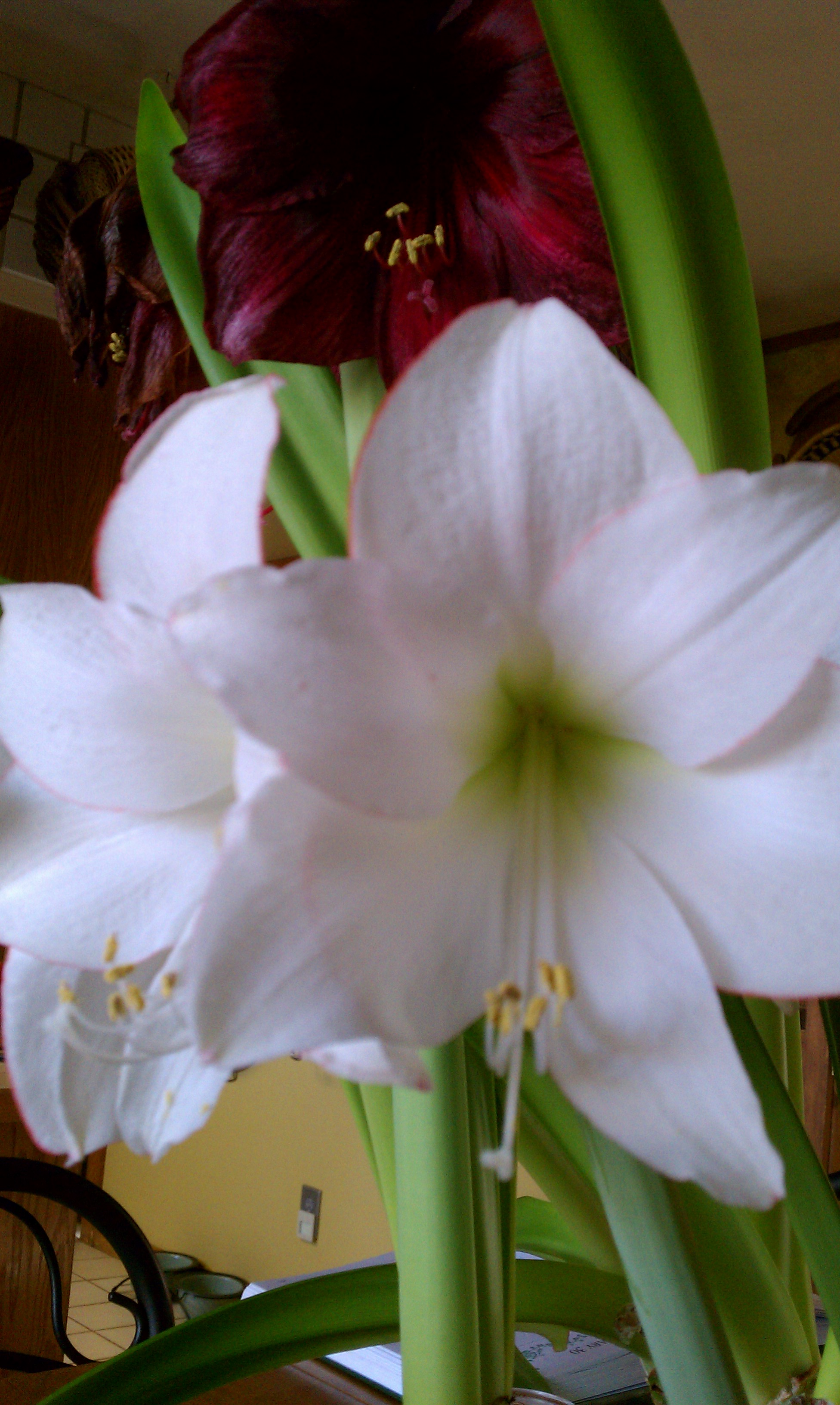
Many of us around Christmas time plant these big beautiful bulbs.  Caring for them and getting them to bloom is fairly easy and we enjoy the show.  But what happens to these bulbs after blooming time.  Some will toss the bulbs just because they don’t know what to do with them and some, more than likely the gardeners in us will save them trying to get them to bloom again.  Unlike most forced bulbs, Amaryllis can bloom again and again if we take the proper steps.  Fertilize with a well-balanced fertilizer once a month until early autumn.    If you have your plant outside during the warm months bring it in before frost.  Stop watering the potted Amaryllis.  Cut down the foliage, uproot the bulb from the planting medium and  store it in a cool, dry, dark place for eight to 10 weeks.  They need a nap!  I like to keep them in a brown paper bag in the cellar.    After nap time, it’s time to replant the bulb in fresh potting soil.  Water thoroughly, fertilize and in no time you will have new leaves emerging with blooms not far behind ready to bloom.

Happy Frog Potting Soil

Leave a comment

Filed under Flower Gardens, Gardening

Making Your Garden’s Dirt, Living

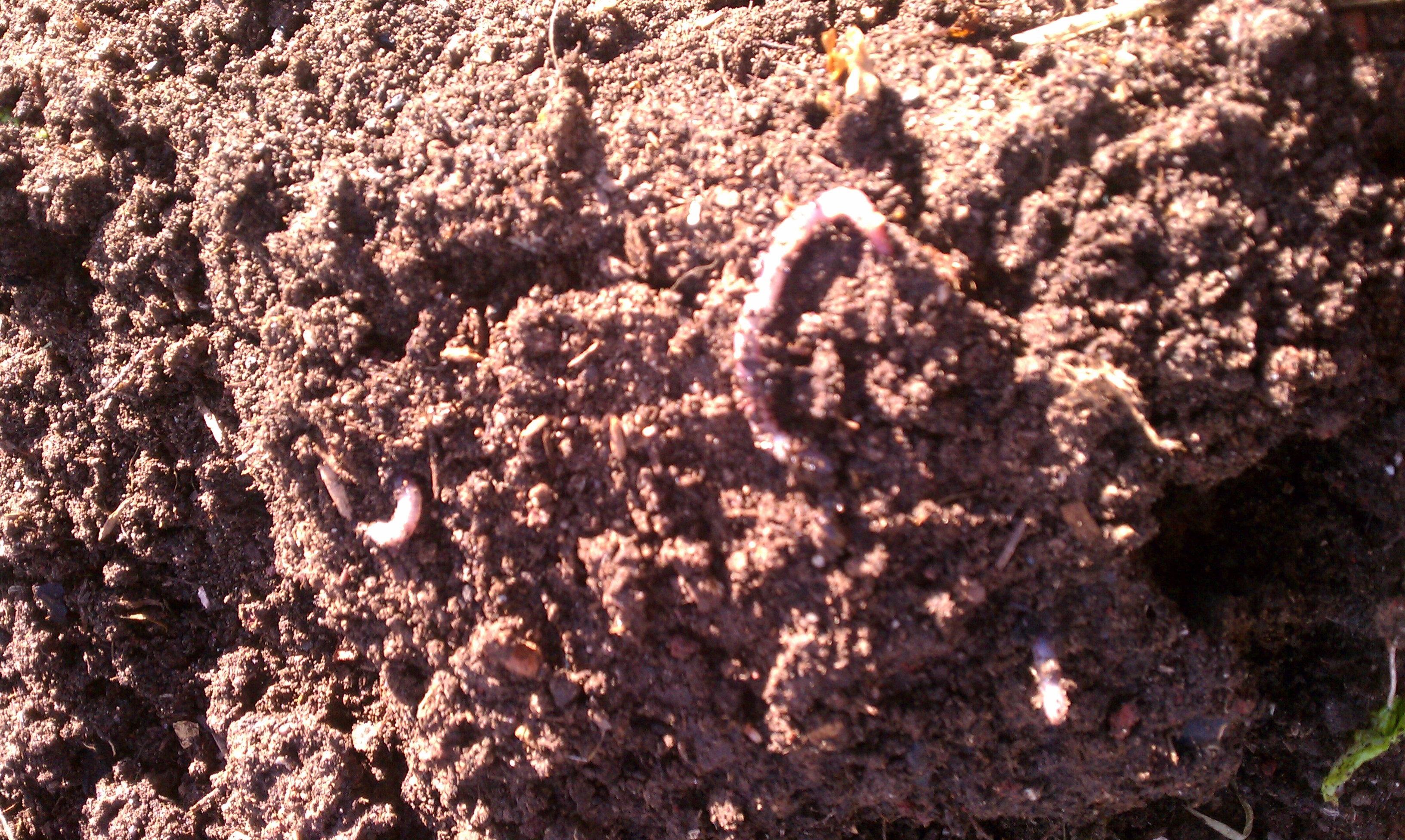
When I first started my garden years ago I can honestly say it was definitely dead dirt.  Nothing living in it at all except the local gopher.  Not even a worm.   Soil should have life and lots of life to it to make healthy plants.  It all starts with the soil.  From the ground up.  One thing I have always have said is “Feed the earth that feeds the plants that feed you”.  Healthy soil wards off diseases and insects.  When the plants are healthy they have less chance of becoming weak and diseased.  Just like us human beings.   Insects will always go to the weak plants first.  Healthy soil means that organisms in the soil are present and doing their job to support the growth of plants.  There is microscopic life performing its own function in the soil food web.  There is good bacteria, which requires oxygen to survive while the disease-causing bacteria thrive on low-oxygen.  Makes since!  Think about compacted soils verses loose loamy soils.   This was my story when I first started my garden.  Believe it or not good soil contains Fungi, microorganisms that help hold soil particles together and improve soil structure.  These little buggers consume things like pine needles, branches and leaves.  Larger hard to break down materials.  So you can see that having both these good guys are more than valuable they are essential.  Nematodes are something else in the soil you may not associate with as being good.  Most people think of root-feeding nematodes that cause havoc while the beneficial nematodes help protect the roots from disease and build soil structure.

So this brings me to Organic Fertilizer vs. Synthetic.  Natural or synthesized.  While many people have had success with synthetic, overtime they are destroying your soil.  Killing off any good microorganisms, not to mention run off and leaching into our water tables.  Synthetics do not feed the living organisms while organic soil amendments and fertilizers do.  synthetic chemicals leave your plants without beneficial life which is their support system! Yes, organic is bulkier, but in the long run your soil, plants and your body will thank you!  synthetic is a quick fix, but is it?  The chances of burning are higher.  The salt content is higher.  Organic fertilizer is a slow release and gives gardeners a litter more leeway to make mistakes without seriously harming the soil or plants.

If you are starting a new garden spot, you need to know your soil.  Is it clay or sand?  Loamy?  Silt?  But what ever you have the very first thing I would add is compost.  Not just a little compost, but a lot of compost.  Every time you plant!   Every Time!  Make sure your compost is truly composted.  Sometimes people think that compost means just manure.  Don’t think that this is compost.  It is raw material that will take time to break down.  If added and then planted right away it can burn new plants and seeds may not germinate.  Raw material will also rob your soil of nitrogen.  I like a well-rounded compost made from more than just manure.  Add peat moss or coconut coir, depending on your pH.  High pH, add peat.  Low pH add coconut coir.  If your soil is sandy add some vermiculite to help hold the water. If it is clay, add perlite to open up the soil for better drainage and help the good bacteria.  These three things, peat moss, vermiculite or perlite and compost can be used for raised beds, but make sure you add some good old dirt to the pile.  I really have seen much better results when you add your native soil to the mix.  Peat will last for 4 years in the soil and vermiculite and perlite will last for 5-7 years.  Another important soil amendment that you shouldn’t forget is GreensandGreensand supplies no organic matter, but it helps loosen clay soils, improves water and nutrient retention in sandy soils, and is a rich source of potassium and micro-nutrients.  I put it in my soil every spring when preparing my garden beds.  As far as working the beds with a tiller I am all for it!  BUT, please don’t pulverize your soil.  Less is more in this case.  I like to work my amendments into the existing soil, but not overwork it.  It really isn’t good for the worm life.  I use a small tiller in my raised beds and the tines only go 8-10 inches deep, so every 3 or 4 years I deep dig (great cardio exercise) with a shovel below the point of where the tines go.  The soil gets somewhat of a hard-pan that isn’t healthy for your plants.  Add organic fertilizers to the needs of your plants.  I suggest to use less more often then loads less often.  The plant will react better and will be healthier if you do it this way.

There are so many things you can add to your soil to help improve its structure and tilth.  Weed free straw, leaves, leaf mold, cotton burr compost, shredded pine needles and so many more things.  I like to add these in the fall so they have time to break down through the winter.  Work them into the soil.  Another thing that some people really like and I use it as well, but I always compost it first is shredded tree branches.  If it hasn’t been composted first it will inhibit seed germination and seriously rob your soil of nitrogen.

There are a few amendments to really feed your micro organisms if you want to get them really active:  Crab Meal, Neem Seed Meal, Karanja Seed Meal, and Alfalfa Meal.  These are great in the compost pile too for basically the same effect.

Greensand, Organic Fertilizers

1 Comment

Filed under Compost, Gardening

Good Bug? Bad Bug?

Many of times have I had  people come into my shop bringing in what they were sure to be a pesky bug about to emerge from their egg and create havoc on their gardens.  When I tell them how lucky they are to have such a wonderful insect egg of the Praying Mantis, their mouths drop and let me know they have been trying to eliminate them.  Well, that brings me to this blog!  The Good Bug, Praying Mantis.  I have kept a twig on the counter with the egg of a praying mantis just to let people know these are  the ‘Good’ guys.  When I trim my fruit trees and see the mantis eggs on the twigs I have just cut I make sure to weave the twig with the egg into the nearby fence so these little guys can hatch and become my little workhorses in the garden during the summer months. 

The life of the Praying Mantis starts in an ootheca egg mass. Taking place usually in the fall on a small branch or twig, the egg mass then hatches in the spring or sometimes early summer as the temperature rises and helps facilitate the time for the hatching of the numerous eggs.  Some eggs look like  a carmel colored packing peanut while others  have a harder type egg that are typically smaller like the picture below.

File:Praying mantis egg pod1.jpgPraying Mantis feed on grasshoppers , ants, moths, crickets, spiders, dragonflies, butterflies (yes, they eat beneficial as well), gnats, worms, meal-worms, grubs, termites, maggots, katydids, aphids, most flies, and some types of water bugs. They are great for eating pests in gardens and yards.

Nurseries carry the egg cases during the spring time and they are great to get mantisbabiesaas long as you don’t spray chemical pesticides that will harm these beneficial beauties.  Just set them out in a protected area and wait and watch for the very tiny babies to emerge and begin feasting on pesky bugs.  So the next time you see these odd-looking egg casings, know that you have help on its way with bug patrol this spring and summer!

1 Comment

Filed under Garden Bugs